
Fears Brunswick 39 Perpetual Calendar: This Changes Everything

There are new watches, and then there are watches that completely change how you look at a brand. For Fears, I suspect the new Brunswick 39 Perpetual Calendar will be very much the latter.
This year marks the 180th anniversary of Fears and ten years since Nicholas Bowman-Scargill brought his family's watch company back to life. And rather than marking the occasion with another dial colour or a limited edition with a fancy caseback, Fears has done something considerably more ambitious. It's built its first high complication.
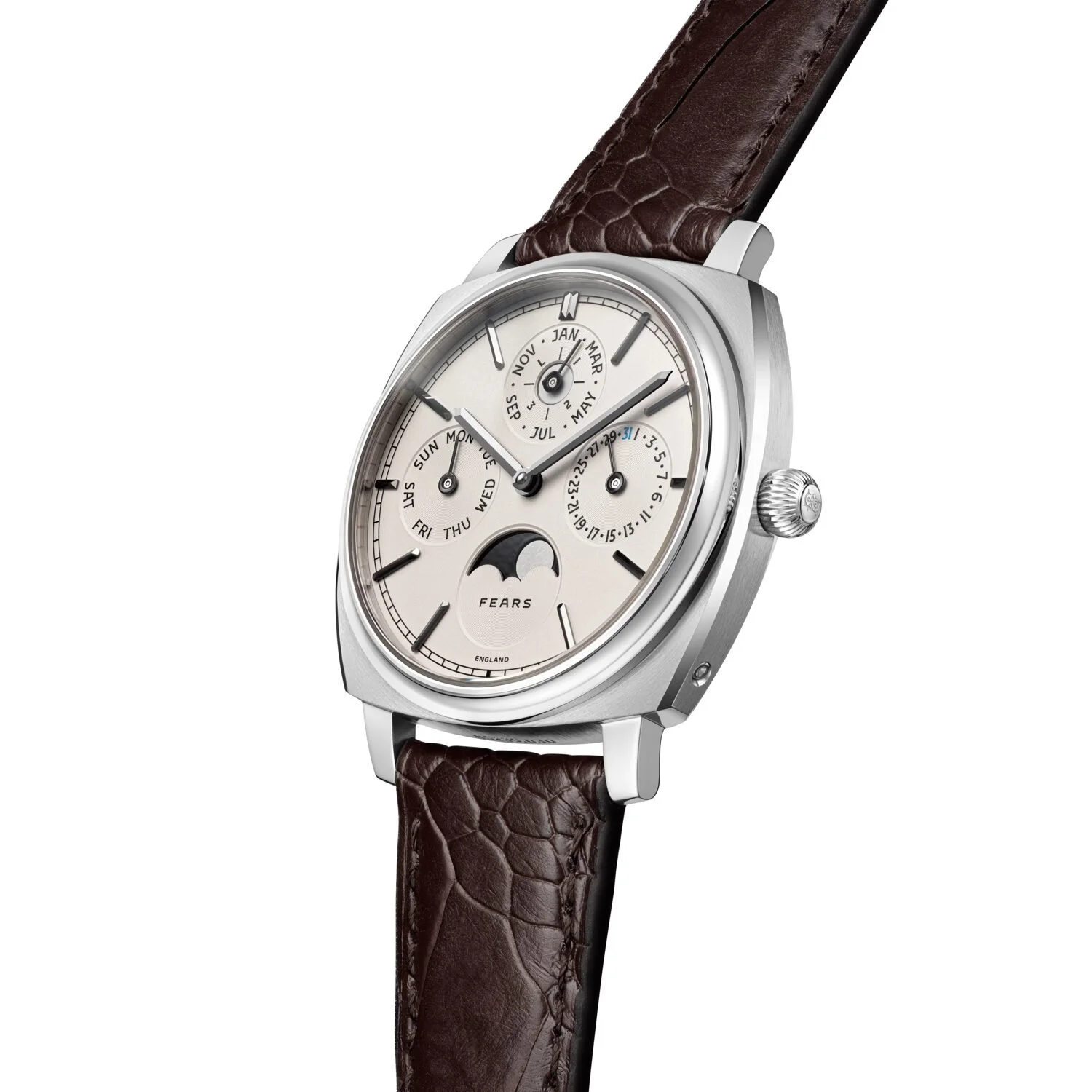
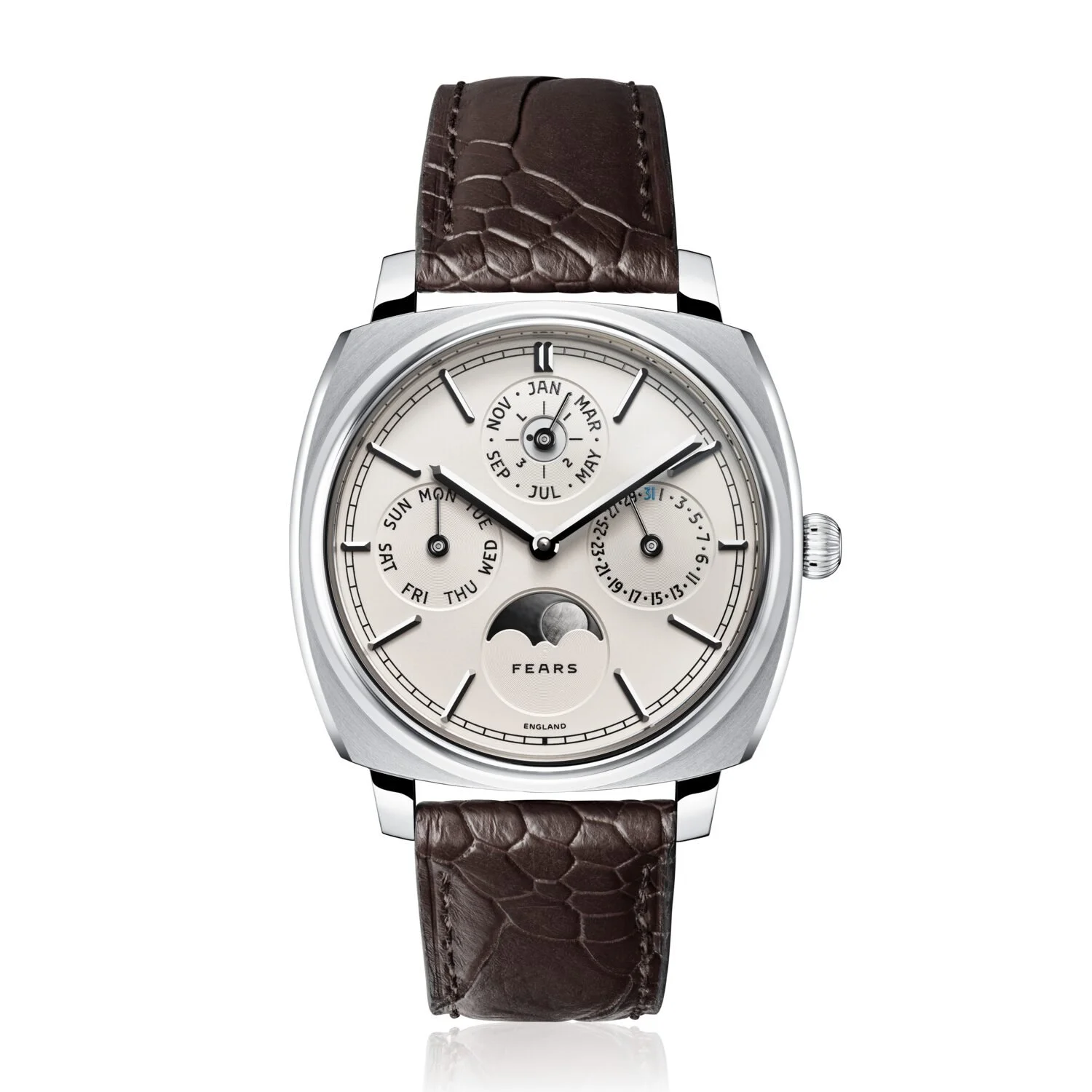
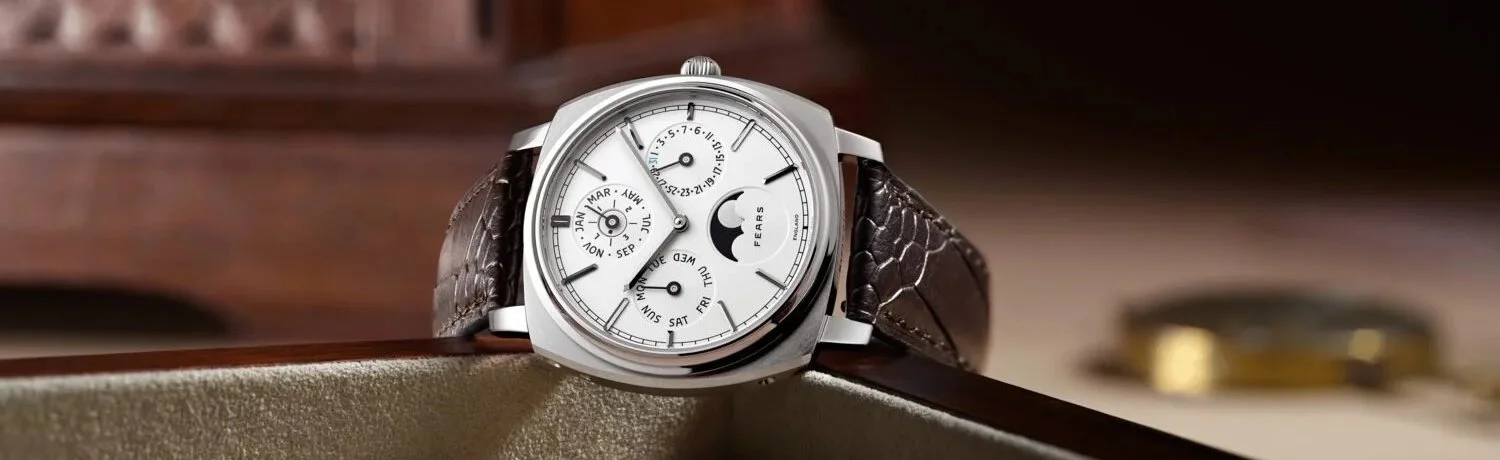
The new Brunswick 39 Perpetual Calendar brings day, date, month, leap year and moonphase indications to the familiar cushion-shaped Brunswick, yet somehow manages to squeeze the lot into a case measuring just 39mm across and, perhaps more impressively, only 9.4mm thick.
And unlike plenty of anniversary watches, this isn't a limited edition. It's joining the permanent Fears collection. That alone tells you quite a lot about where the Bristol brand sees itself going next.
A Very Different Brunswick
At first glance, there's plenty here that still feels unmistakably Fears. The cushion-shaped case, restrained dial and rather British approach to design haven't disappeared simply because there's considerably more mechanical firepower underneath.
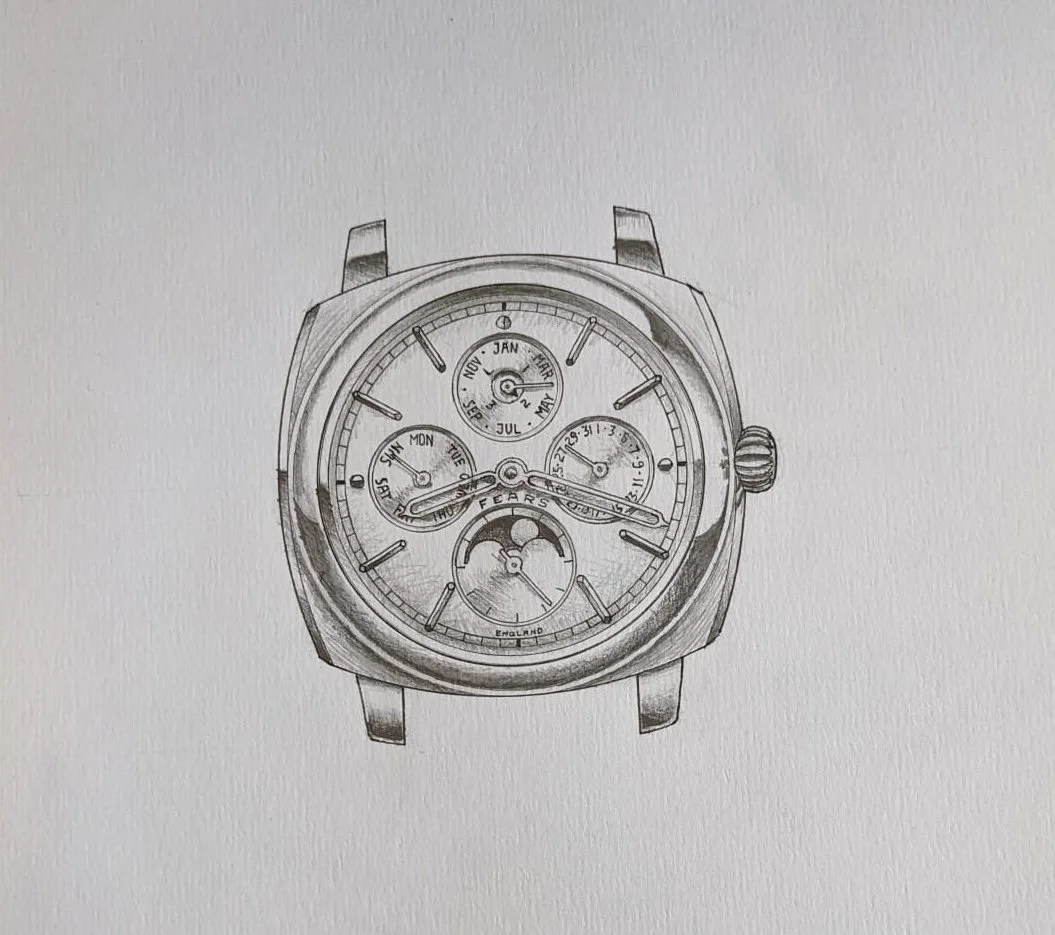
But look closer and this isn't simply an existing Brunswick with a perpetual calendar shoehorned inside. Fears has created a new 39mm Brunswick case architecture for the watch, featuring broad polished bevels together with a concave bezel and caseback. Keeping the thickness down to 9.4mm is quite an achievement too.
Complicated watches have an annoying habit of becoming rather chunky, particularly once you start stacking calendar modules onto automatic movements. Keeping this one below 10mm should preserve much of the elegance that makes the Brunswick work in the first place.
Because however clever the movement might be, a Brunswick still needs to look like a Brunswick.
Silver Mink and a New Set of Numerals
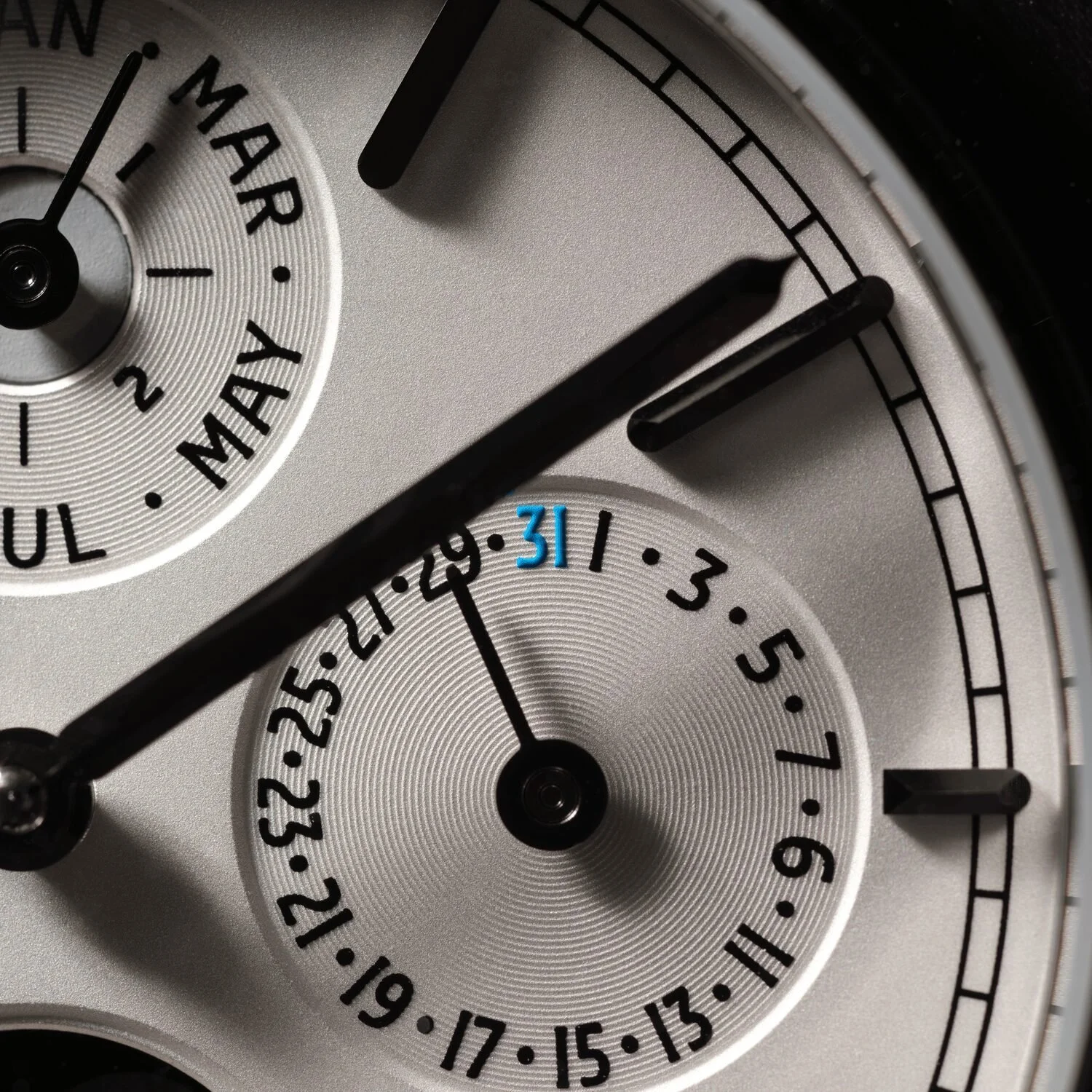
The dial is described by Fears as Silver Mink, with a softly frosted finish providing the backdrop for the various calendar indications.
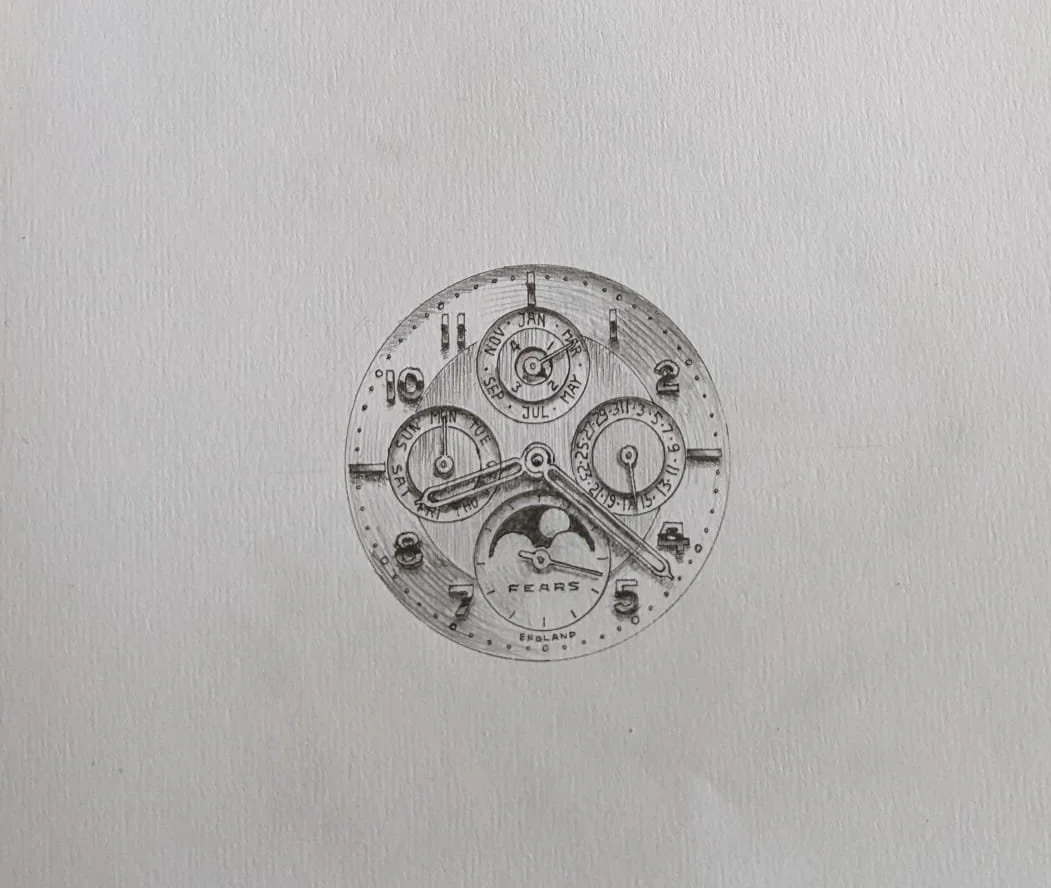
More interestingly, it also introduces a completely new numeral design. Called Bristol numerals, they were created in-house by Fears Senior Design Manager Lee Yuen-Rapati. It's a small detail in the context of everything else happening here, but one I rather like.
When you're producing the most complicated watch in the company's modern history, it would have been very easy to make the complication the entire story. Instead, Fears has taken the opportunity to develop another piece of its visual identity at the same time.
And with a perpetual calendar, there's quite a lot of information to organise.
The watch displays the hours and minutes alongside the day, date, month and leap-year cycle, while the moonphase sits at six o'clock.
That moonphase deserves a closer look. Rather than simply printing a couple of moons onto a disc, Fears uses two silver moons that are individually hand-finished using charbonage, creating a textured surface intended to resemble the moon itself.
It's also the first moonphase Fears has ever produced. Not bad for a complication that could easily have ended up as a small decorative detail at the bottom of the dial.
The Important Bit Is Underneath
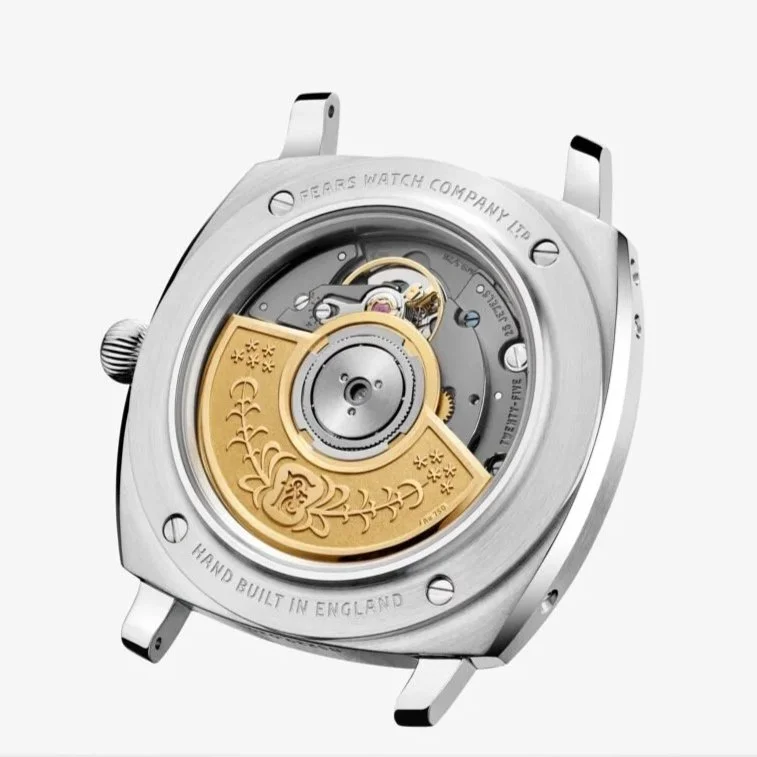
Inside sits the Dubois Dépraz calibre 55115.
It combines a Sellita SW300 automatic base movement with a modified perpetual calendar module from Dubois Dépraz, with the base calibre receiving additional hand finishing. Some will inevitably focus on the fact that this isn't an entirely in-house movement, but I think that slightly misses the point.
Fears isn't pretending to suddenly be a vertically integrated movement manufacture. Instead, it's working with established Swiss specialists to create a complication that represents a huge step beyond anything the company has offered previously.
And it's a proper perpetual calendar.
Once correctly set and kept running, the mechanism automatically accounts for months of different lengths and leap years. In theory, you shouldn't need to manually correct the calendar until 2100, when the Gregorian calendar rather inconveniently decides to skip what would otherwise be a leap year.
So if you're still around to complain about adjusting your Fears in 2100, I think you've probably done rather well. There's another lovely detail visible around the back. Fears has fitted the movement with a custom solid 18ct gold rotor featuring its Bristol Flower design.
Again, it's unnecessary in purely functional terms. Which is precisely why I like it.
Now we get to the interesting part.
The Brunswick 39 Perpetual Calendar costs £26,950 including VAT. That's quite a sentence to write about a Fears.
For context, the familiar Brunswick collection has traditionally occupied a very different part of the market, with current 38mm models sitting around the £3,000 mark. Fears has produced more expensive and exotic pieces before, including precious-metal Brunswicks and the Jump Hour, but £26,950 puts this watch into completely different company.
And I suspect that's going to generate plenty of discussion. But simply comparing it with a standard Brunswick doesn't really tell you much. A perpetual calendar is one of traditional watchmaking's major complications, and the moment you enter that territory the competitive landscape changes dramatically.
The more interesting question is whether collectors are ready to see Fears operating at this level. I think that's precisely why making this a permanent-production watch is significant.
Had Fears produced ten numbered pieces for its 180th anniversary, sold them to existing collectors and moved on, it would have been easy to treat this as a celebratory experiment.
Instead, the Brunswick 39 Perpetual Calendar is joining the core collection. That's a statement.
Ten Years On
It's worth remembering where Fears was when Nicholas Bowman-Scargill revived the family business in 2016.
The modern company has grown carefully rather than trying to jump immediately into haute horlogerie. The Brunswick established the design language, the collection gradually expanded, and watches such as the Jump Hour showed that Fears was prepared to move beyond straightforward time-only pieces.
Now comes the biggest jump yet, and perhaps that's what makes the Brunswick 39 Perpetual Calendar interesting. It's not just Fears making a more complicated watch. It's Fears asking to be considered in a different part of the watchmaking conversation.
The specifications certainly give it a fighting chance. A 39mm case that's only 9.4mm thick, a proper perpetual calendar, moonphase, solid gold rotor and a design that hasn't forgotten where it came from all sound very promising on paper.
Of course, at nearly £27,000, this is also a watch I'd really want to handle before drawing any final conclusions.
At this level, finishing, dial quality, movement operation and how that wonderfully slim case actually feels on the wrist become incredibly important.
But as a statement of intent? This might be the most important watch Fears has made since the company returned ten years ago. Considering Fears has been around, on and off, for 180 years, that's saying something.