
Christopher Ward has been on something of a roll over the last few years. From the Bel Canto and Twelve to the increasingly impressive Lumière, the British brand seems determined to keep pushing itself further up the horological ladder.
But sometimes you don't need another complication or exotic material to make an interesting watch. Sometimes you just need to get the proportions right.
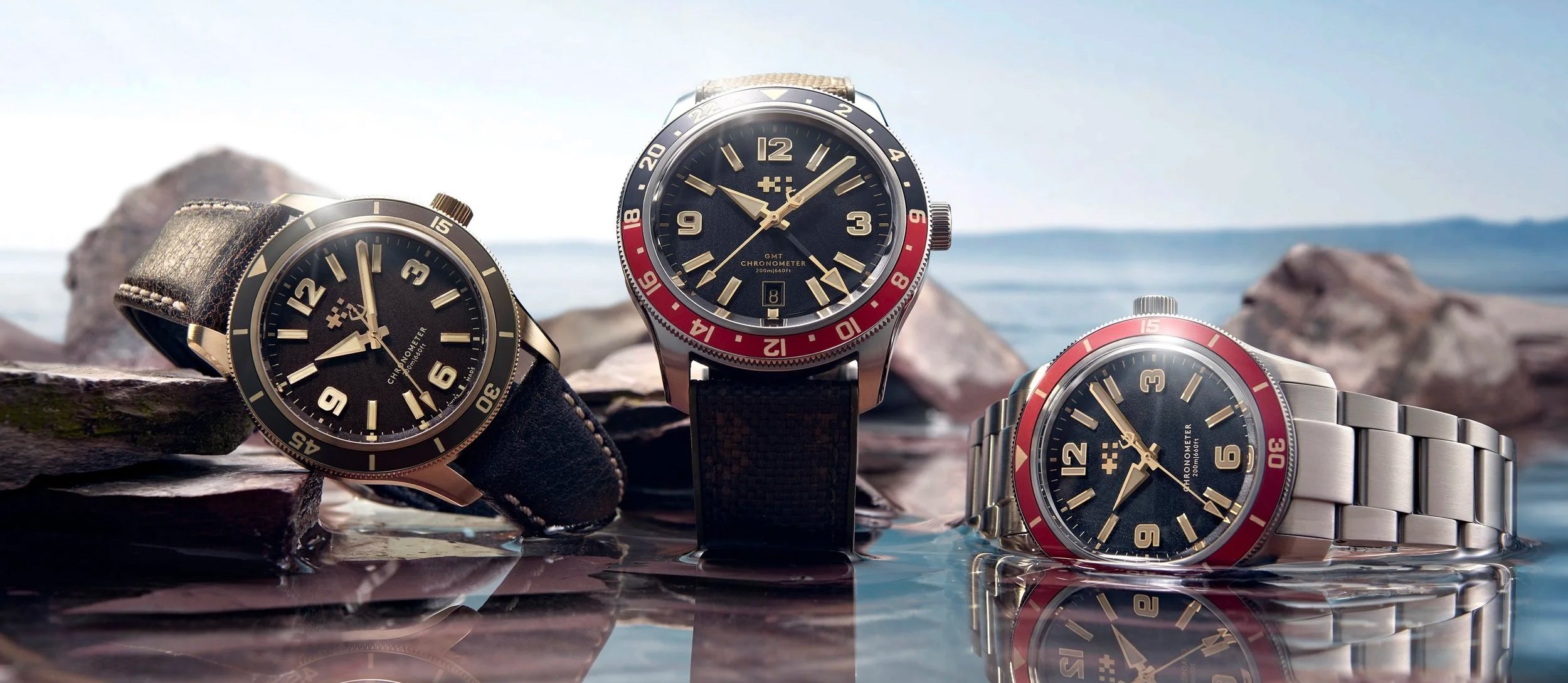
Enter the new Christopher Ward C60 Trident Biscay, an entirely new collection inspired by the skin divers of the 1960s and, for us, potentially one of the most wearable Tridents Christopher Ward has produced.
The Biscay replaces the outgoing C65 Aquitaine and sits alongside the C60 Trident Pro and Reef, bringing a noticeably more vintage inspired character to Christopher Ward's dive watch family.
And rather than launching a single watch, Christopher Ward has gone all in from day one.
There are three versions: Automatic, GMT and Bronze, with the steel models available in both 39mm and 42mm sizes.
So, what exactly is a Biscay?
The name comes from the Bay of Biscay, the rather unpredictable stretch of Atlantic between France and Spain that's famous for powerful currents and its maritime history.
It's an appropriate name because Christopher Ward isn't pitching this as a brightly coloured, sun lounger friendly diver.
The Biscay is supposed to feel a little moodier. Or, as Christopher Ward CEO and co-founder Mike France puts it, “stormy, earthy, rugged, grounded – and gorgeous.” We'll take that.
More importantly, the inspiration comes from the skin divers of the 1960s, which I’m personally a huge fan of. These were generally slimmer and lighter than traditional professional dive watches, designed for the growing popularity of recreational and breath hold diving.
Christopher Ward has taken that basic philosophy and given it the modern Trident treatment, and the dimensions immediately stand out.
C60 Trident Biscay Automatic
The Automatic is probably the purest expression of the new collection. You can choose either a 39mm or 42mm stainless steel Light-catcher case, but whichever size you go for, thickness is just 11mm. That's impressively slim for a 200 metre automatic dive watch.
There's also a box sapphire crystal, which gives the Biscay some of the visual character of vintage acrylic without the scratches and nervous polishing that usually accompany owning the real thing.
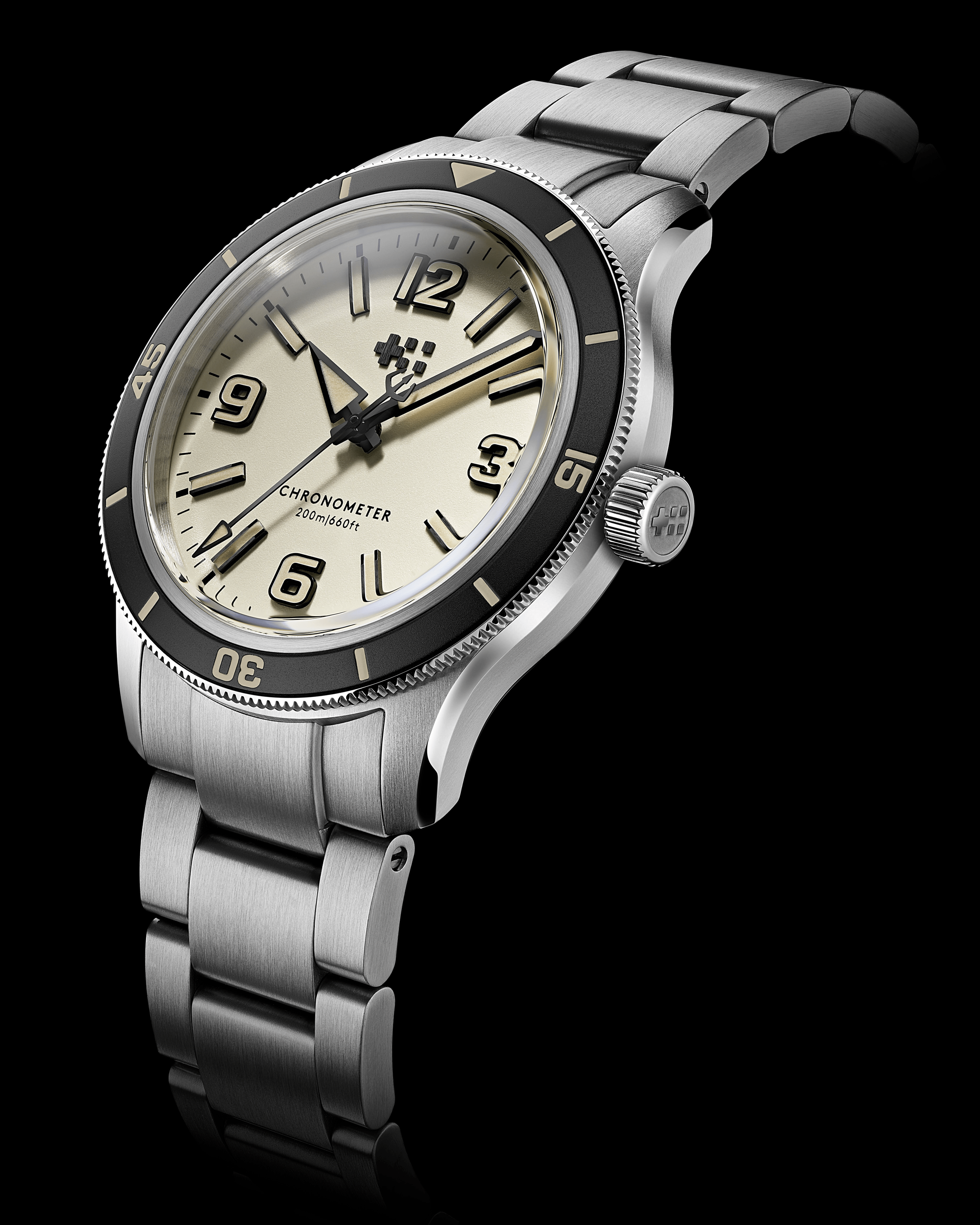
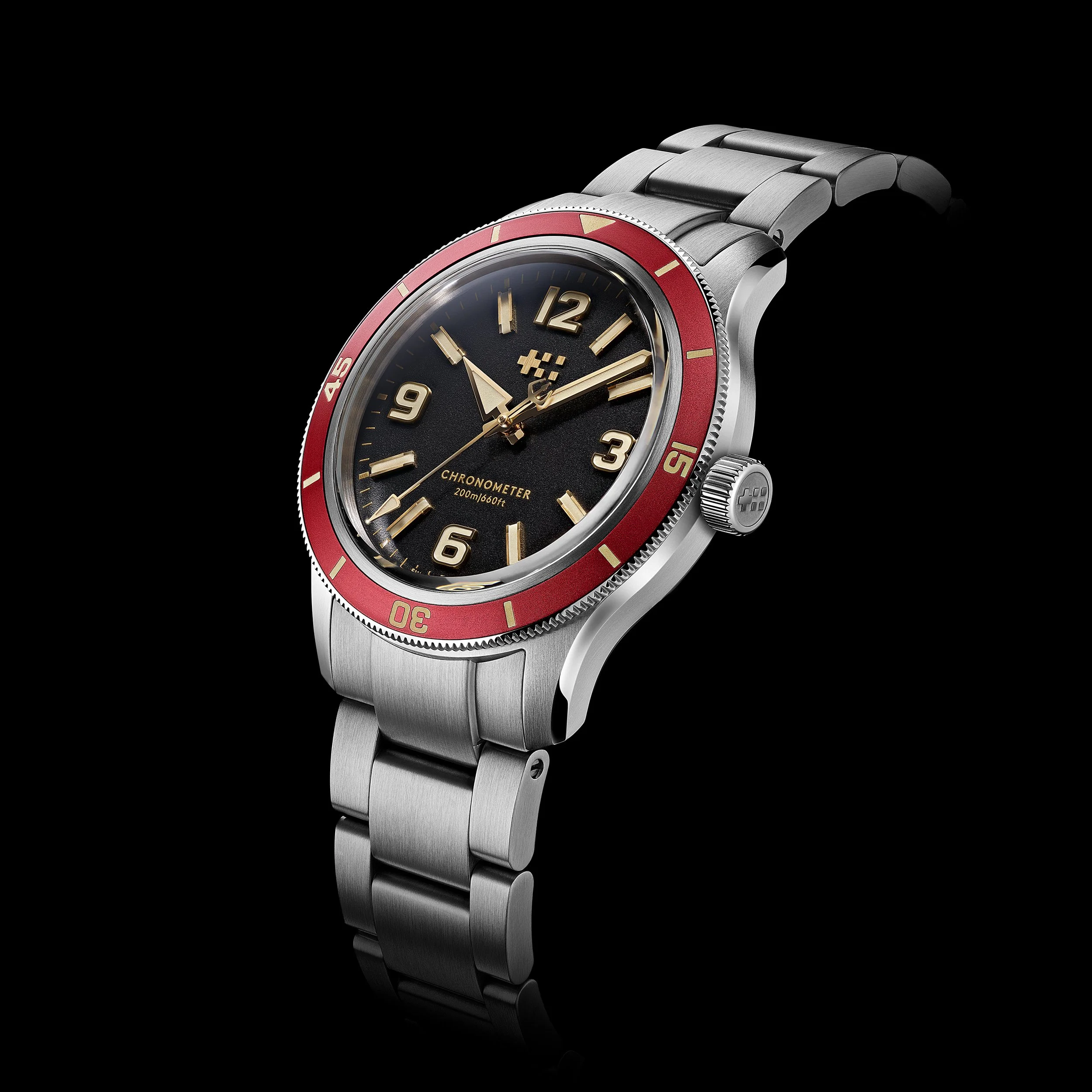
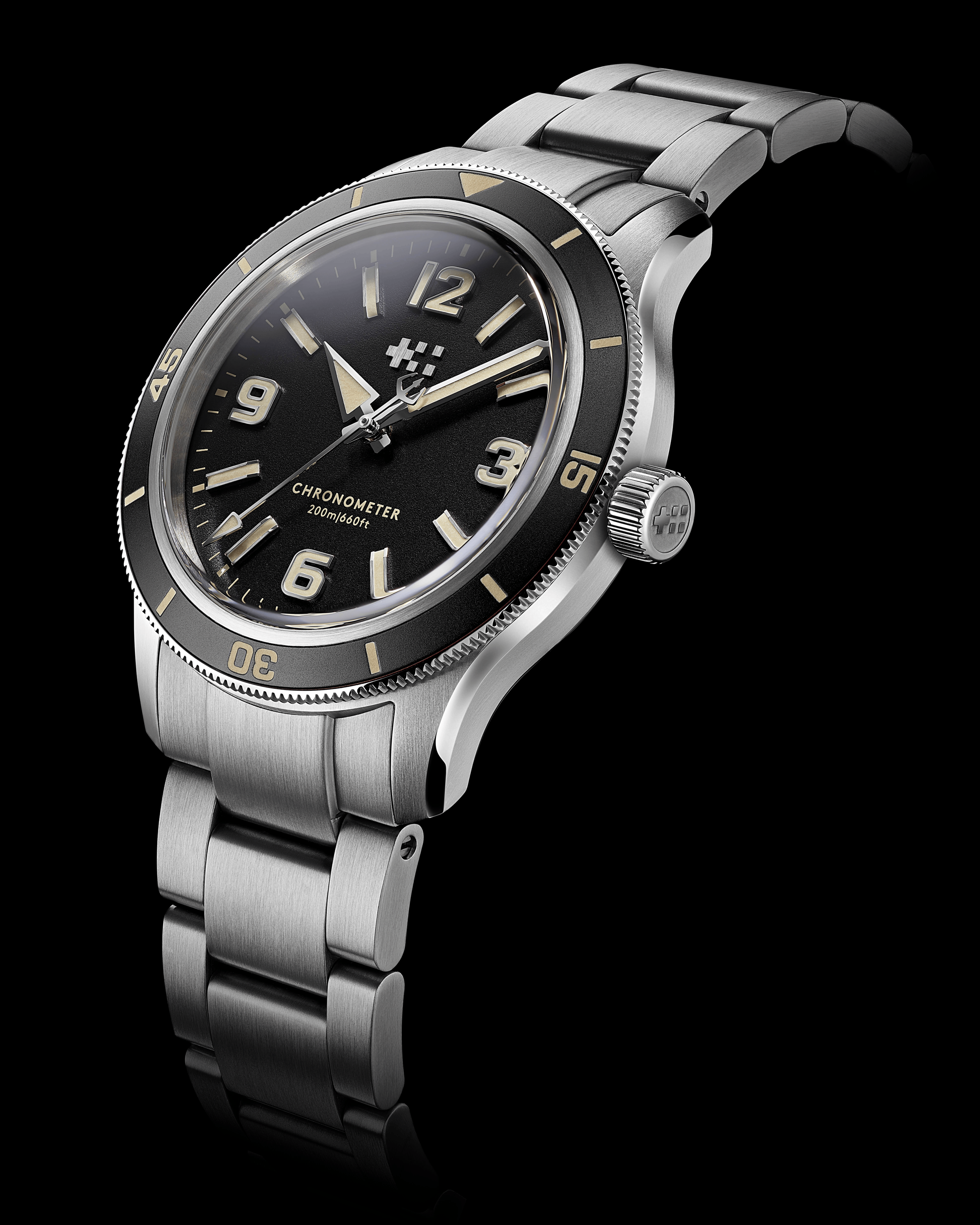
The case itself isn't simply a thinner Trident Pro either. Christopher Ward designer Matthew Sweatman says its shape is actually closer to the Lumière, with smoother transitions between the polished and brushed surfaces.
Up front, things get considerably more retro. The granular dial uses large applied Arabic numerals at 3, 6, 9 and 12, accompanied by baton markers and diamond cut hands.
Christopher Ward has even developed a custom coloured Super-LumiNova Grade X1 BL designed to recreate the warm appearance of aged radium.
Faux patina can be a dangerous game. Get it wrong and it can look like somebody has attacked the dial with a tea bag. Here, though, it makes sense within the wider skin diver aesthetic. There's also a newly designed bezel with a more intricate tooth profile, giving the watch another small point of difference from the regular Trident.
A proper movement upgrade
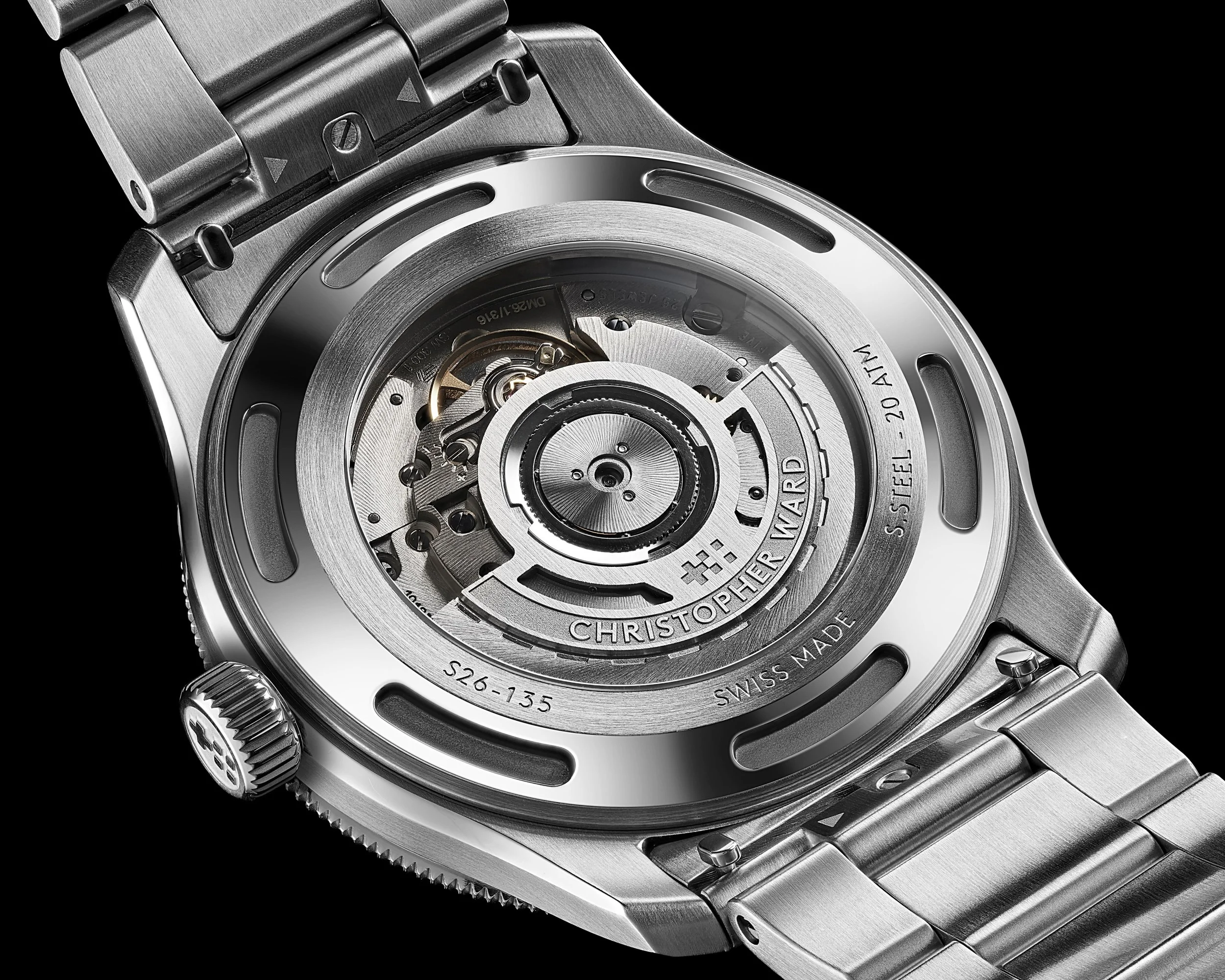
Perhaps the biggest news is inside.
Rather than the SW200 found in many Christopher Ward watches around this level, the Biscay Automatic uses the COSC certified Sellita SW300-1.
It runs at 4Hz, delivers 56 hours of power reserve and is regulated to COSC's stated tolerance of minus four to plus six seconds per day.
The SW300 is also a slimmer movement than the SW200, which helps explain how Christopher Ward has managed to keep the Biscay at just 11mm thick.
Better still, you can actually see it.
The exhibition caseback reveals a newly designed rotor and elaboré finishing, which is a welcome touch on a watch at this price. Water resistance remains a thoroughly useful 200 metres.
Prices for the Automatic start at £1,330 on either the Hybrid or Vintage Oak leather strap, rising to £1,495 on the Bader bracelet and £1,535 on the Consort.
C60 Trident Biscay GMT
Then there's the GMT.
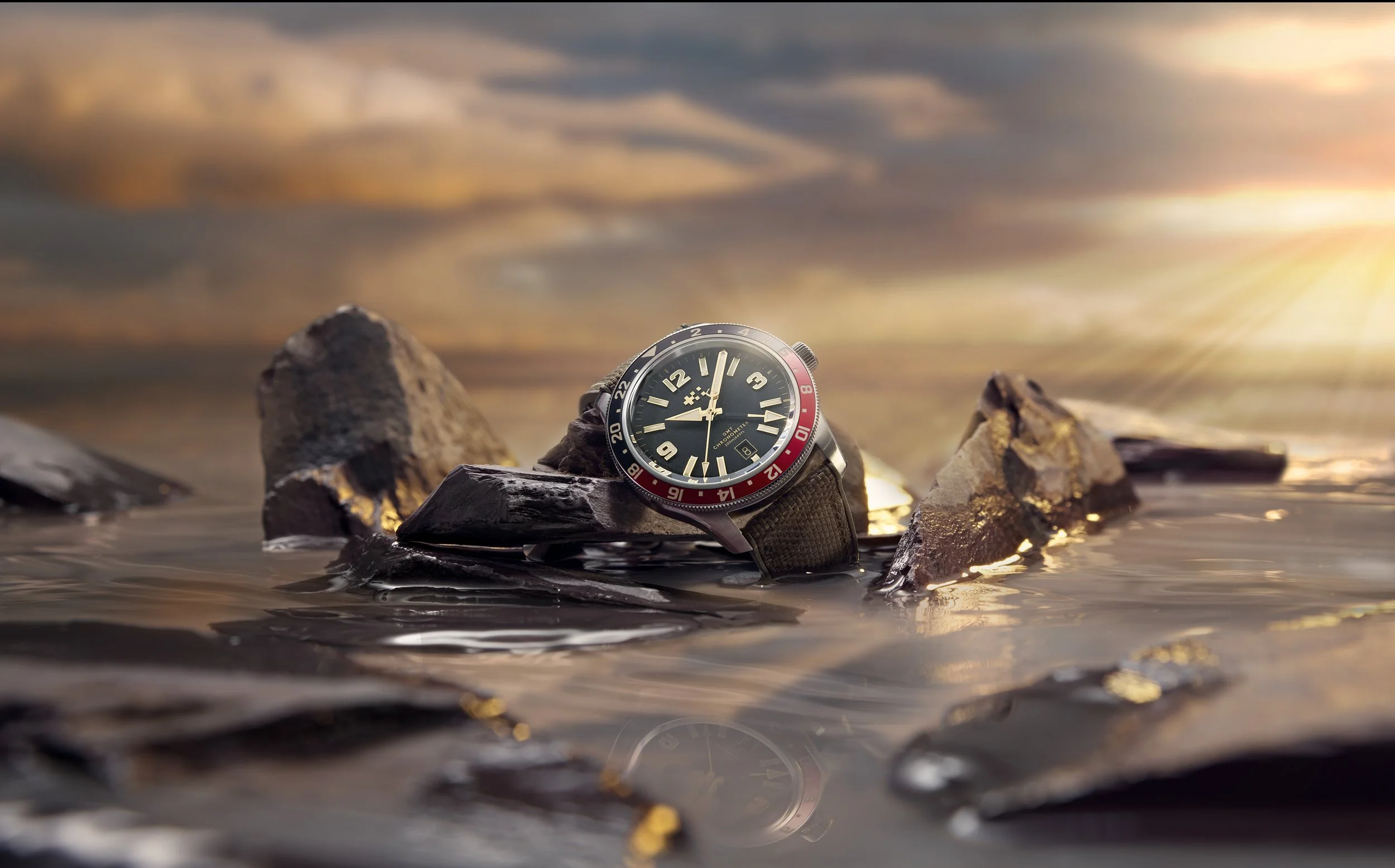
Again available in 39mm and 42mm, the GMT increases thickness slightly to 12mm and introduces a fourth hand alongside a bidirectional two tone aluminium 24 hour bezel, and yes, aluminium.
That might initially sound like a step backwards in an era where ceramic bezels are almost expected, but it fits the vintage character of the Biscay considerably better. Christopher Ward hasn't simply left the aluminium untreated either.
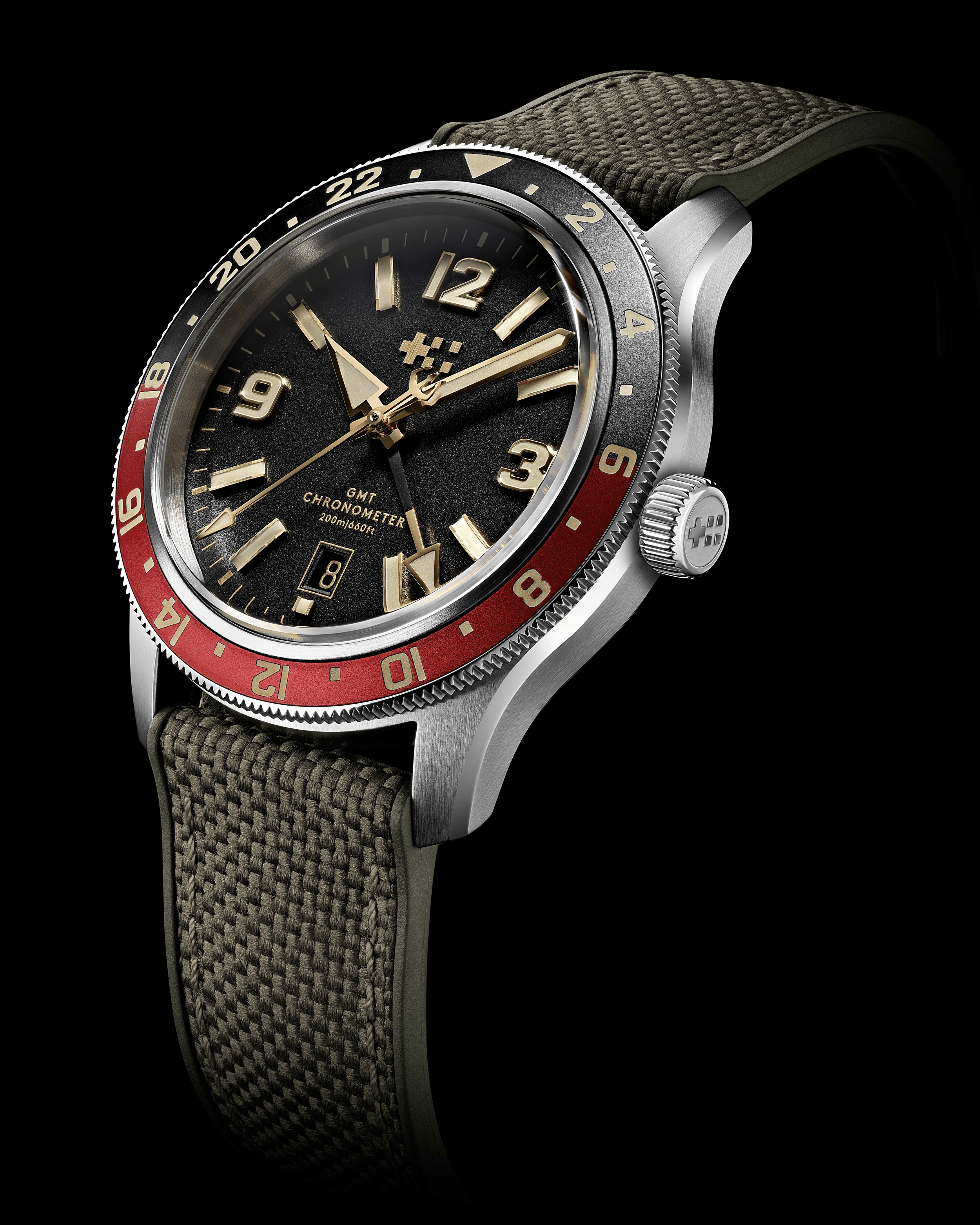
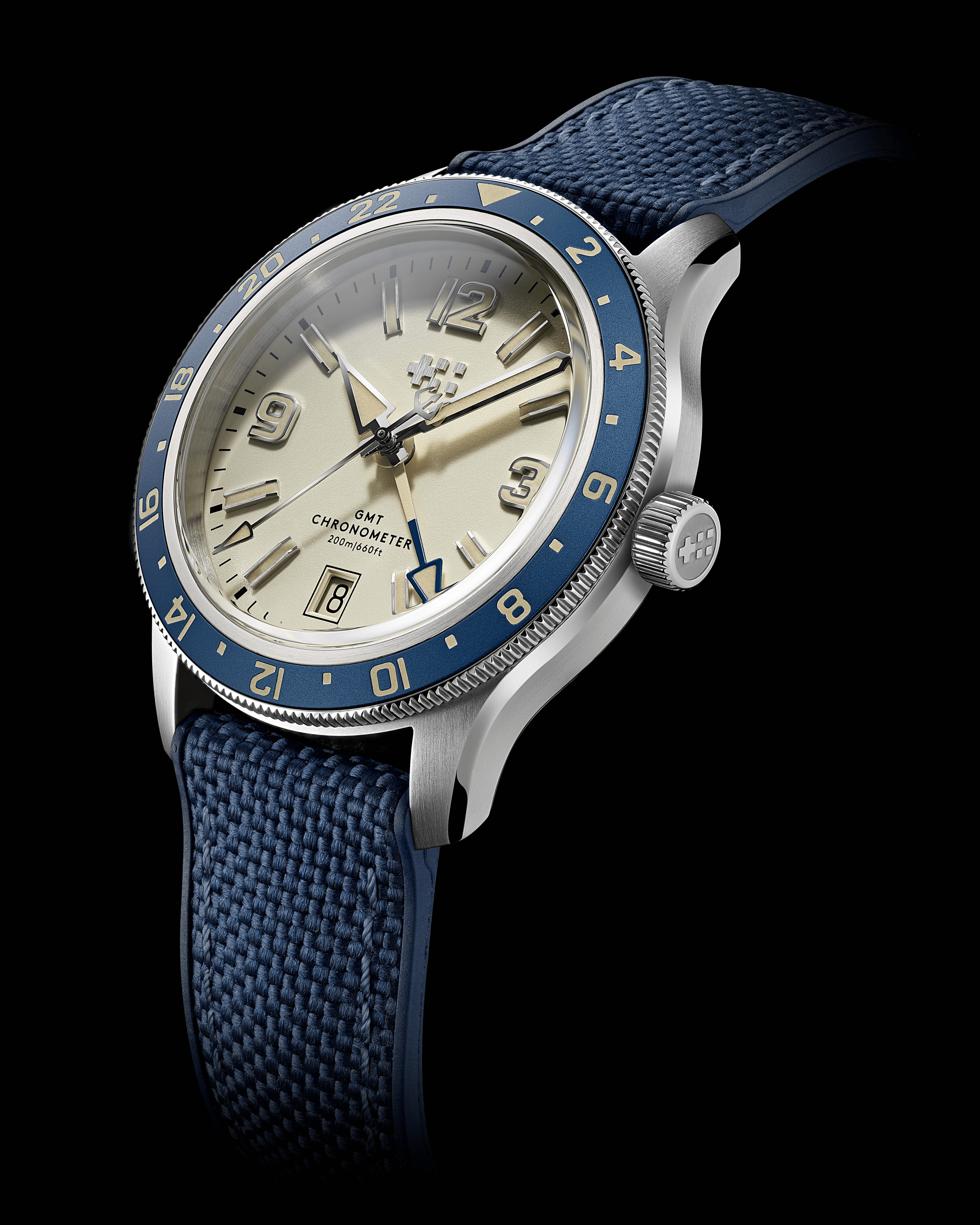
The bezel is surface hardened to 250HV, which the company says makes it 67 per cent harder than untreated aluminium. More importantly, the numerals and dots across the bezel are luminous rather than just the 12 o'clock marker.
Inside is another COSC certified Sellita, this time the SW330-2, providing 56 hours of power reserve and caller GMT functionality.
Prices start at £1,430 on the Hybrid or Vintage Oak straps, £1,595 on the Bader and £1,635 on the Consort bracelet.
For an extra £100 over the Automatic, that could make the GMT the sweet spot of the range.
And then there's the Bronze
This might be the most interesting Biscay of the lot.
Unlike the steel models, the C60 Trident Biscay Bronze is exclusively 39mm, which already sounds like a rather nice combination with the vintage skin diver styling.
But the clever bit is the material itself. Christopher Ward has moved away from the CuSn6 bronze commonly used in watches and adopted a marine grade aluminium bronze known as CuAl10Ni5Fe4. (how that roll of the tongue).
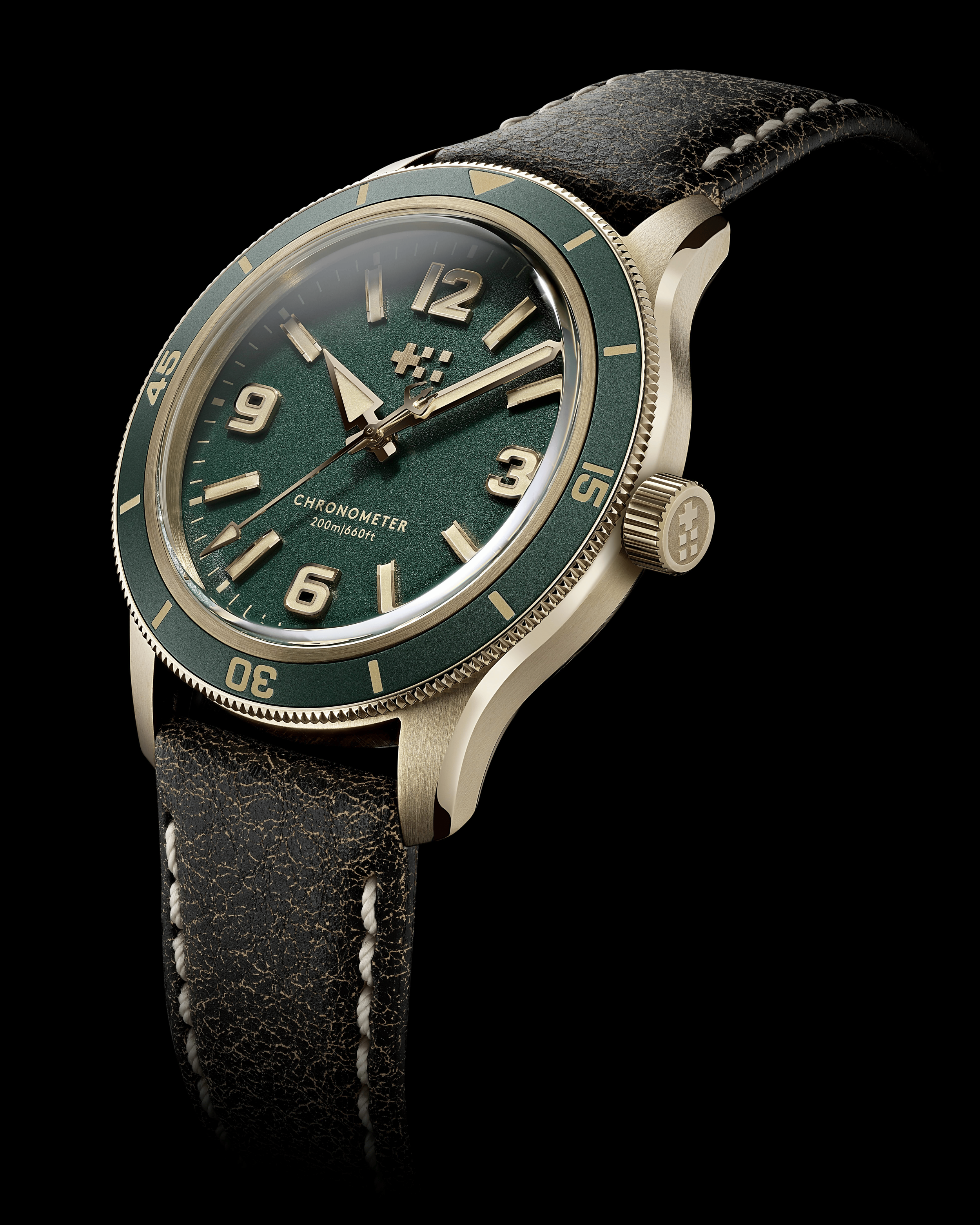
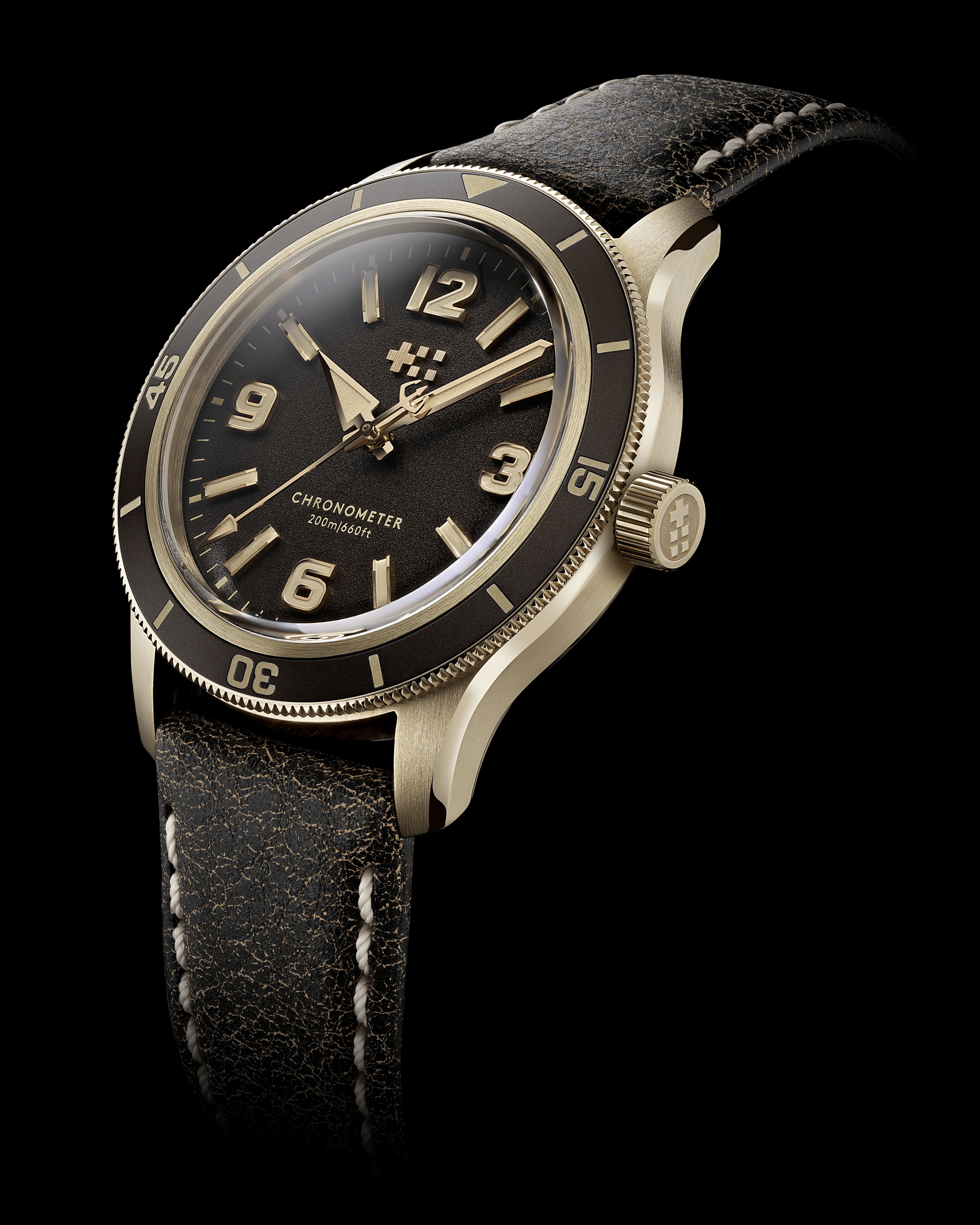
It contains approximately 10 per cent aluminium, 5 per cent nickel and 4 per cent iron and is used in marine engineering because of its resistance to seawater corrosion, wear and erosion.
The practical benefit is that it should patinate more slowly and evenly than conventional bronze while retaining its brighter, slightly more golden appearance for longer.
Bronze watches look fantastic when new, but we've seen plenty where the novelty of developing a unique patina eventually becomes the novelty of wondering why your expensive watch looks like an old penny. This potentially gives owners the character of bronze without quite such an aggressive transformation.
The Bronze retains the 11mm thickness, box sapphire, 200 metre water resistance and COSC SW300-1 movement of the steel Automatic. Rose gold plated hands complete the warmer look.
Prices start at £1,495, with the Bronze offered on either the Hybrid or Vintage Oak leather strap.
New bracelets and straps
Christopher Ward has also used the Biscay to update what holds the watch on your wrist.
There's a redesigned Hybrid strap combining rubber with a Cordura style texture. Importantly, it now tapers considerably more aggressively, from 20mm or 22mm at the lugs down to 16mm at the clasp.
There's also a Vintage Oak leather option for those wanting to lean fully into the mid century aesthetic.
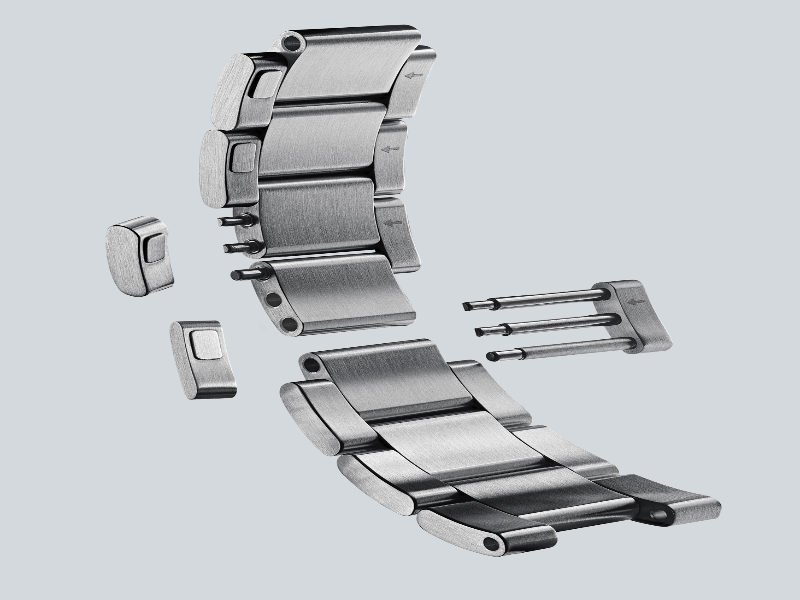
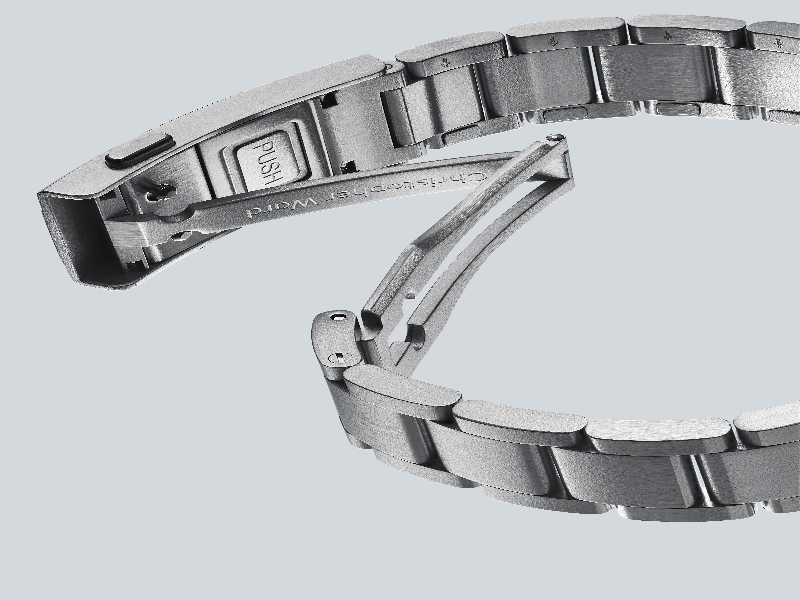
The steel watches can be ordered on either Christopher Ward's Bader or Consort bracelets, both now equipped with the brand's iLink tool free resizing system.
Individual links can be released using small push buttons, meaning there's no need to hunt around the house for a screwdriver while desperately trying not to scratch your brand new bracelet.
It's the sort of feature you don't necessarily think you need until you've used it.
Watch Brothers thoughts
There's quite a lot to like here.
The Trident has been central to Christopher Ward for years, but the wider collection was beginning to cover so much ground that some clearer separation between the models makes sense.
The Pro is the modern all rounder. The Lumière is the technical flagship. The Reef brings the colour.
And now the Biscay gives Christopher Ward a proper retro diver again.
More importantly, it doesn't feel like they've simply taken a Trident and added some beige lume.
The slimmer cases, box sapphire, granular dial, oversized applied numerals and aluminium bezel all contribute to the skin diver character, while the SW300 movement and COSC certification ensure the vintage influence stops firmly at the aesthetics.
The 39mm Automatic is probably where we'd start. At 11mm thick with 200 metres of water resistance, a COSC SW300 and that cleaner no date dial, the proportions sound pretty spot on.
But the Bronze could be the sleeper of the collection.
Using marine grade aluminium bronze feels like exactly the sort of nerdy engineering decision we enjoy seeing from Christopher Ward. It solves a genuine issue with conventional bronze while giving the watch another point of difference.
And then there's the price.
At £1,330 for the Automatic and £1,430 for the GMT, these aren't inexpensive watches anymore. Christopher Ward has moved a long way from its early days of simply undercutting the established Swiss brands.
But the specification has moved with it.
COSC movements, 200 metre water resistance, 11mm and 12mm cases, strong finishing and increasingly sophisticated bracelets make the Biscay a pretty compelling package.
The bigger question is whether Christopher Ward buyers are ready for the brand to live comfortably in this price territory. Judging by what the company has been producing lately, we suspect plenty will be.
The Biscay doesn't reinvent the dive watch. Thankfully, Christopher Ward isn't pretending it does.
Instead, it's taken one of the most appealing dive watch formats of the 1960s, added modern materials and movements, and wrapped the whole thing in the increasingly confident design language of the Trident.
Sometimes getting the proportions right really is enough.