
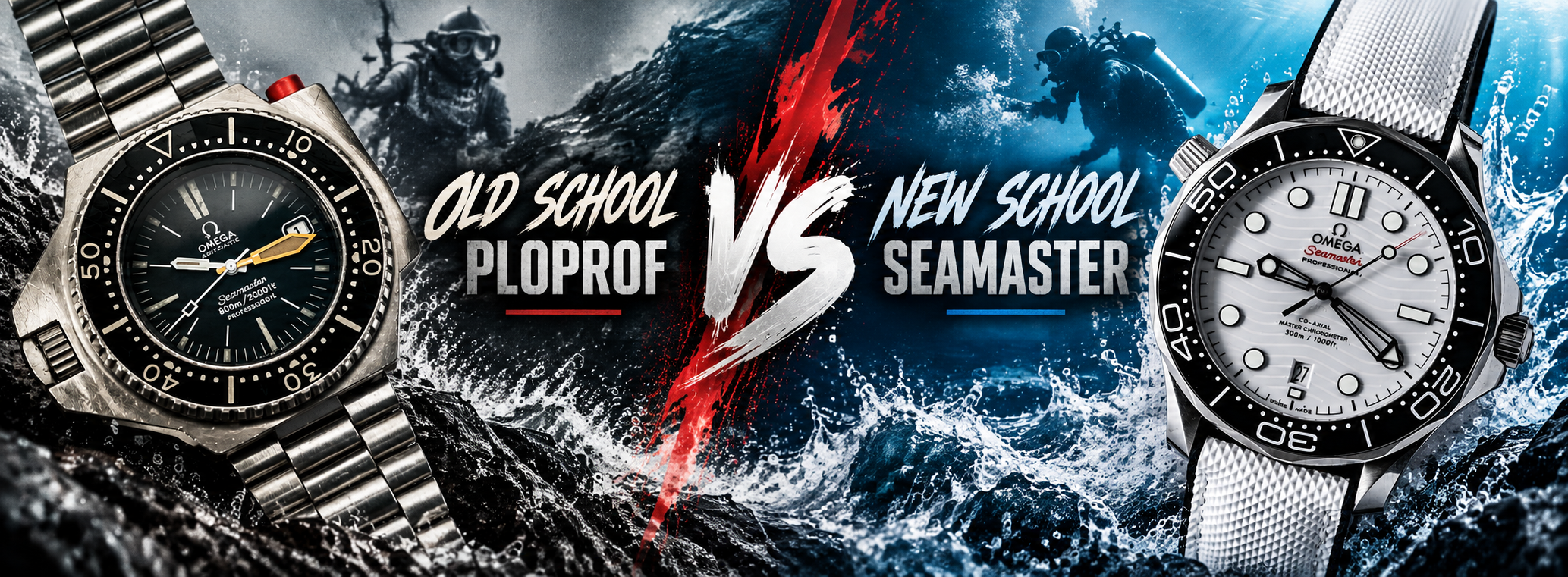
There are dive watches, and then there are watches that look as though they might actually survive being fired from a torpedo tube.
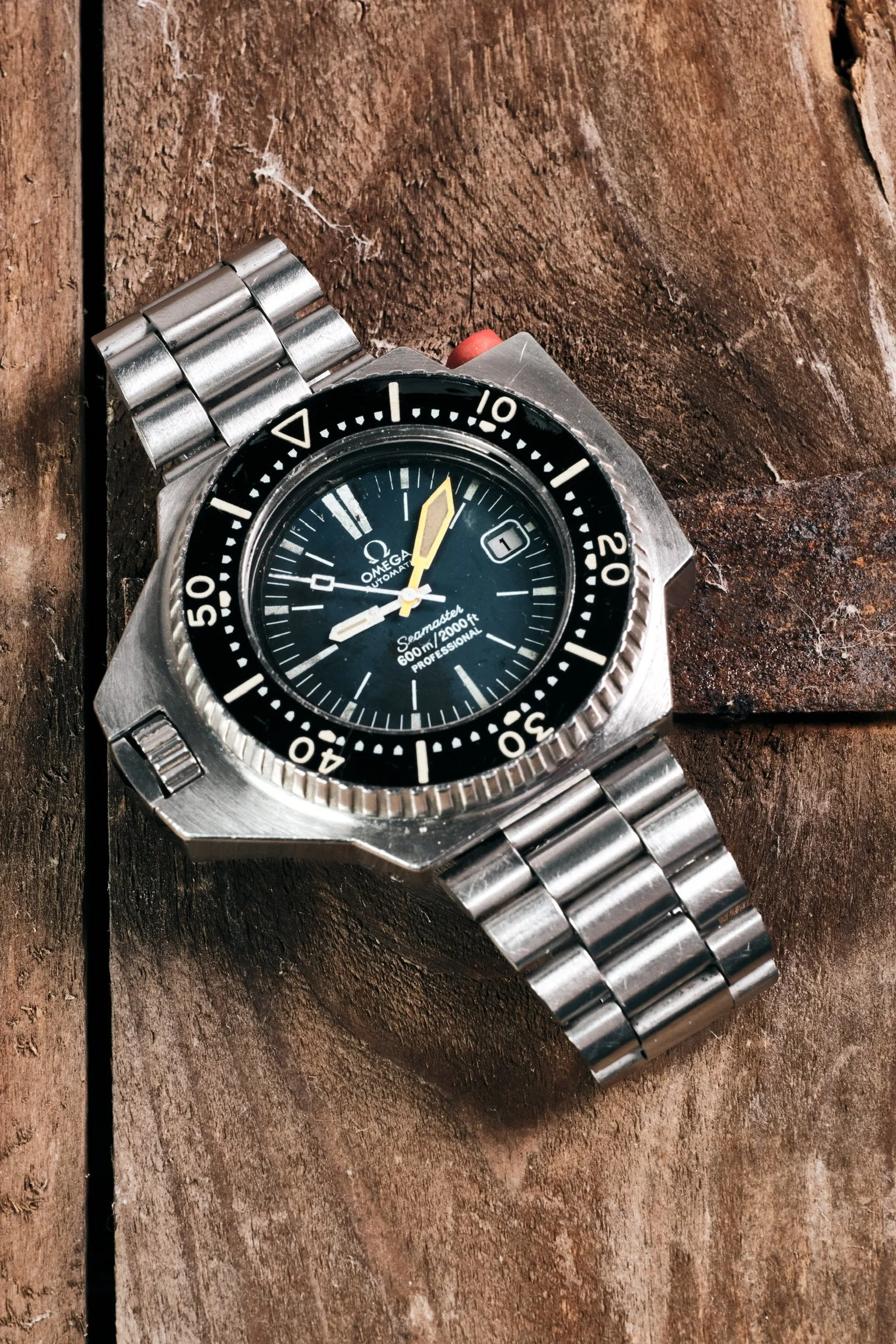
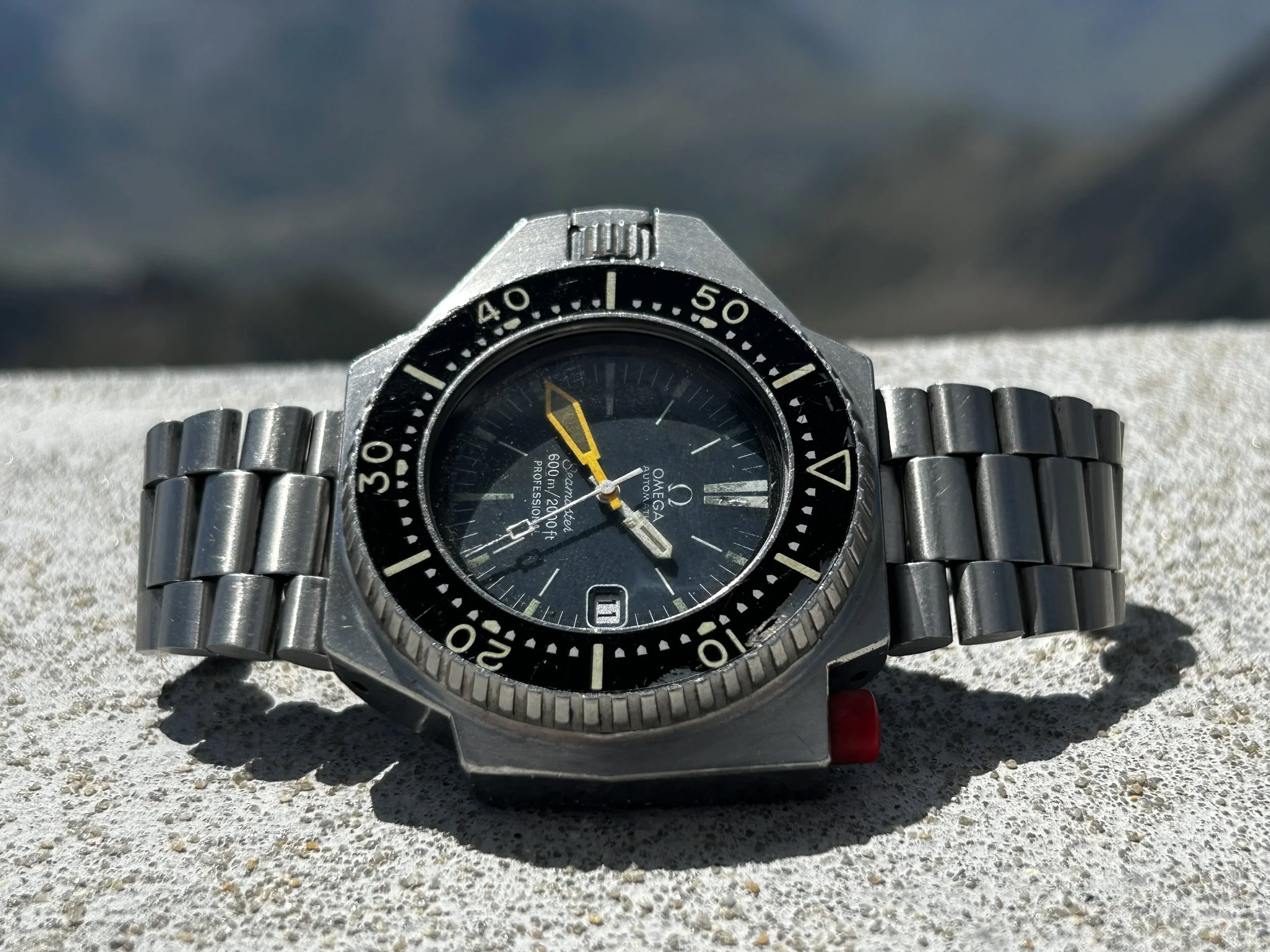
My vintage Omega Seamaster 600 Ploprof ref. 166.077 very definitely belongs in the latter camp.
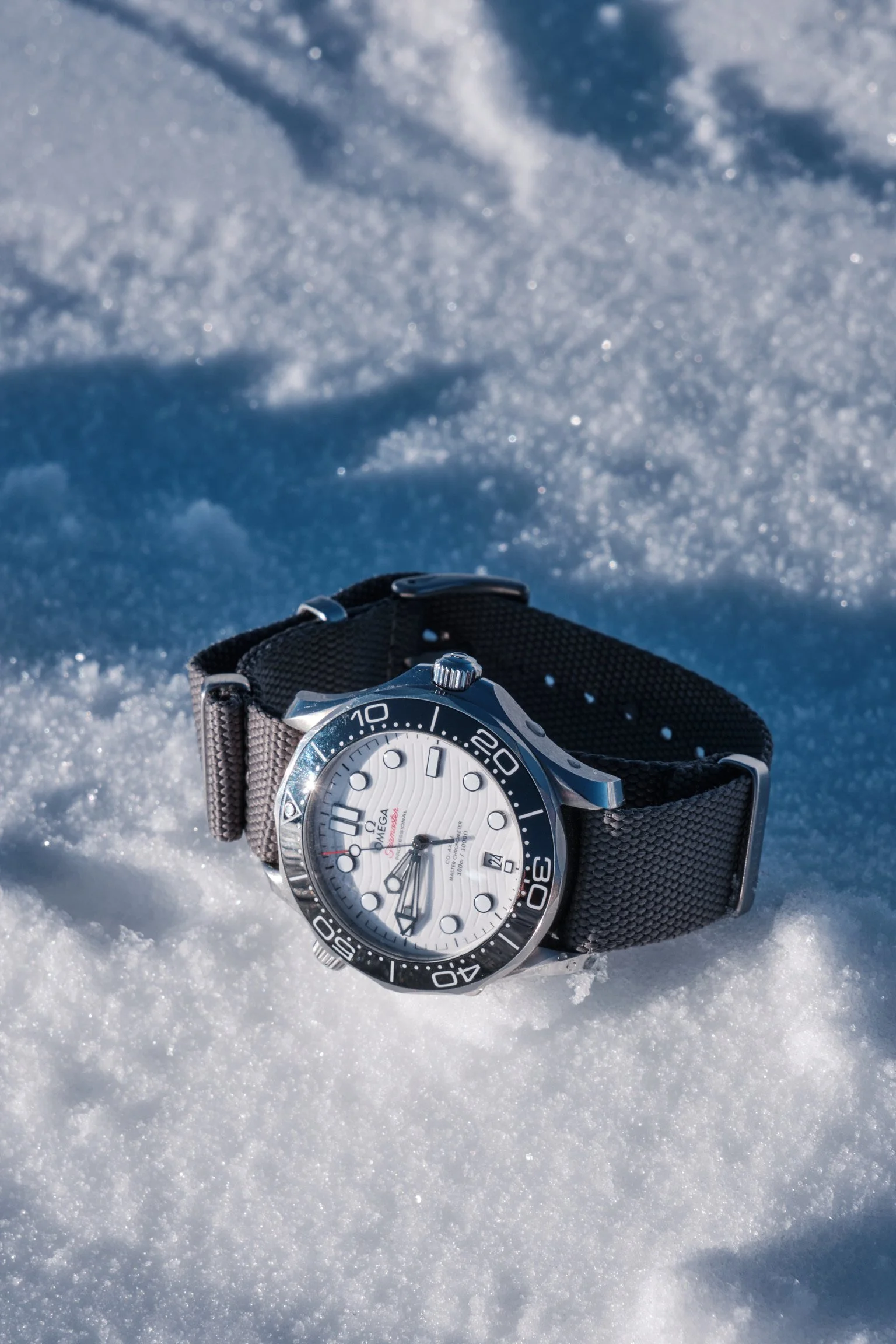
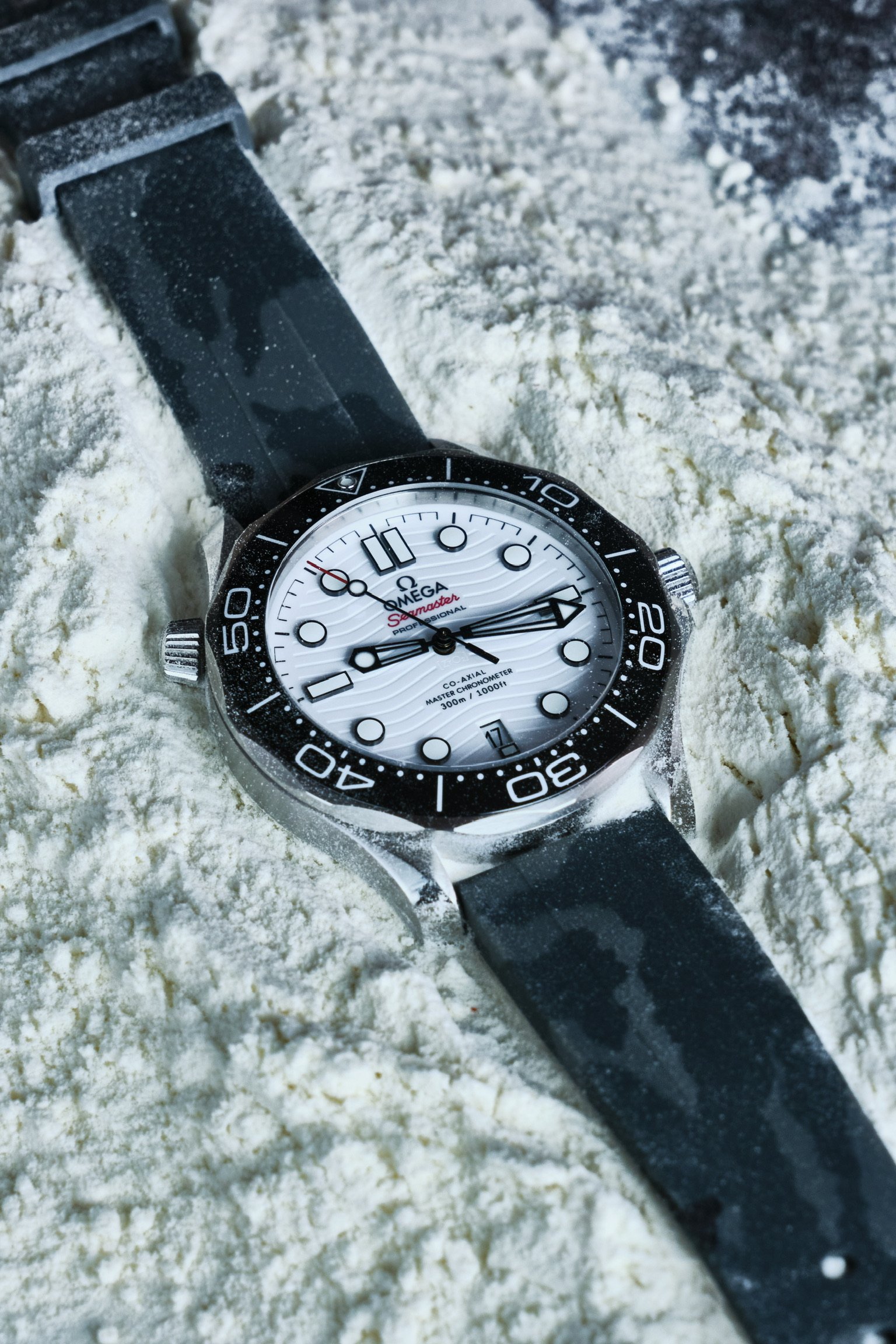
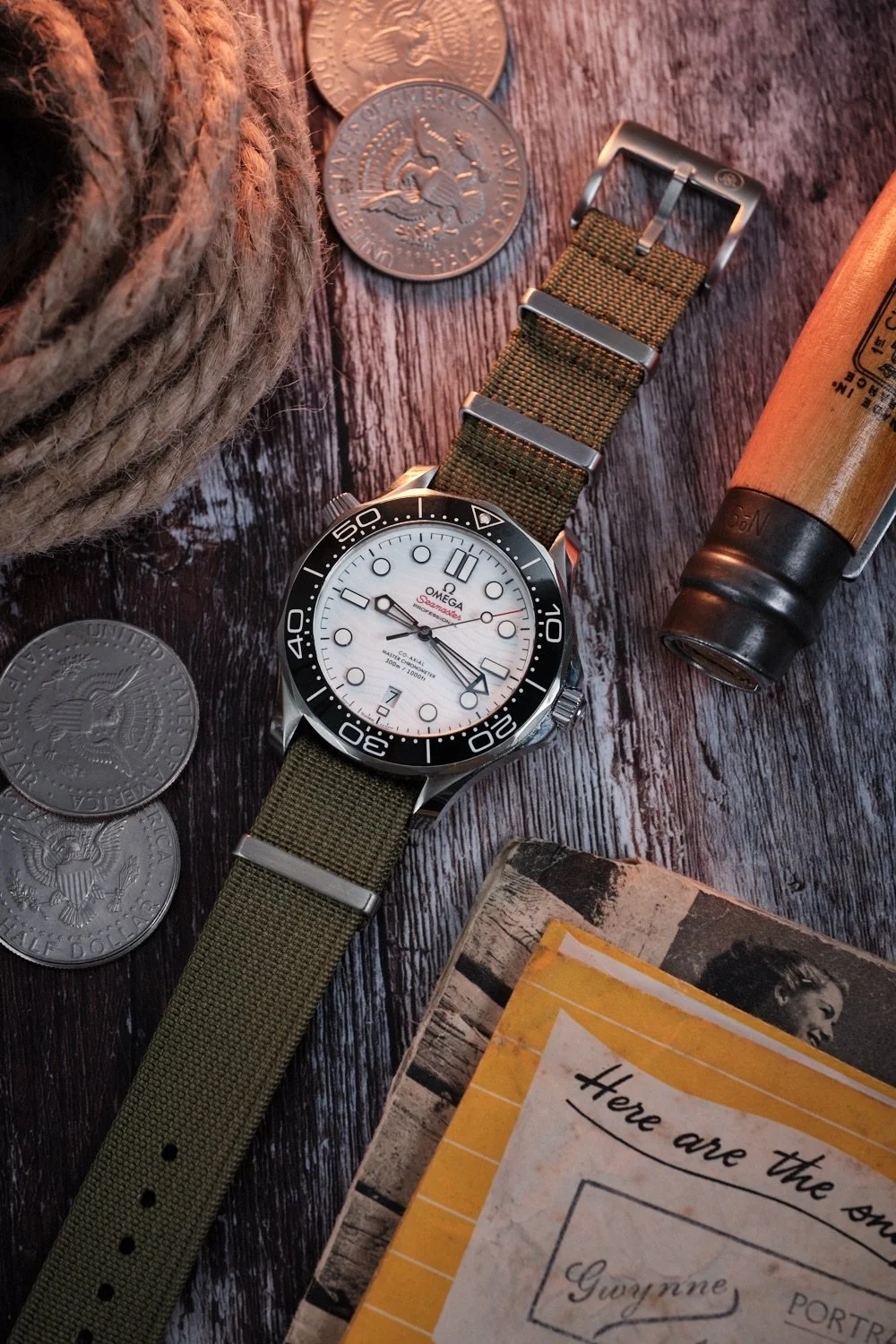
Sitting alongside it is Mark’s considerably newer Omega Seamaster Diver 300M with its crisp white ceramic dial. Both carry the Seamaster name. Both were designed to go underwater. Both are unmistakably Omega. And yet, put them side by side and you could quite easily believe they came from entirely different manufacturers.
In some respects, they almost did.
The Ploprof comes from an Omega obsessed with solving the problems faced by professional divers. The modern Diver 300M comes from an Omega that has spent decades refining the dive watch into something that needs to work just as convincingly with a wetsuit as it does with a T-shirt and jeans.
So which is better? Mark and I have one each. There was only one sensible thing to do.
Put them head-to-head.
Two Seamasters, Two Different Eras
The Seamaster 600 ref. 166.077 emerged from Omega’s work on professional diving watches during the late 1960s and early 1970s. Rather than adapting an existing watch, Omega approached the problem as an engineering exercise, developing a highly specialised diving instrument around a monobloc case. The Seamaster 600 was publicly announced for retail in 1971, although its development stretched back several years before that.
“Ploprof” comes from Plongeur Professionnel, or professional diver, and that tells you almost everything you need to know about the philosophy behind it.
This wasn't really intended to be a luxury watch that happened to be capable of diving. It was a diving instrument that happened to have Omega written on the dial.
And it looks like one.
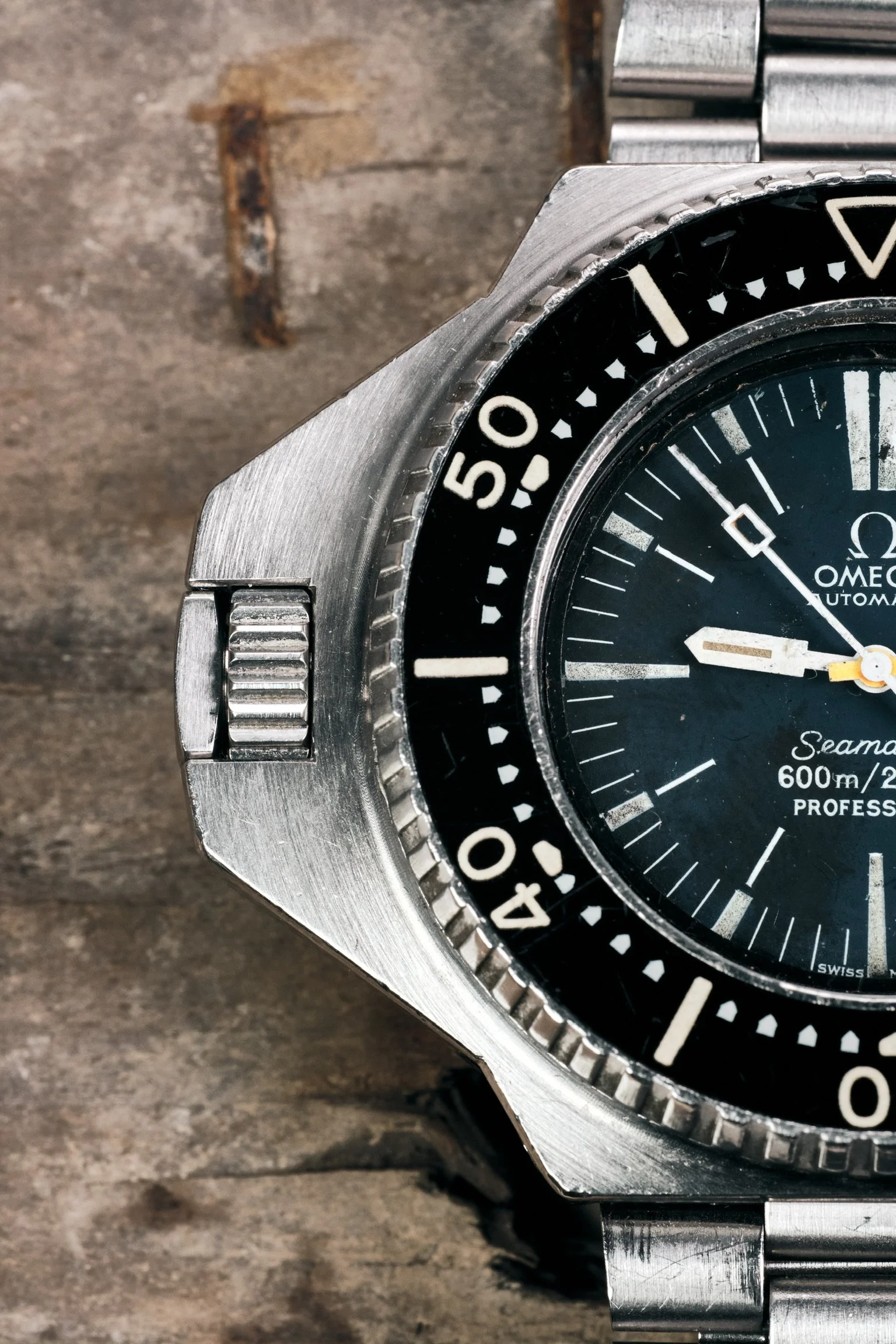
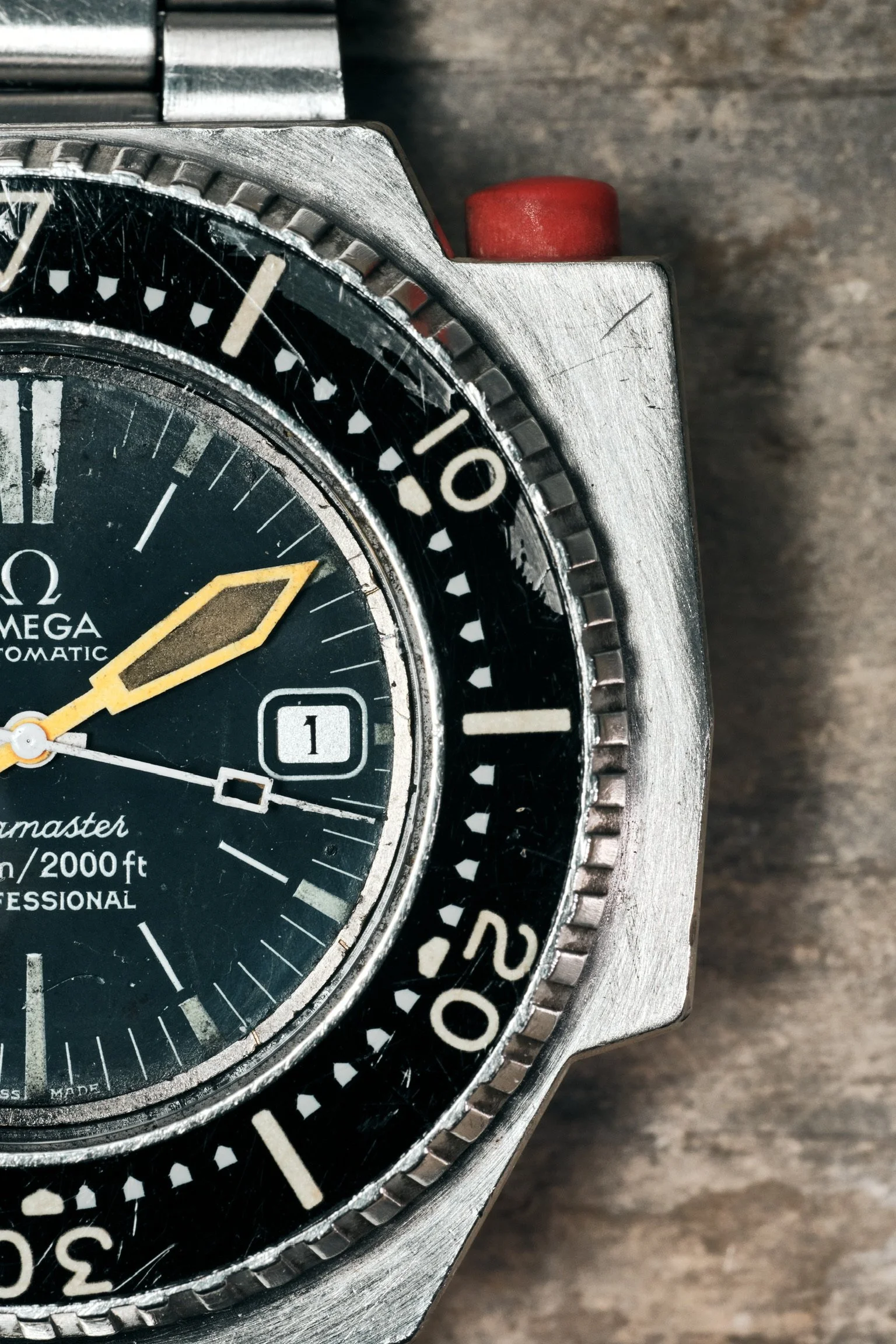
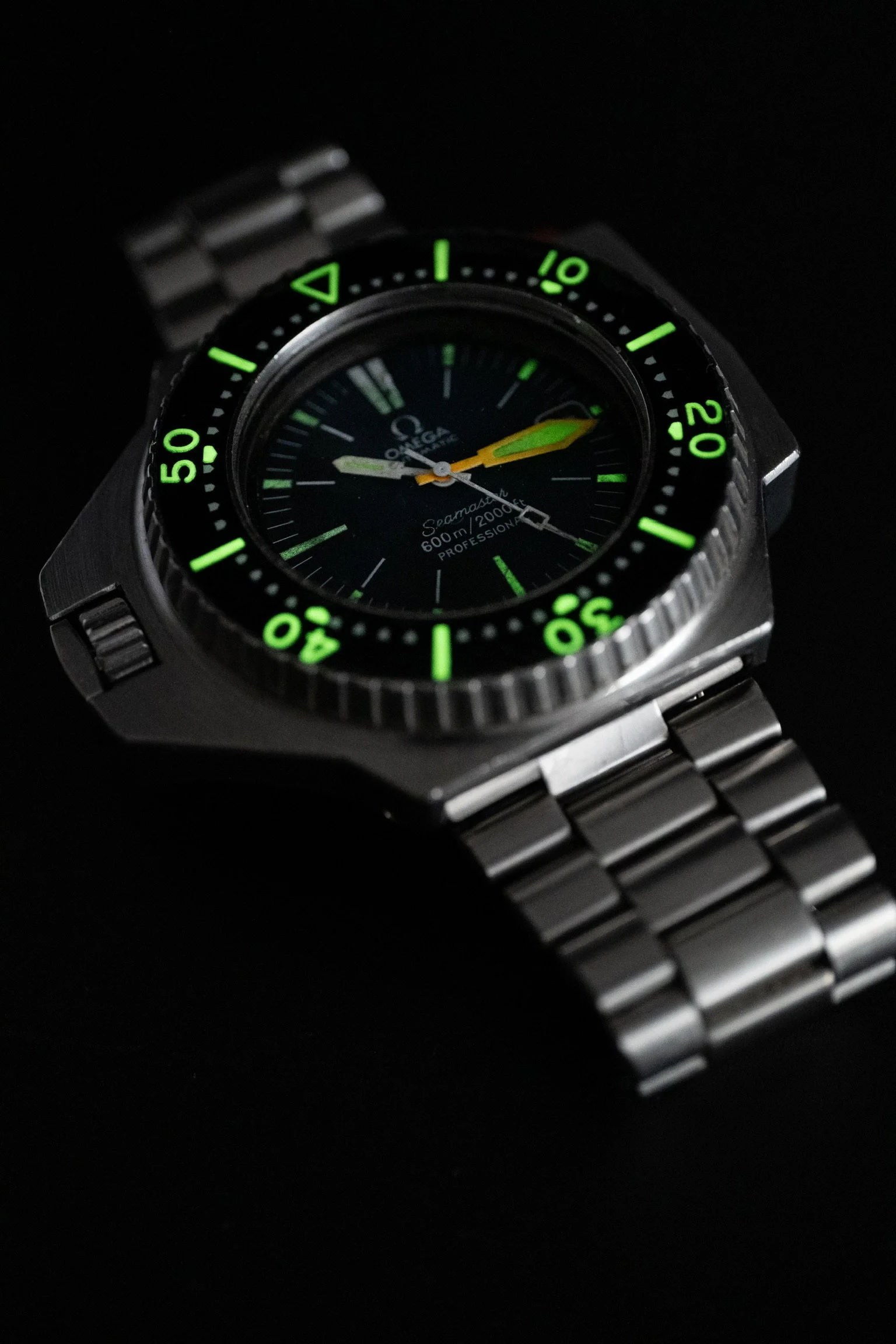
The huge asymmetric steel case, deeply recessed crown, bright orange minute hand and that wonderful red bezel-release button are all there for a reason. Nothing about the Ploprof feels decorative.
My example dates from 1977, towards the latter part of the original Seamaster 600's production run. It still has its original dial and hands, something increasingly important with vintage Ploprofs given how many were modified or had components replaced during servicing over the years.
Mark's Seamaster Diver 300M represents an entirely different philosophy.
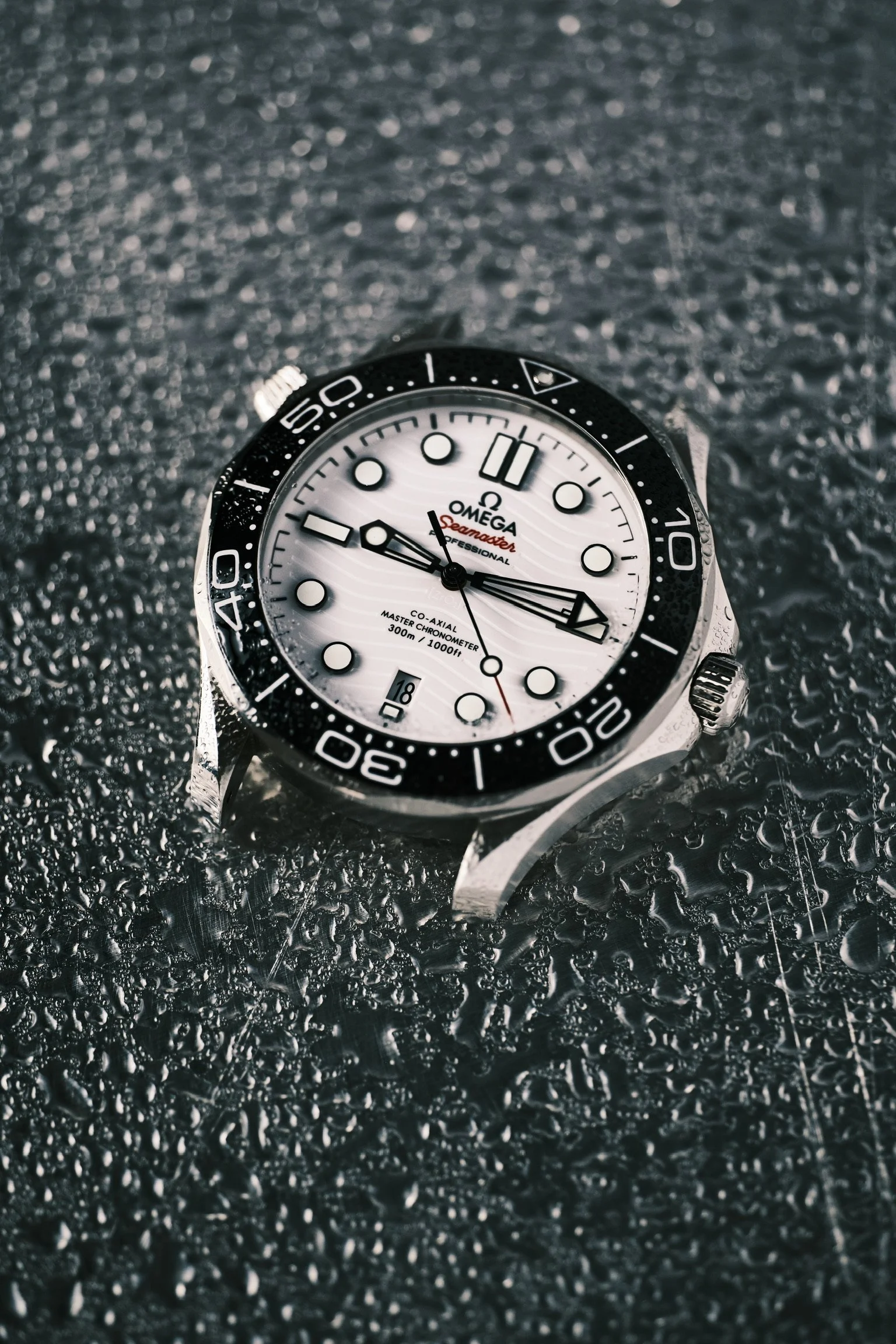
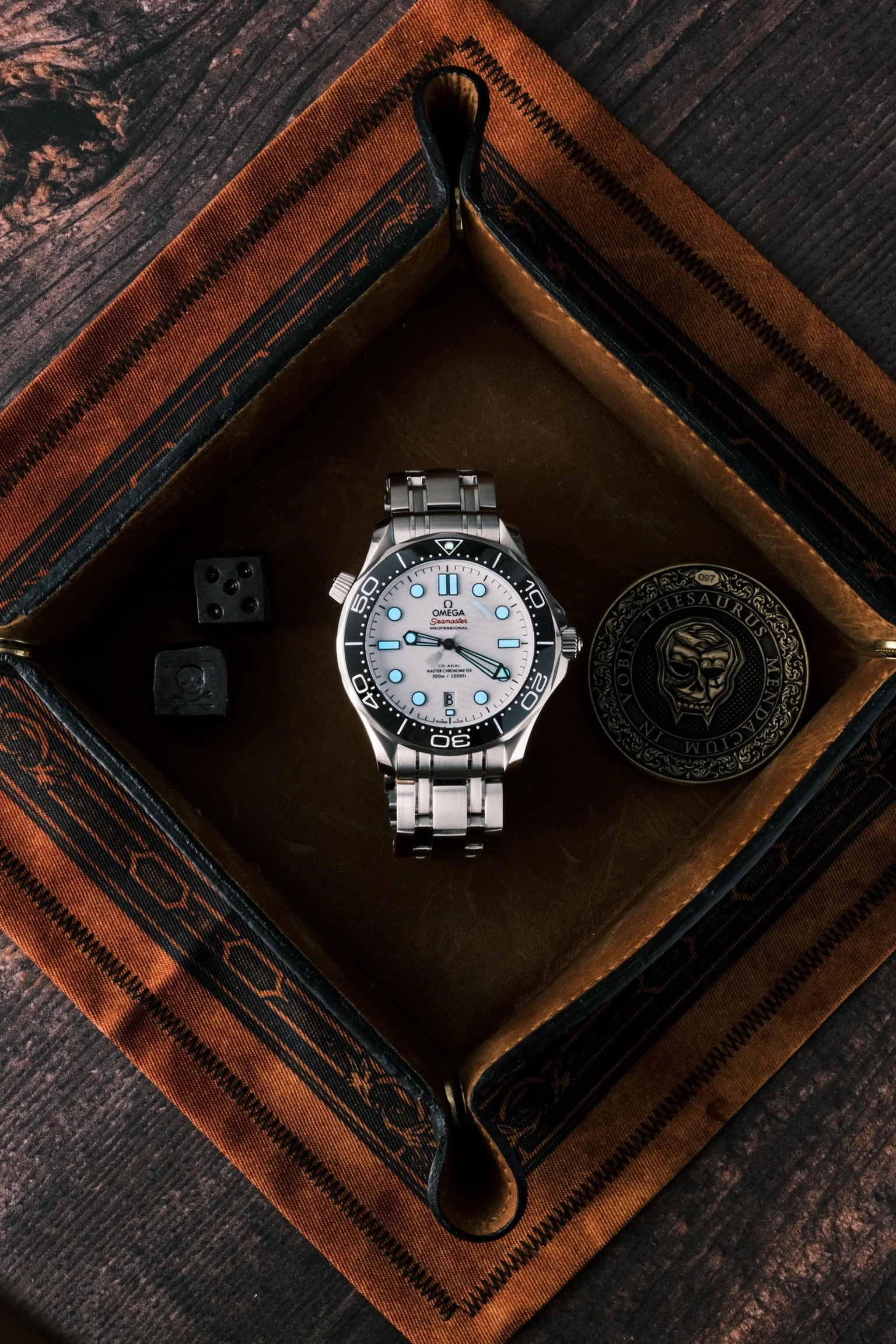
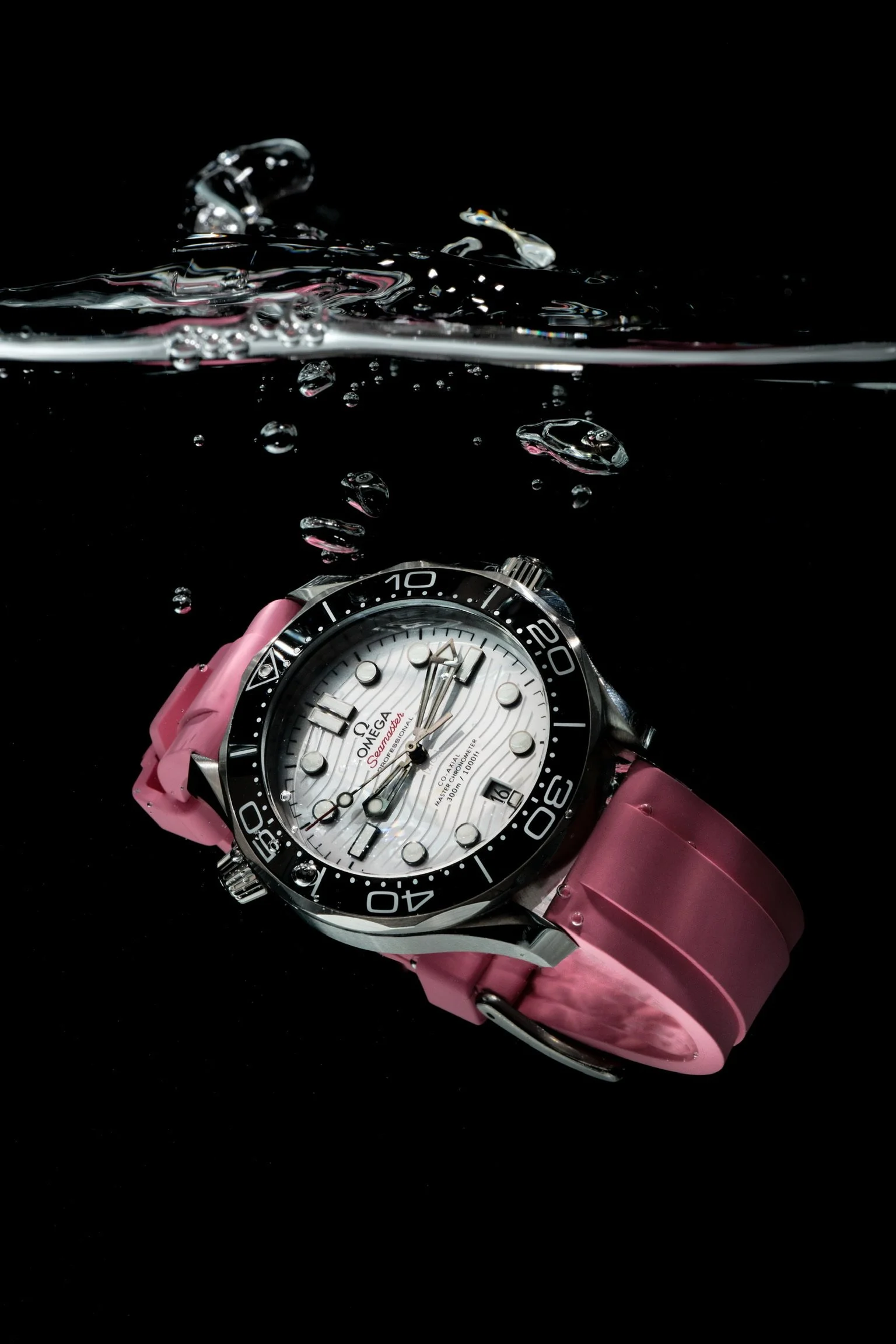
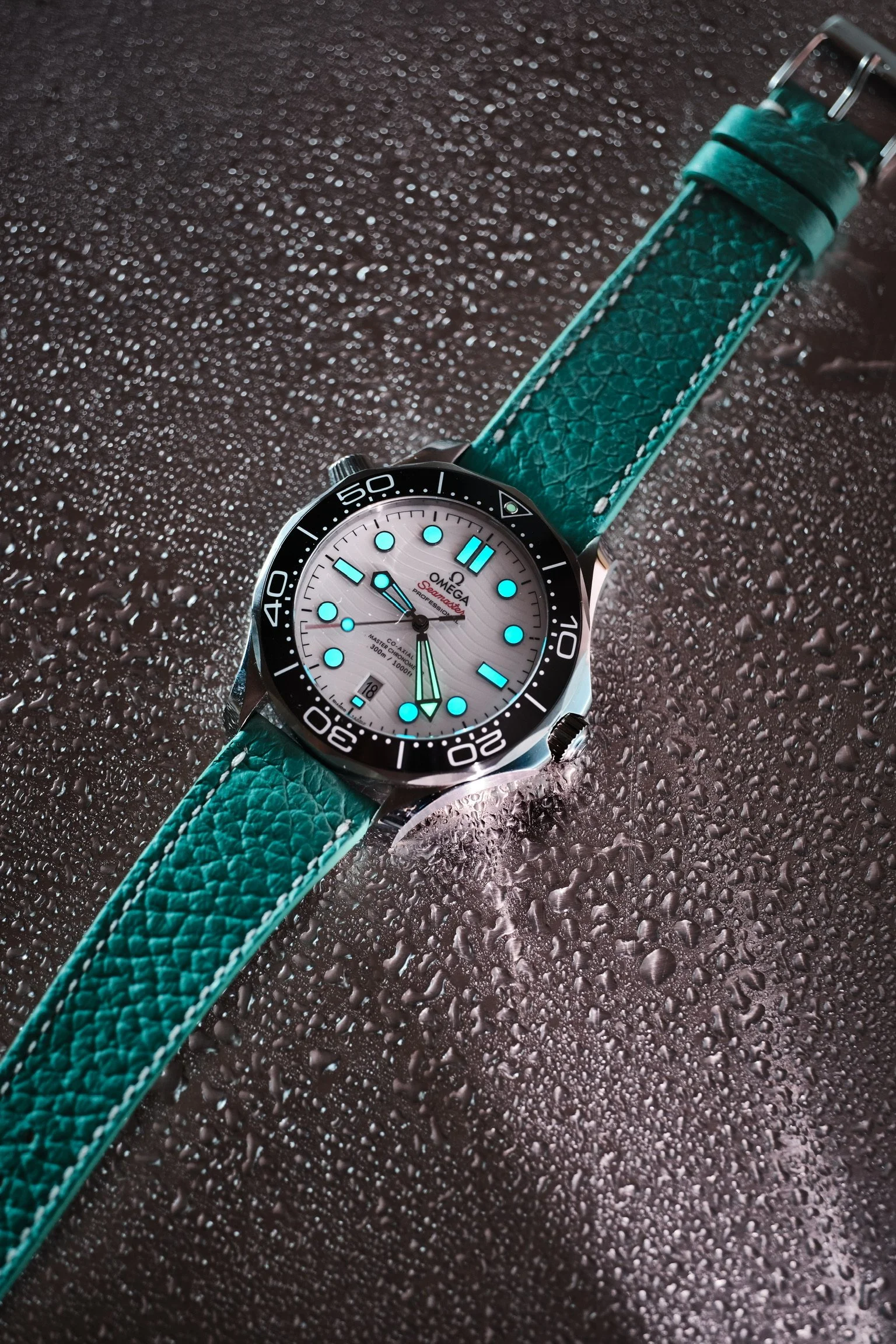
The modern Diver 300M family traces its lineage to 1993, while this generation arrived in 2018. In white-dial form, ref. 210.30.42.20.04.001, you get a 42mm stainless-steel case, white ceramic wave dial, black ceramic bezel, 300 metres of water resistance and Omega's calibre 8800 Co-Axial Master Chronometer movement.
It is still a serious dive watch. It just doesn't feel the need to shout quite as loudly about it.
Round One: Design
Let's get this out of the way. The Ploprof is ridiculous, and I absolutely love it.
Its case measures roughly 55mm across its broadest dimension and looks less like traditional watchmaking and more like something recovered from the control room of a 1970s submarine.
There's almost no attempt at elegance.
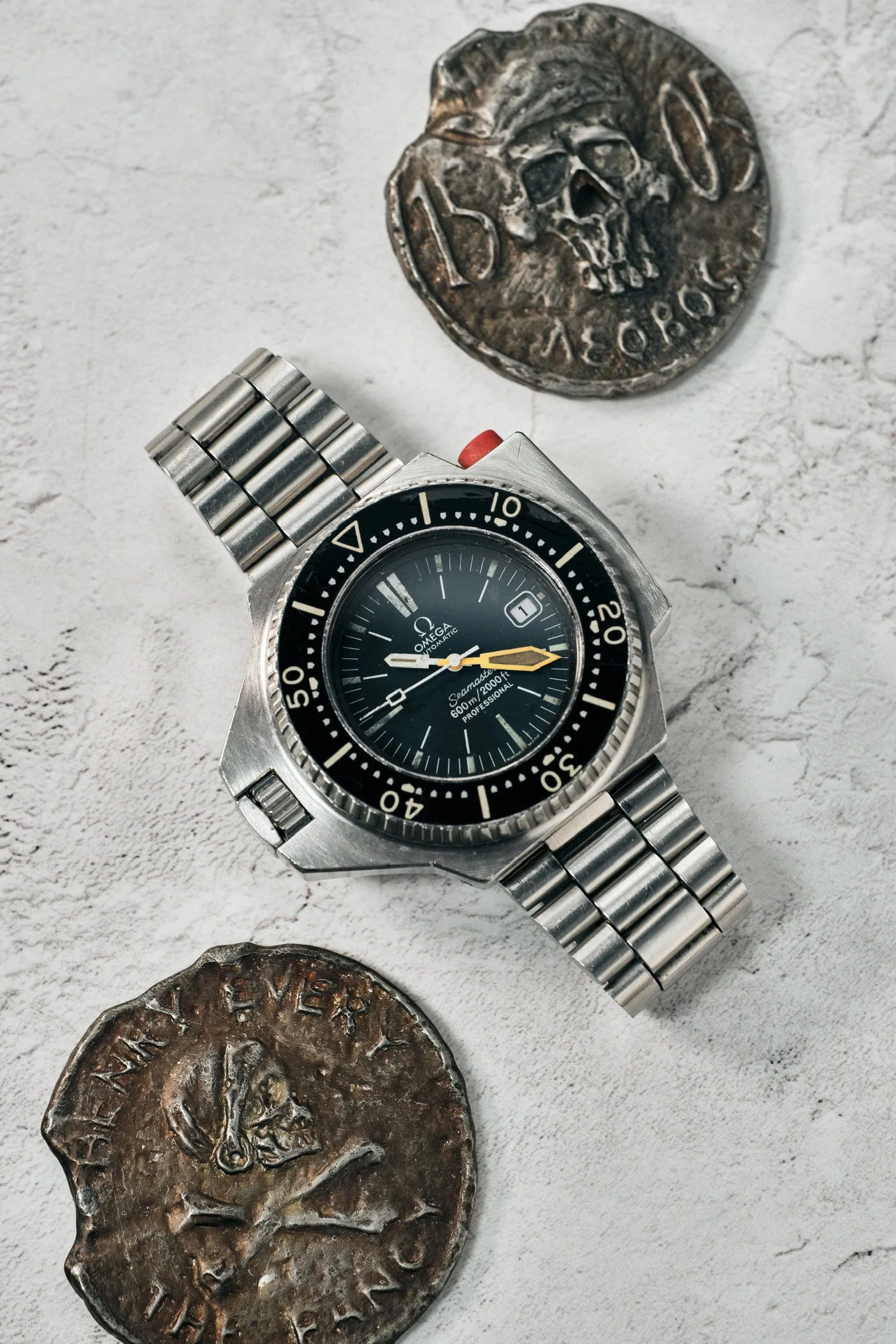
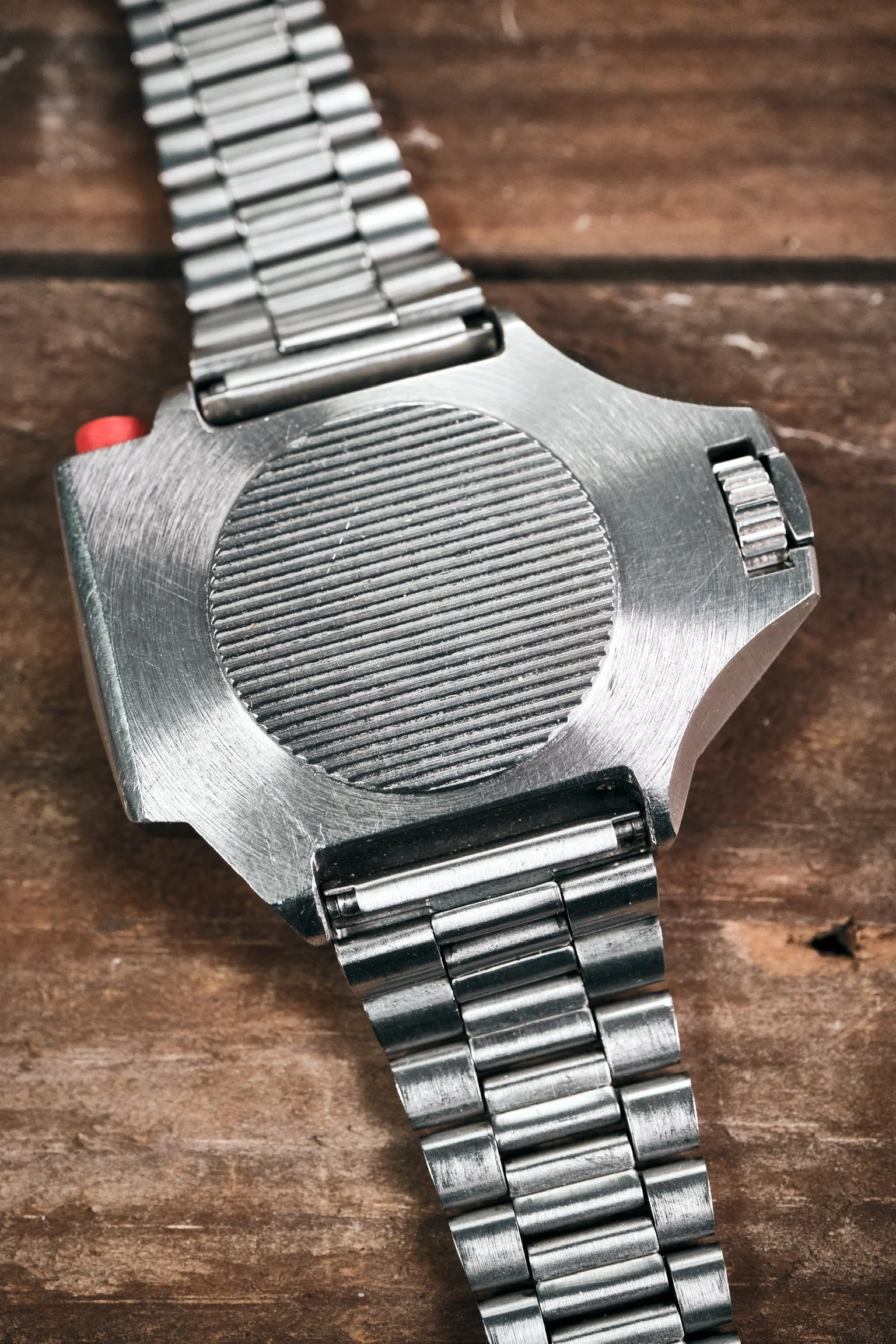
The crown sits on the left, protected within the case. On the opposite side is the instantly recognisable red button that must be pressed before the bezel can be rotated. Then there's that enormous orange minute hand sitting against the dark dial.
Subtle it isn't.
Mark's white Seamaster couldn't be more different.
At 42mm it is still a substantial watch, but its proportions are far more conventional. The twisted lugs, scalloped bezel and skeletonised hands immediately identify it as a Seamaster Diver 300M, while the white ceramic dial completely changes its personality.
Against the black ceramic bezel, the white dial looks fantastic. The laser-engraved waves add texture without overwhelming things and the flashes of red give it just enough colour.
If you wanted one watch to wear every day, the modern Seamaster wins this part of the argument quite easily.
But if we're talking pure character? Sorry, Mark.
Ploprof takes round one.
Round Two: On the Wrist
Here's where things get interesting.
Looking at the Ploprof, you'd assume wearing it would be comparable to strapping a small kitchen appliance to your wrist.
It isn't. Well, not entirely.
Despite those enormous dimensions, the unusual case shape means the Ploprof can wear surprisingly well. It is unquestionably heavy and you are never going to forget it's there, but it doesn't feel quite as absurd on the wrist as the measurements suggest.
That doesn't make it versatile.
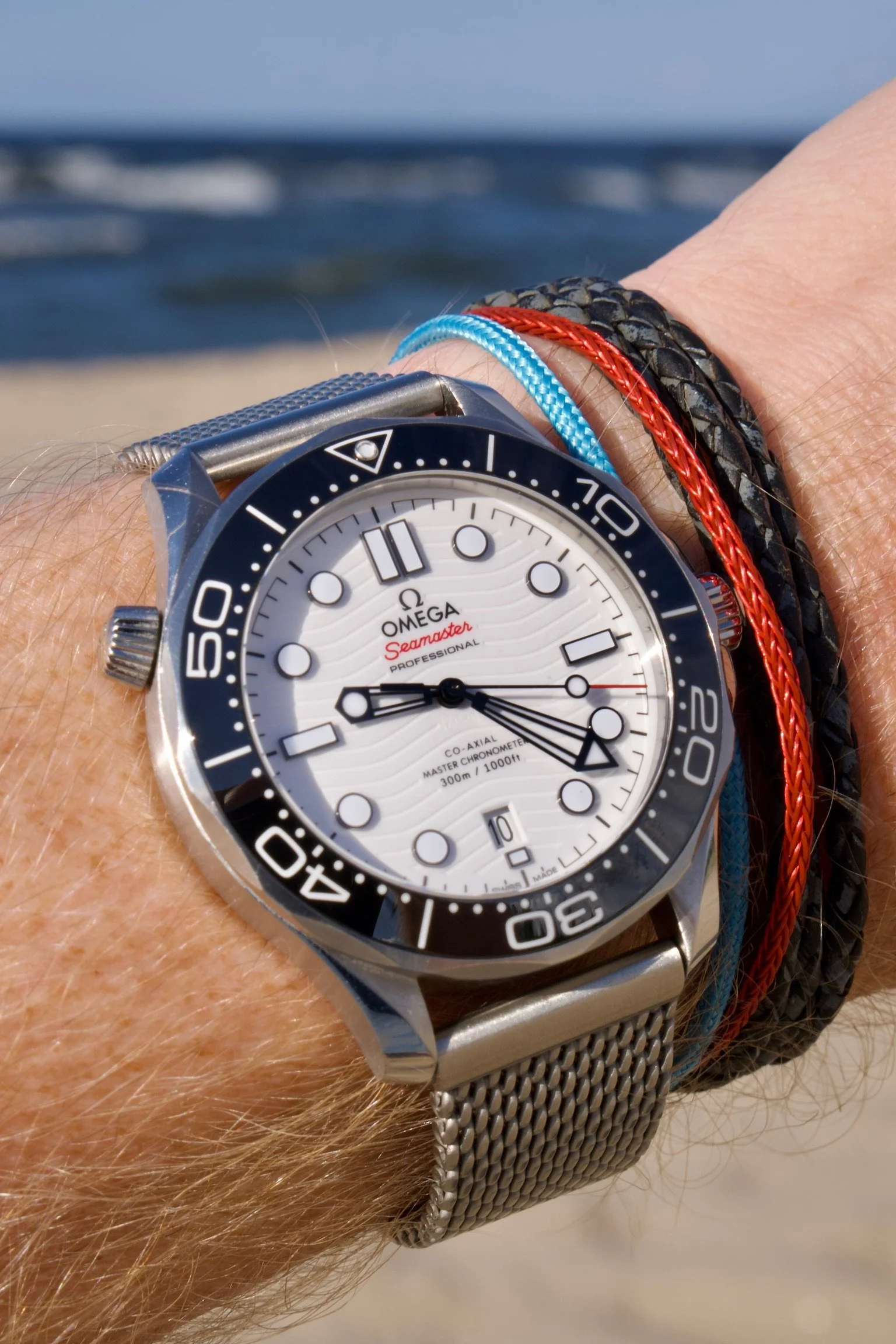
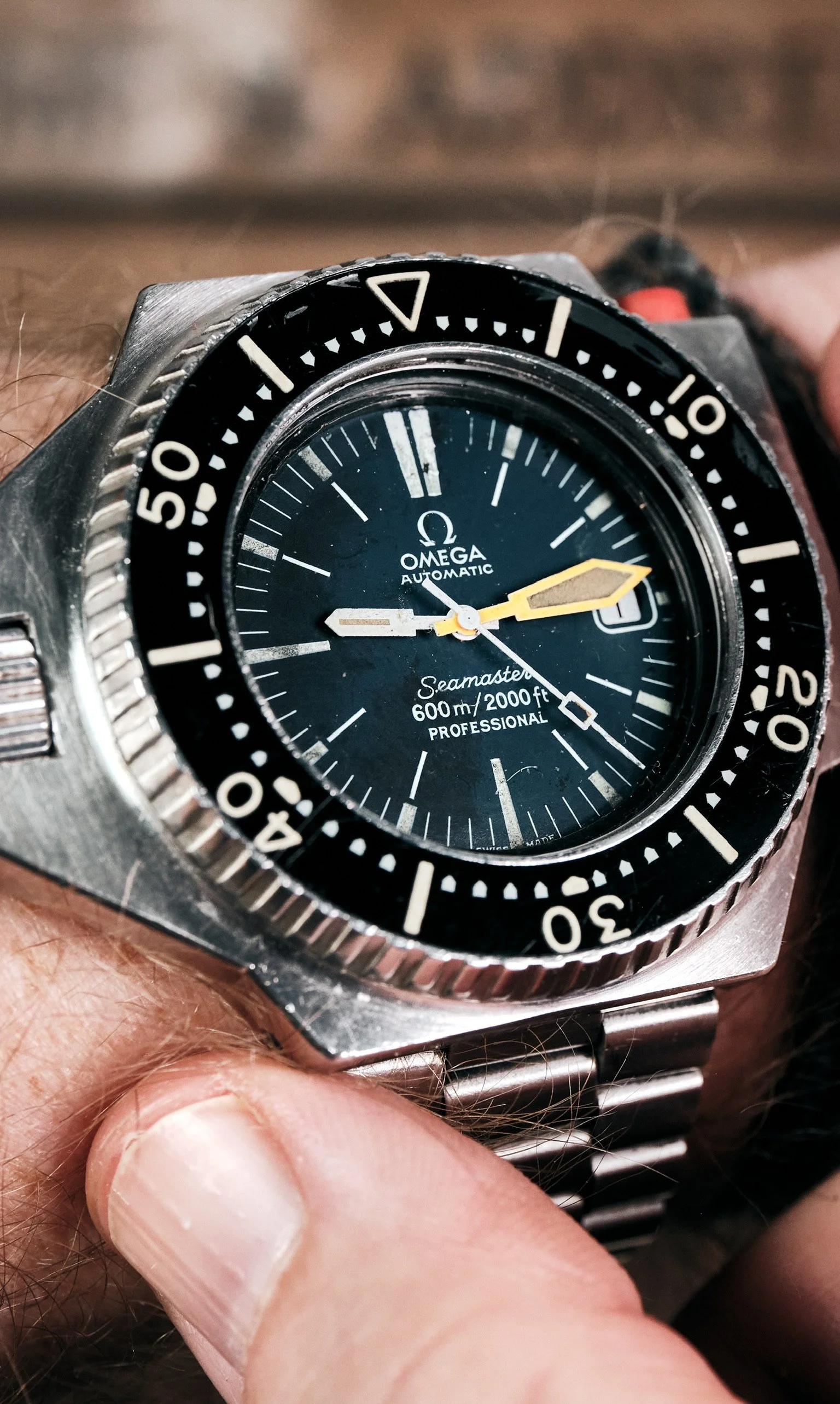
Wearing a Ploprof discreetly is basically impossible. Put one on and people notice it. Watch enthusiasts notice it immediately. Non-watch people stare at it trying to work out what on earth it is.
The Diver 300M is much easier. Its 42mm case is 13.56mm thick, and while it's certainly no shrinking violet, the conventional case architecture makes it far easier to live with.
It works with shorts. It works with a jumper. You could wear it to the office. You could take it on holiday and genuinely use it in the sea without spending the entire swim worrying about the value of an increasingly collectible vintage watch.
And that's an important distinction. Technically my Ploprof was built to survive 600 metres beneath the surface.
These days, I wouldn't dream of testing that claim.
Round two goes to Mark's Diver 300M.
Round Three: Movements
This one is almost unfair.
Inside the vintage Ploprof sits Omega's calibre 1002, an automatic movement running at 28,800 vibrations per hour with a date complication. It was perfectly appropriate for a serious professional watch of its period.
But half a century of movement development is half a century of movement development.
Mark's Seamaster contains Omega's calibre 8800. It's a Co-Axial Master Chronometer automatic movement with a 55-hour power reserve and METAS certification.
Then there's the rather lovely irony that Omega displays it through a sapphire caseback. My Ploprof treats its movement like a state secret.
Mark's Seamaster proudly puts its movement on display. For accuracy, magnetic resistance, efficiency and everyday reliability, there isn't really a contest.
Diver 300M takes round three.
Round Four: Diving Credentials
Now things swing back towards the old boy.
The modern Seamaster offers 300 metres of water resistance, a unidirectional ceramic diving bezel, excellent lume and a helium escape valve. Nobody realistically needs more from a mechanical dive watch.
But the Ploprof is something different.
The Seamaster 600 was conceived specifically around the extreme requirements of professional and saturation diving. Its monobloc case construction was intended to minimise potential points of water ingress, while the huge bezel lock and oversized controls were designed around actual underwater use. Its rated depth was 600 metres.
The best detail, though, is what it doesn't have.
A helium escape valve.
Omega engineered the case to be sufficiently resistant to helium penetration that the company didn't consider one necessary.
Compare that with Mark's Seamaster, where the helium escape valve at 10 o'clock has become one of the model's defining visual characteristics.
Two completely different engineering solutions to essentially the same problem.
If we're judging the watches as they were originally intended rather than asking whether I'd actually take a 1977 Ploprof saturation diving today, the winner is obvious.
Ploprof takes round four.
We're level.
Of course we are.
Round Five: Everyday Ownership
This is where Mark starts looking rather smug. The Diver 300M is simply a much easier watch to own.
It's modern. It's robust. It has sapphire crystal, ceramic components, contemporary water resistance and a movement designed for the realities of modern life. You can wear it without thinking about it.
The Ploprof demands rather more commitment.
Owning a vintage one means caring about originality, service history and exactly what has happened to it during the previous five decades. That's particularly relevant with the ref. 166.077 because replacement movements, dials, bezels and hands are far from unusual among surviving examples.
That makes an original example more interesting to a collector. It also makes you rather more protective of it.
Mark can knock his Seamaster against a doorframe and swear.
If I knock the Ploprof against a doorframe, I'm checking the watch, the doorframe and probably my blood pressure.
Diver 300M takes round five.
So Which Is Better?
After five rounds, we're stuck at 3–2... Actually, no.
That's exactly the sort of neat conclusion these comparisons are supposed to have, but it misses the point.
Because the better watch is probably Mark's Seamaster Diver 300M.
It is more accurate, easier to wear, technologically superior, more practical and infinitely easier to live with. If someone handed me both and said I had to choose one watch to wear every day for the next ten years, the white Diver 300M makes an incredibly strong case.
But that's not the same thing as asking which one I'd rather own. That's where the Ploprof comes charging back into the room.
The 166.077 represents a period when Omega was prepared to throw conventional watch design in the bin because professional divers presented it with a problem that needed solving.
It isn't trying to look like anything else, or trying to be elegant. It barely seems concerned with whether you actually like it.
And that's precisely why, more than fifty years later, it remains one of the most recognisable dive watches ever produced. Mark's Seamaster is objectively the more accomplished modern watch.
My Ploprof is the one with the story.
So if the question is which is the better everyday Omega dive watch?
Mark wins.
If the question is which would I keep if one had to go?
I'm afraid Mark already knows the answer.
The Ploprof stays.
Not because it's better at everything. Because nobody has made anything quite as wonderfully bonkers since.