
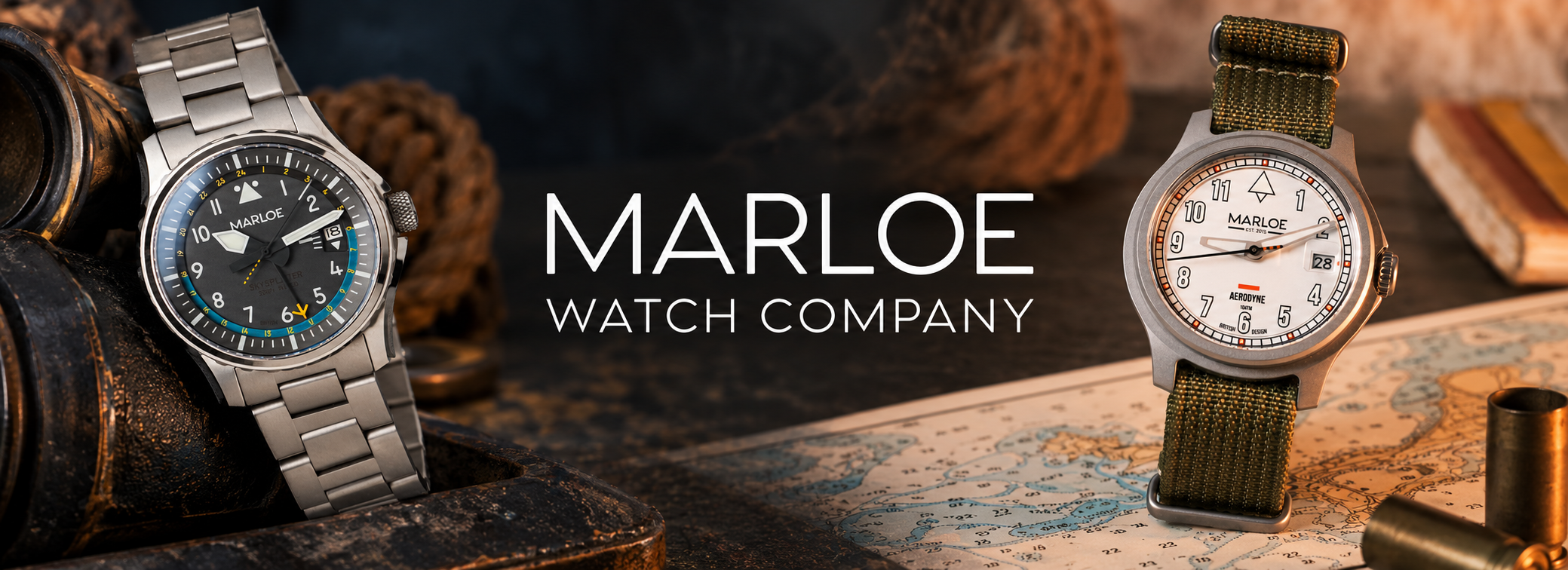
There’s certainly no shortage of pilot’s watches out there.
It’s one of those categories that pretty much every watch brand has had a crack at over the years, and for good reason. Big numerals, strong legibility and a bit of aviation history thrown into the mix is usually a fairly safe recipe.
The problem is that it can also become a little predictable. So when British brand Marloe Watch Company offered to send us a couple of its aviation inspired watches to spend some time with, I was intrigued.
The two watches in question were the Aerodyne Navigator and SkySplitter Airway, and while both take their inspiration from aviation, they couldn't be much more different.
The Aerodyne looks back to the pioneering days of flight, with a slightly more elegant, almost romantic take on the theme.
The SkySplitter feels like it has been pulled from the instrument panel of something considerably faster.
Same inspiration. Two very different watches.
And after spending some time with both, there’s rather more going on here than simply sticking some aviation inspired numerals onto a dial and calling it a pilot’s watch.
A little about Marloe
For anyone unfamiliar with Marloe Watch Company, the British independent was founded by Oliver Goffe and designer Gordon Fraser and has been producing watches for around a decade.

Marloe has always done things slightly differently. Rather than simply chasing familiar designs, its watches tend to start with a particular story or idea, with that inspiration then filtering down into the dial, case and smaller details.
More importantly, Marloe has also taken the significant step of bringing assembly in house at its workshop in Oxfordshire.
Both the Aerodyne Navigator and SkySplitter Airway we had in for review are assembled by Marloe themselves, which adds another dimension to what the company is doing.
There’s a lot of talk about British watchmaking at the moment, and exactly what constitutes a "British watch" can become a rabbit hole very quickly. But seeing smaller brands invest in actually assembling watches here in the UK can only be a positive thing.
And that brings us nicely to the first of our two watches.
Marloe Aerodyne Navigator
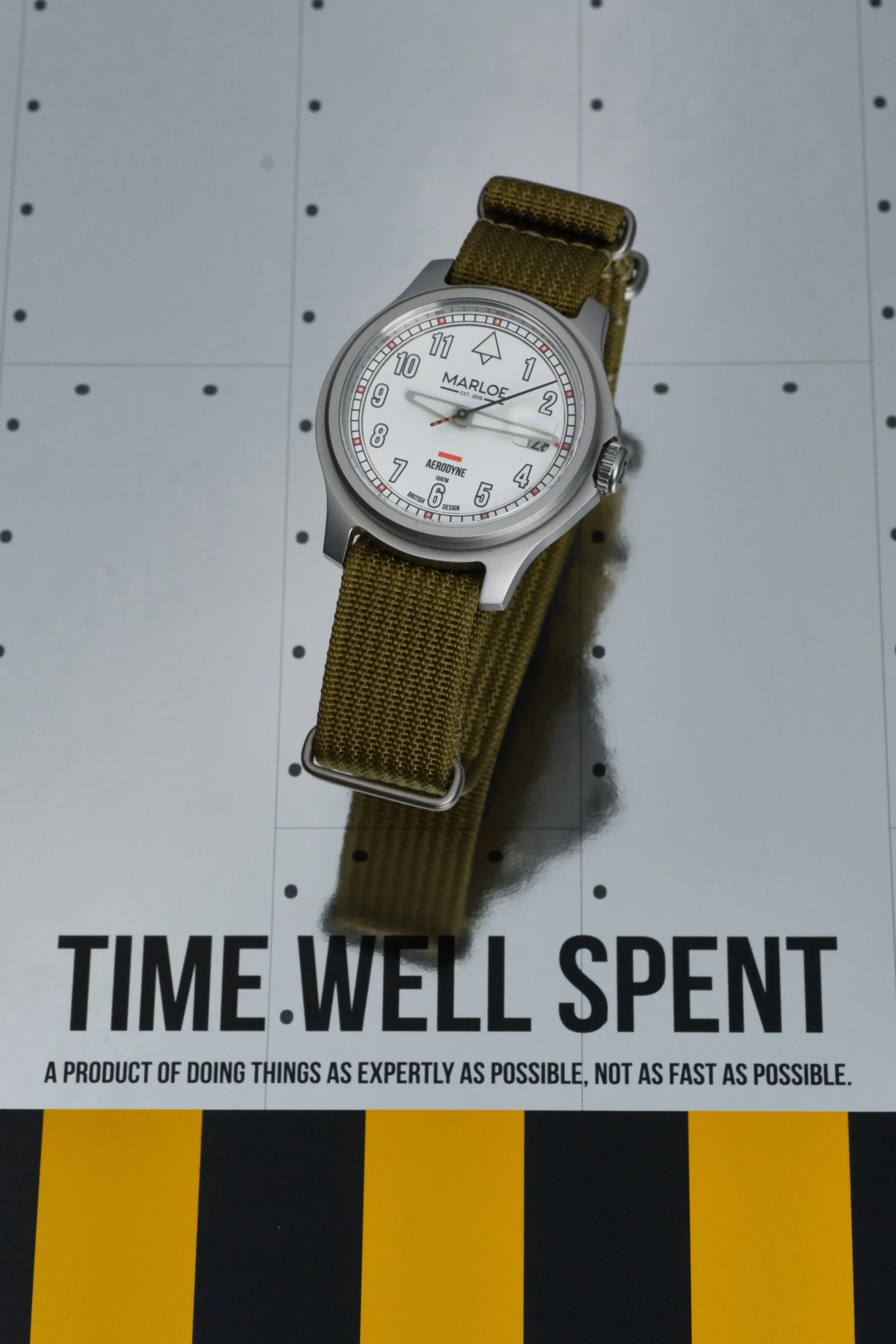
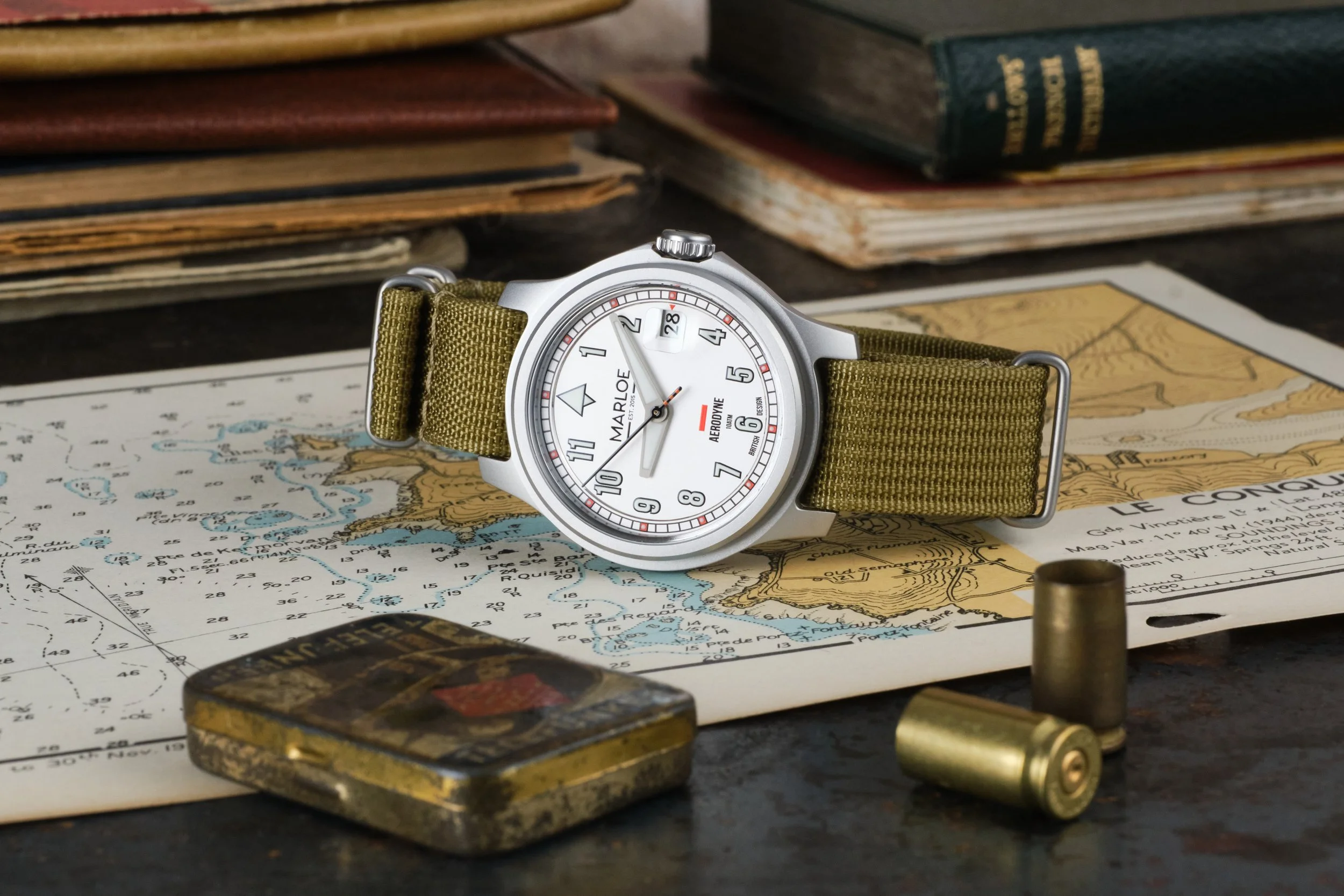
Of the pair, the Aerodyne Navigator is probably the more immediately charming.
The inspiration behind the Aerodyne collection is Amelia Earhart and the pioneering aviation era of the 1930s. Interestingly, though, the original idea didn't come from staring at an old aircraft or digging through vintage cockpit instruments.
It came from music.
While designing the watch, Gordon Fraser was listening to The Last Flight by Public Service Broadcasting, an album centred around Earhart’s attempted circumnavigation of the globe in 1937.
That became the starting point for the Aerodyne.
It’s a great little backstory, but thankfully Marloe hasn't gone overboard with it. There isn't an aeroplane stamped across the dial or a load of unnecessary aviation terminology everywhere.
Instead, the influence comes through in the overall character of the watch.
And I think that's much more effective.
A proper compact pilot’s watch
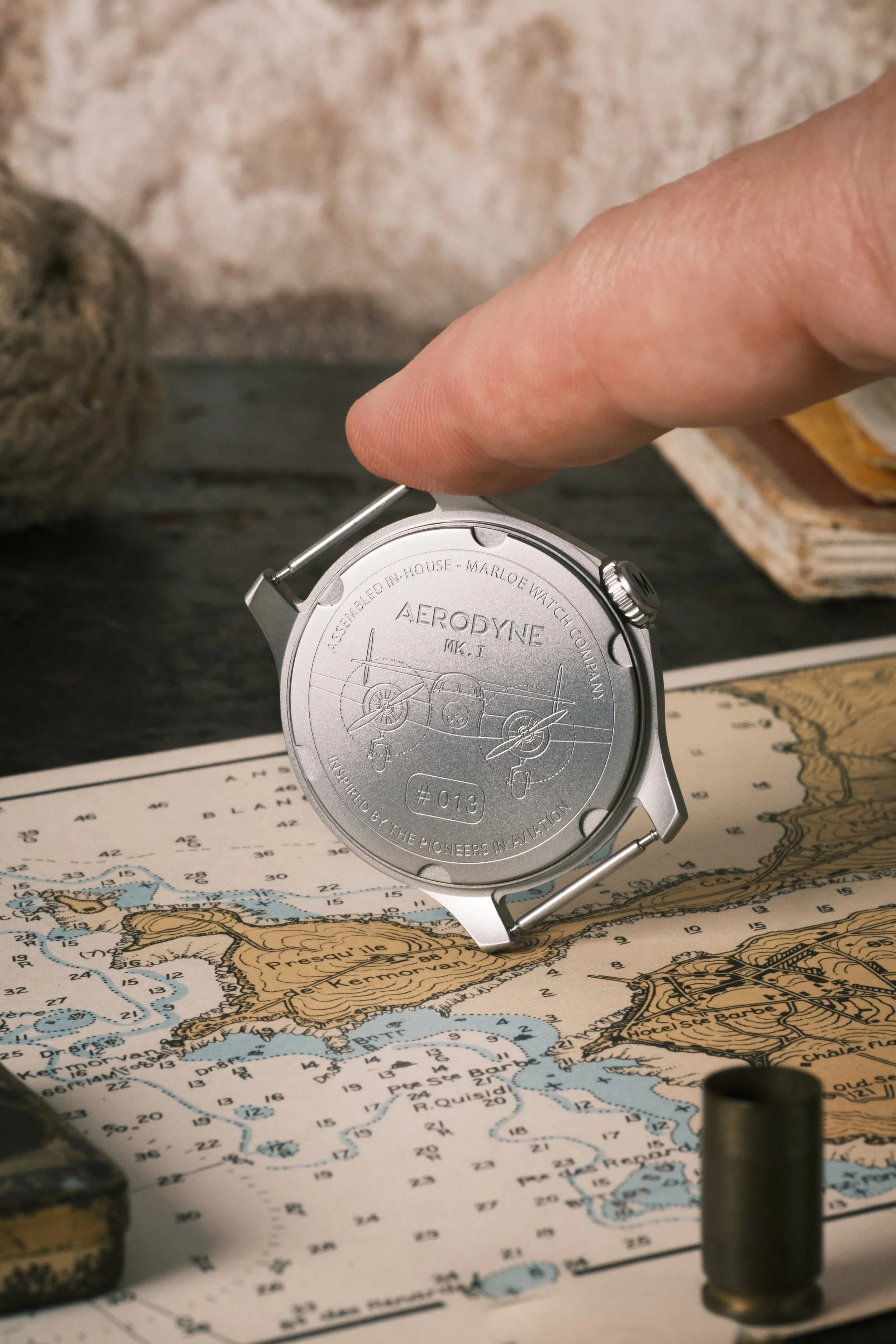
The first thing I noticed about the Navigator was the size. At 38mm in diameter and just 9.8mm thick, this is a surprisingly compact pilot’s watch, and I really like that.
Pilot’s watches have traditionally tended towards the larger end of the spectrum, partly for legitimate historical reasons and partly, I suspect, because brands decided anything aviation related needed to be enormous.
The Navigator goes in completely the opposite direction.
At just 49 grams on its leather strap, it almost disappears on the wrist. But because of the dial design and relatively open layout, it doesn't actually look particularly small.
The case itself is deliberately uncomplicated, taking inspiration from manufacturing techniques of the 1930s. The predominantly blasted finish works particularly well with the Navigator dial and gives the watch that slightly utilitarian feel you'd expect from something aviation inspired.
There's a sapphire crystal with anti reflective coating up top and a very useful 100 metres of water resistance.
So despite its vintage influences, this isn't something you need to treat like a vintage watch.
That Navigator dial
The dial is really where this particular Aerodyne comes together for me. There's a wonderful warmth to the Navigator that suits the concept perfectly.
Rather than looking like a modern watch desperately trying to appear old, the colours and typography give it a subtle period feel without venturing too far into faux vintage territory.
The Art Deco inspired numerals are a particularly nice touch. They immediately separate the Aerodyne from the seemingly endless supply of Type A and Type B Flieger watches out there. Then you start spotting the smaller details.
The slender seconds hand has a propeller inspired counterweight, the hands and hour markers are lumed and the vertically brushed dial gives the whole thing considerably more texture than you might expect from photographs.
There's also a date window with a magnifier. Now, I'm not always convinced that adding a date improves a watch. Quite often it feels like it's there simply because the movement happens to have one.
Here, though, I don't mind it.
The Aerodyne isn't trying to be a historically accurate recreation of a 1930s pilot's watch. It's a modern everyday watch that takes inspiration from that period. There's a difference.
Inside the Aerodyne
Turn the Navigator over and inside you'll find the Miyota 9015.
It's a familiar movement at this end of the market, running at 28,800 vibrations per hour with 24 jewels and more than 40 hours of power reserve. You also get hacking seconds and hand winding.
Is it exotic? No. Does it need to be? Not really.
The 9015 is proven, reliable and easily serviceable. At the Aerodyne's price point, I'd rather Marloe put the money into the things you can actually see and interact with, and that's exactly what they've done.
Marloe SkySplitter Airway
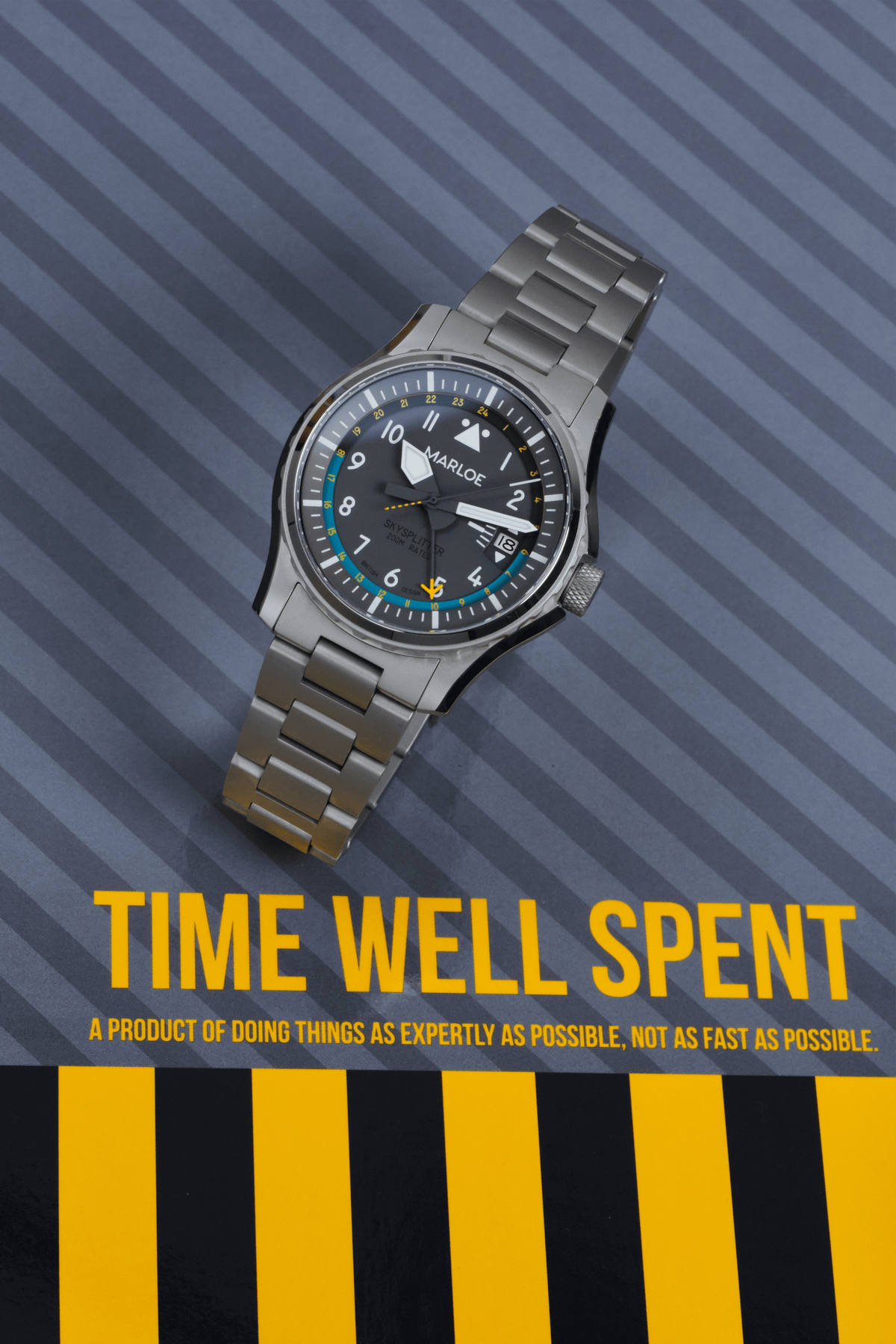
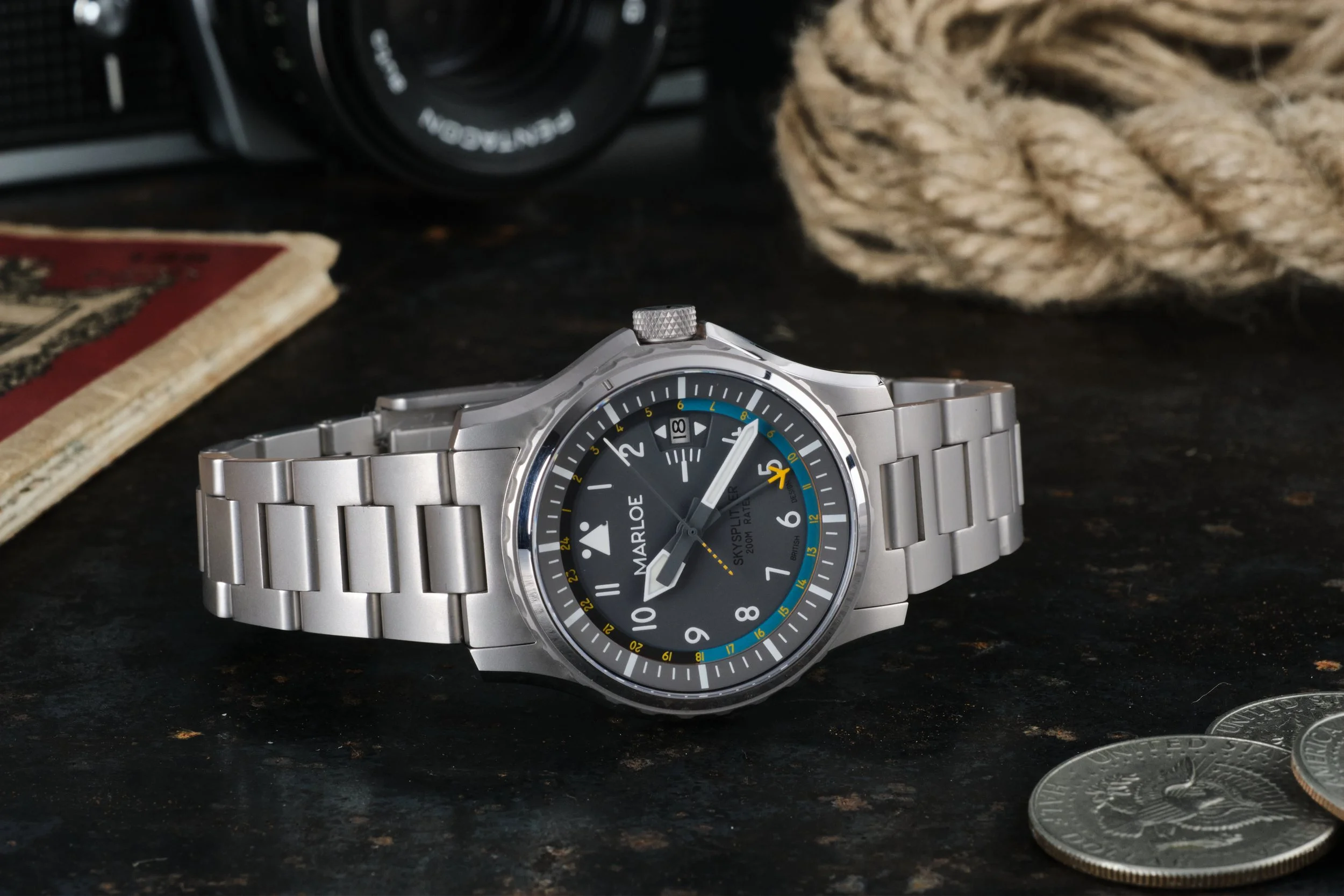
Then we come to the SkySplitter Airway.
And things change rather dramatically.
If the Aerodyne Navigator represents the romantic age of aviation, the SkySplitter Airway feels like someone has jumped forward several decades and climbed into a fast jet.
The vintage cues have disappeared.
In their place you get something far more technical and instrument focused.
Marloe says the SkySplitter takes inspiration from aircraft including the Panavia Tornado and modern cockpit instrumentation.
Spend five minutes looking at the Airway and that influence isn't particularly difficult to spot.
There's a lot going on here.
Cockpit on the wrist
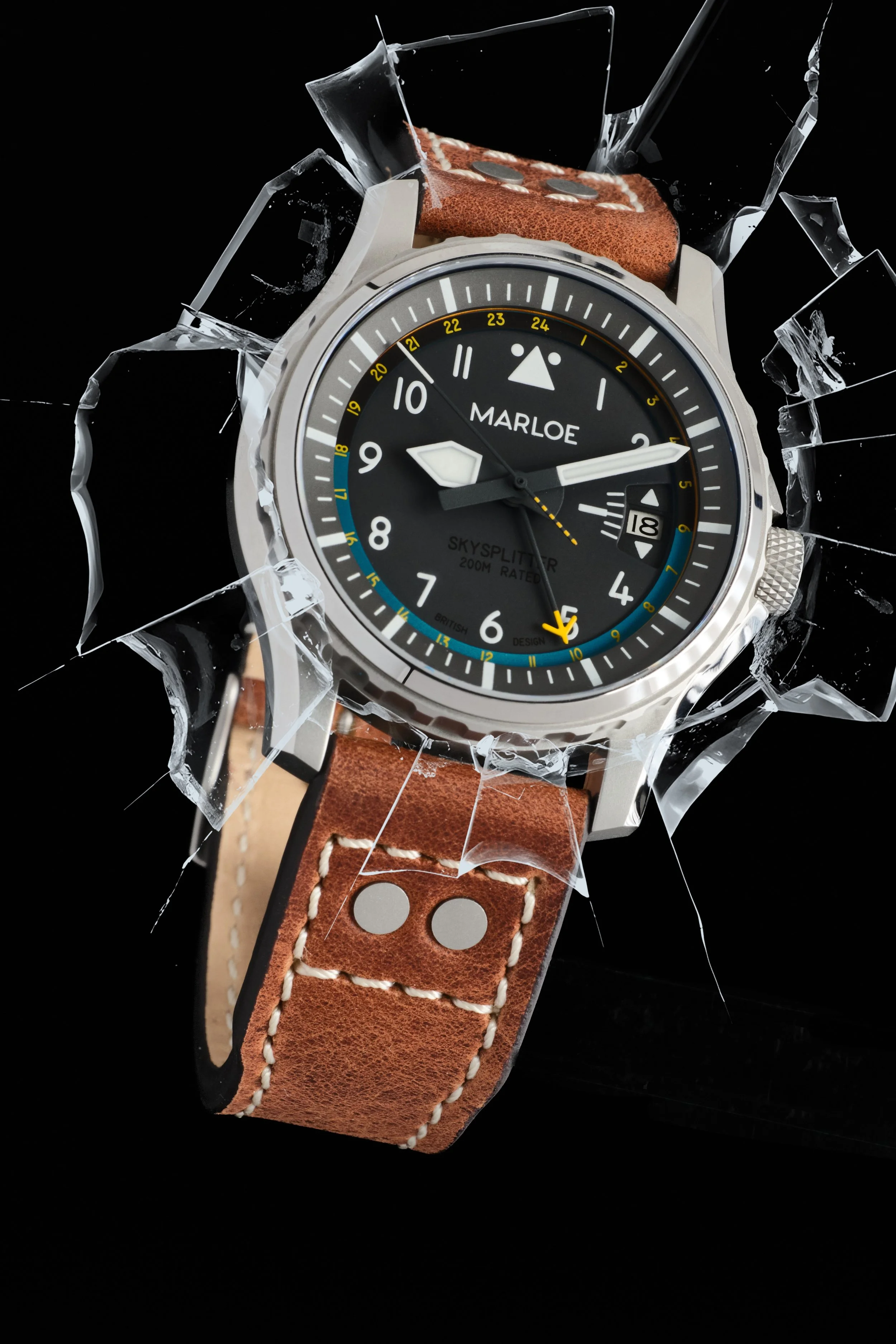
The SkySplitter Airway measures 40mm, which is still relatively restrained for this style of watch.
But visually it has considerably more presence than the Aerodyne.
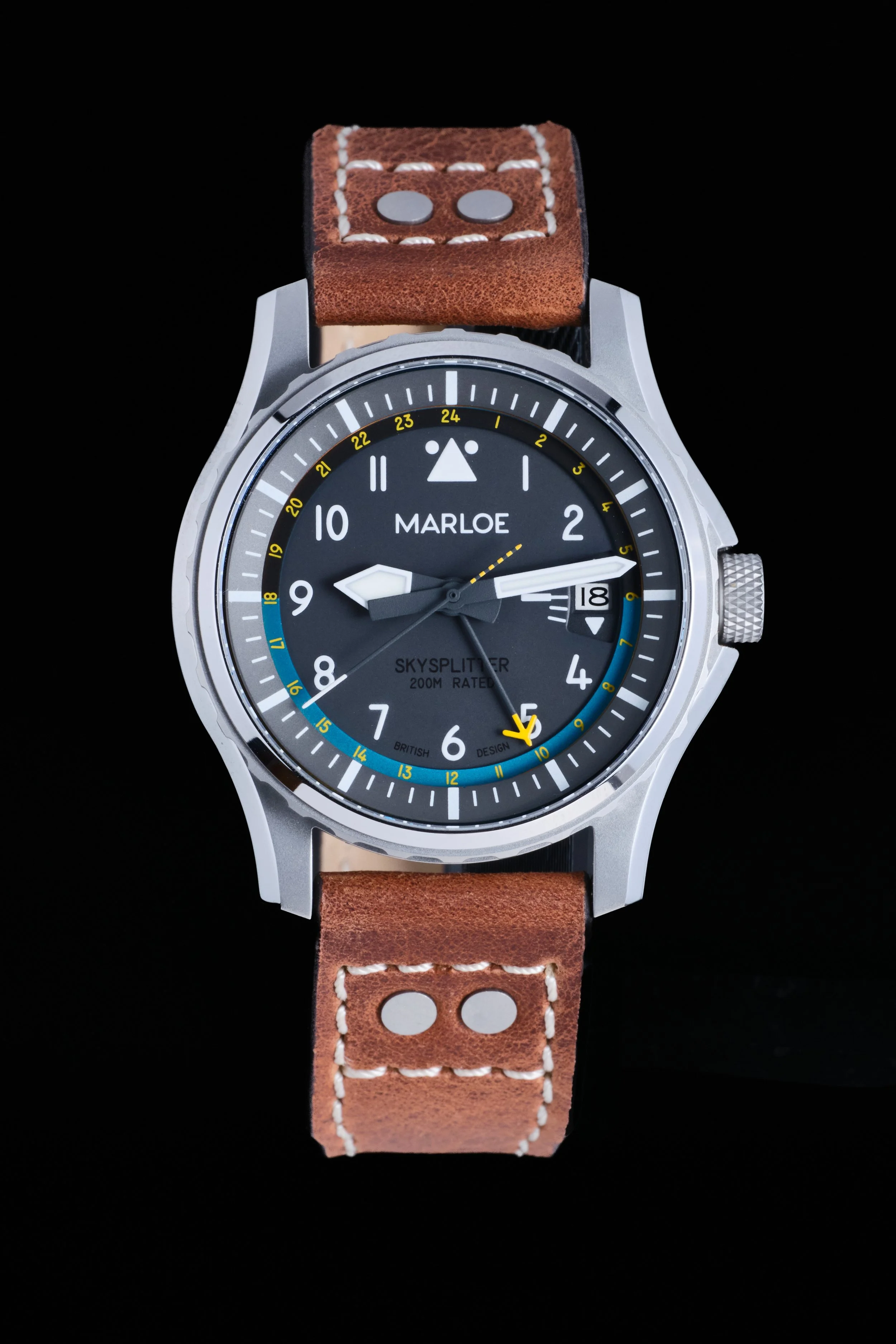
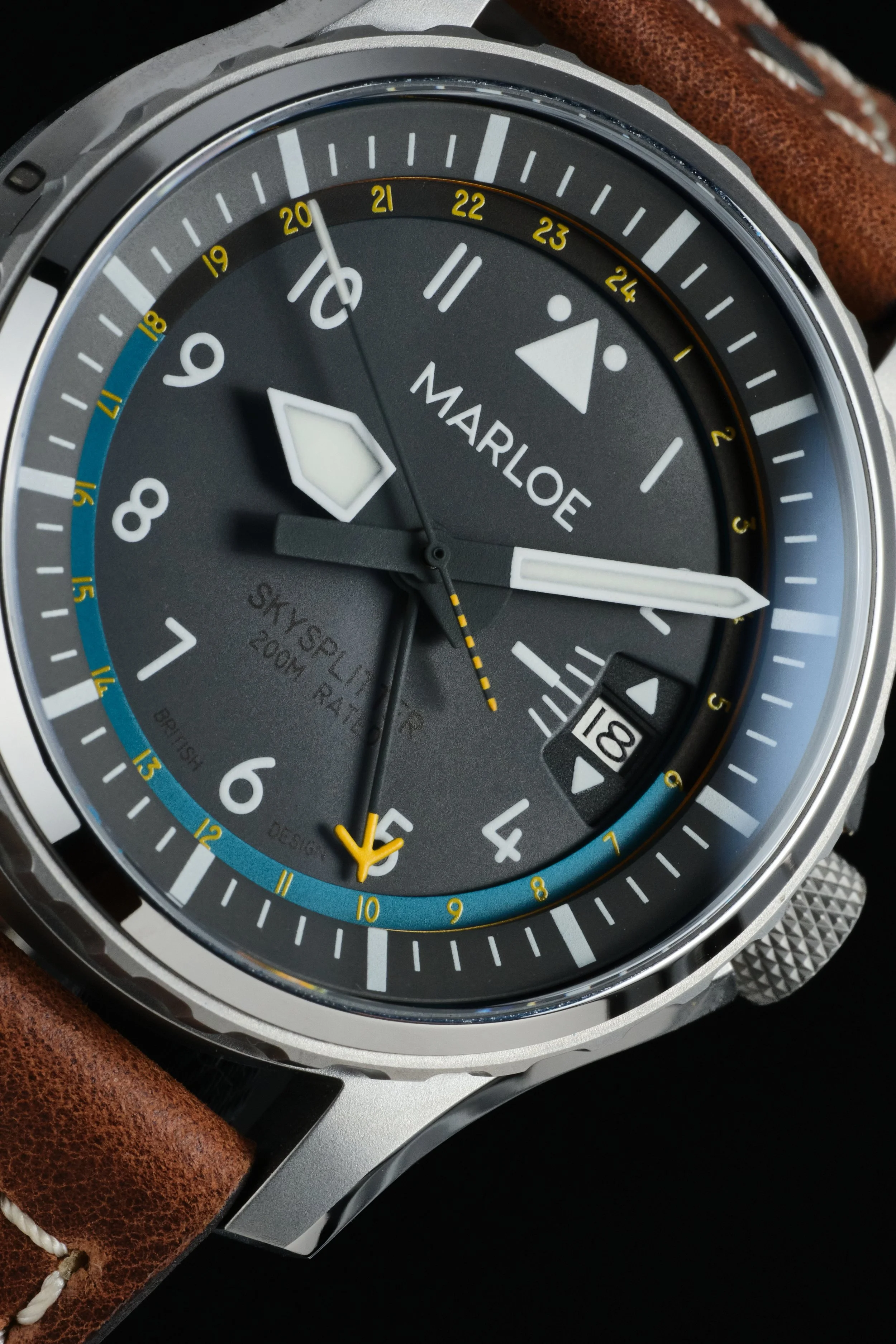
The dial is busy. You have large hour markers, multiple levels, a GMT scale, date window and several different hand designs competing for attention.
That sounds like a recipe for chaos. Somehow, it isn't.
Despite everything going on, the SkySplitter remains surprisingly easy to read.
That's probably one of the most impressive things about the watch because there's a very fine line between "inspired by aircraft instrumentation" and "someone emptied a cockpit onto my wrist".
Marloe stays on the right side of it. The Airway colourway helps here too.
There’s a strong contrast between the dial elements, allowing your eye to quickly pick out the local time while the GMT information sits slightly further back visually.
And there’s some lovely depth to the dial.
Different layers and textures reveal themselves as you move the watch around, and it's one of those dials that benefits from being seen in person rather than judged purely from press photographs.
The hands continue the aircraft theme, with inspiration coming from cockpit instrumentation rather than traditional watch design.
Even the seconds hand gets some attention, with its striped counterweight providing another little flash of character. None of these details are particularly huge individually. Together, though, they give the SkySplitter a personality of its own.
A proper GMT
The big difference between these two watches is obviously functionality. Inside the SkySplitter Airway is the Miyota 9075 automatic GMT movement, and importantly, this is a true, or flyer, GMT.
That means the local hour hand can be adjusted independently when you arrive in a new time zone, while the GMT hand continues tracking your home time.
For a watch built around aviation and travel, that feels like exactly the right movement to use. The 9075 runs at 28,800 vibrations per hour, has 24 jewels and offers more than 40 hours of power reserve.
It's a movement we've started seeing in more independent watches over recent years, and for good reason. Before the 9075 arrived, affordable true GMT watches were relatively thin on the ground. Miyota changed that, and the SkySplitter makes good use of it.
The SkySplitter case deserves some attention
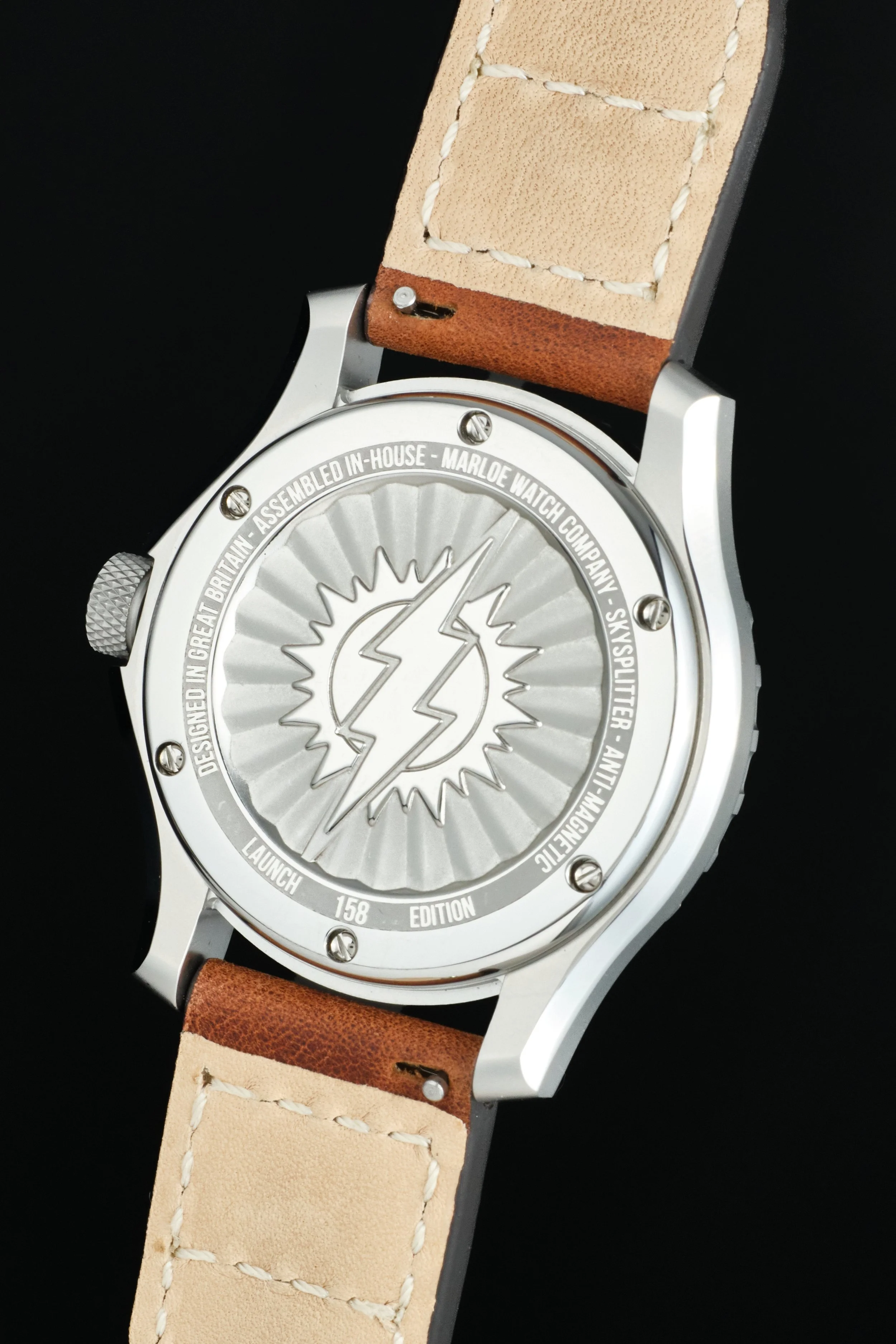
While the dial is obviously where your eyes initially go, I think the case is actually one of the strongest parts of the SkySplitter.
The main surfaces are blasted, which gives the watch its toolish appearance, but Marloe has added polished chamfers that catch the light as you move your wrist.
It's a small thing, but it makes a big difference. Without them, the SkySplitter could easily have looked a little flat.
Instead, you've got this interesting contrast between the utilitarian blasted surfaces and those sharper polished edges.
There's also some very nice machining around the bezel and crown.
Again, these aren't necessarily things that jump out at you when looking at photographs online.
They're the details you start noticing after wearing the watch for a few days.
You also get a sapphire crystal, screw down crown, anti magnetic protection and 200 metres of water resistance.
On a GMT pilot's watch.
I'm fairly confident nobody is buying a SkySplitter Airway for their next saturation dive, but I'm certainly not going to complain about having 200 metres of water resistance.
Bracelet done properly
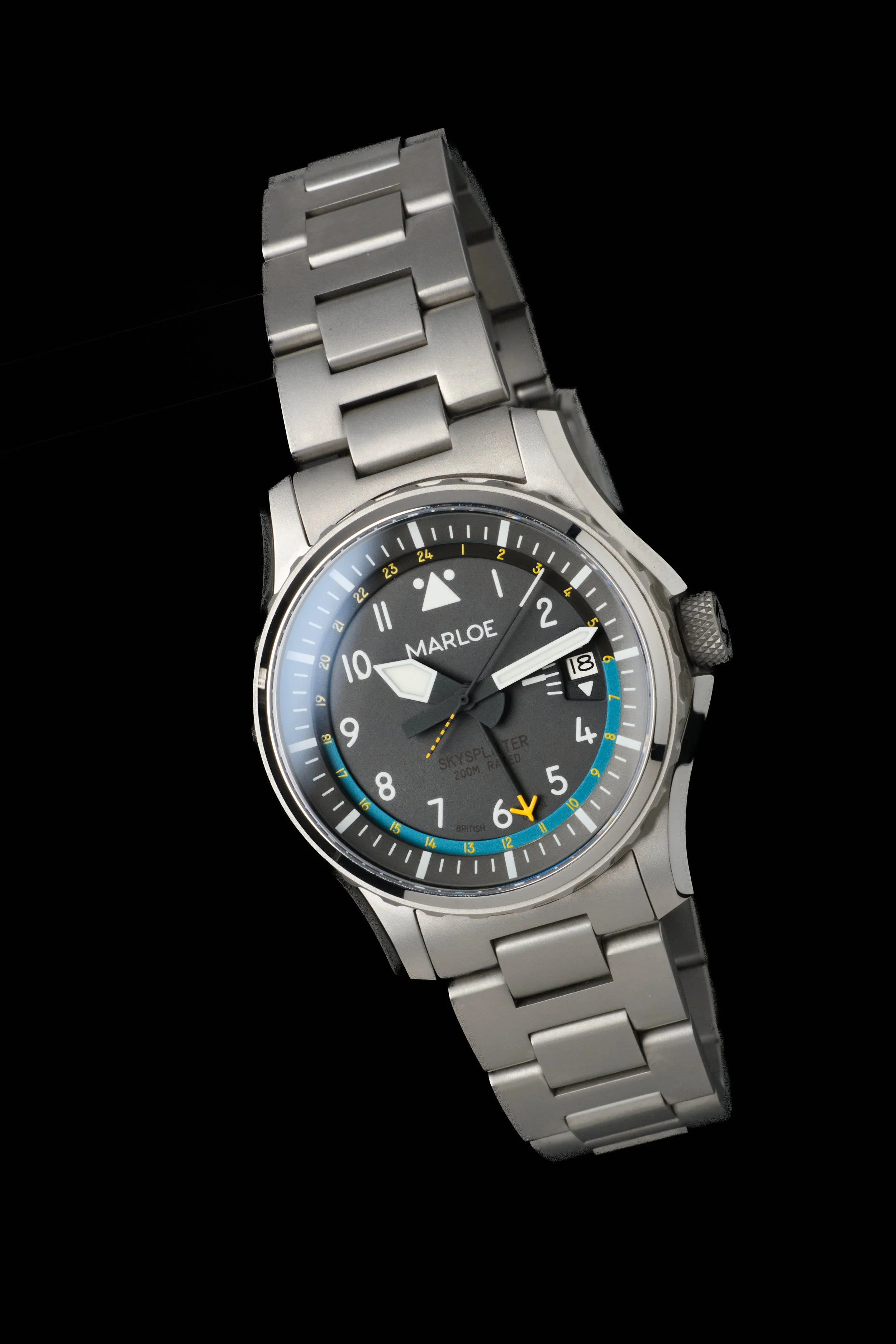
The SkySplitter Airway also comes on Marloe's dedicated steel bracelet.
And thankfully they haven't treated it as an afterthought.
The bracelet uses solid screw links and quick release spring bars, while the clasp features on the fly micro adjustment.
That last feature has become increasingly important to me.
Once you've become used to being able to quickly adjust a bracelet during the day, going back to a traditional clasp with a spring bar and a few micro adjustment holes feels strangely prehistoric.
We're also starting to see proper tool free adjustment appear on more affordable watches, which can only be a good thing.
The SkySplitter weighs around 169 grams on the bracelet, so there's no pretending this is as light or discreet as the Aerodyne.
But again, I don't think it should be. This is the more substantial watch of the two.
On the wrist
Wearing these two back to back really highlights just how different they are. The Aerodyne Navigator is incredibly easy to wear.
At 38mm and under 10mm thick, it sits neatly on the wrist and will happily disappear underneath a cuff.
There's an elegance to it that you don't often associate with pilot's watches.
The SkySplitter Airway is different. You know you're wearing it.
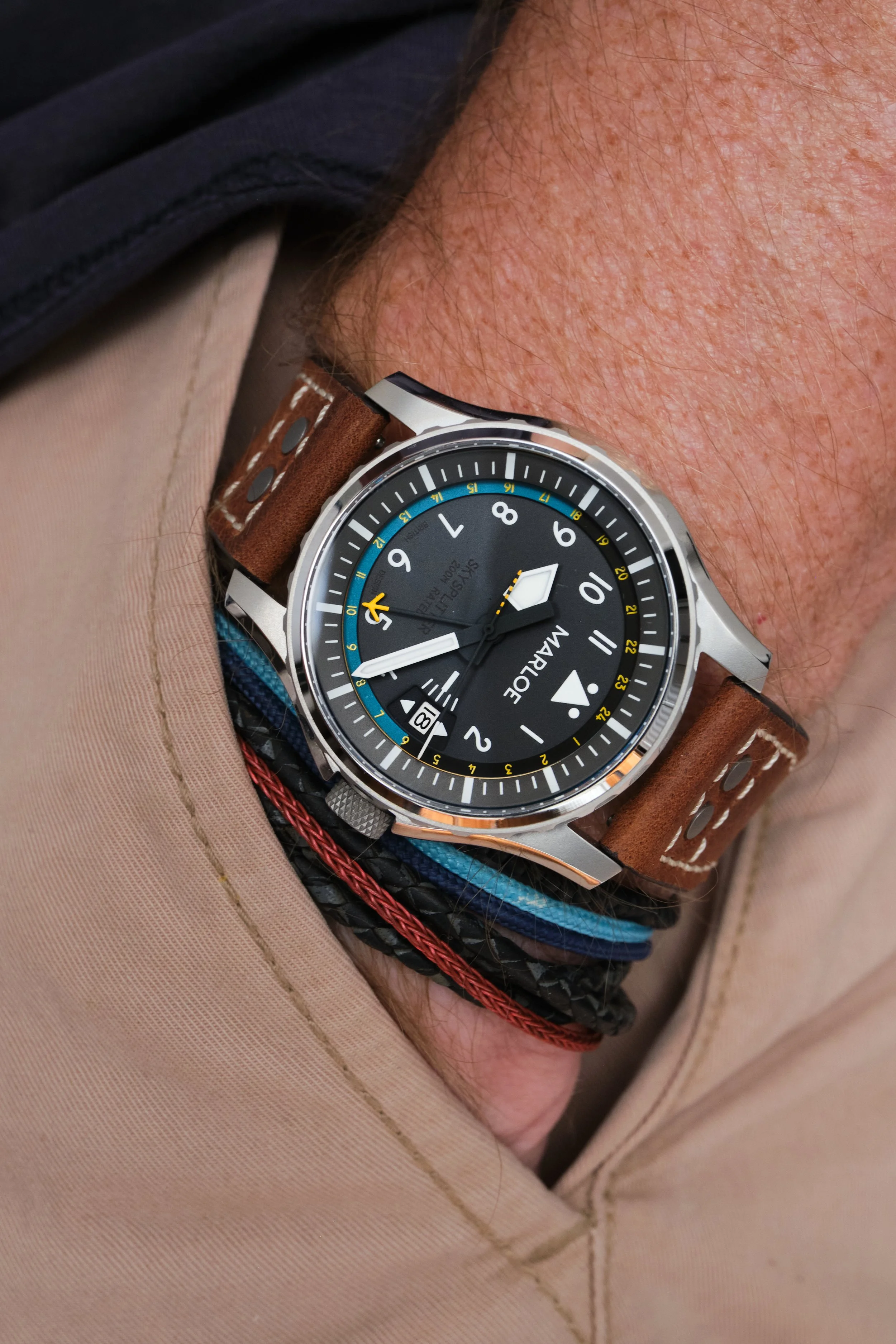
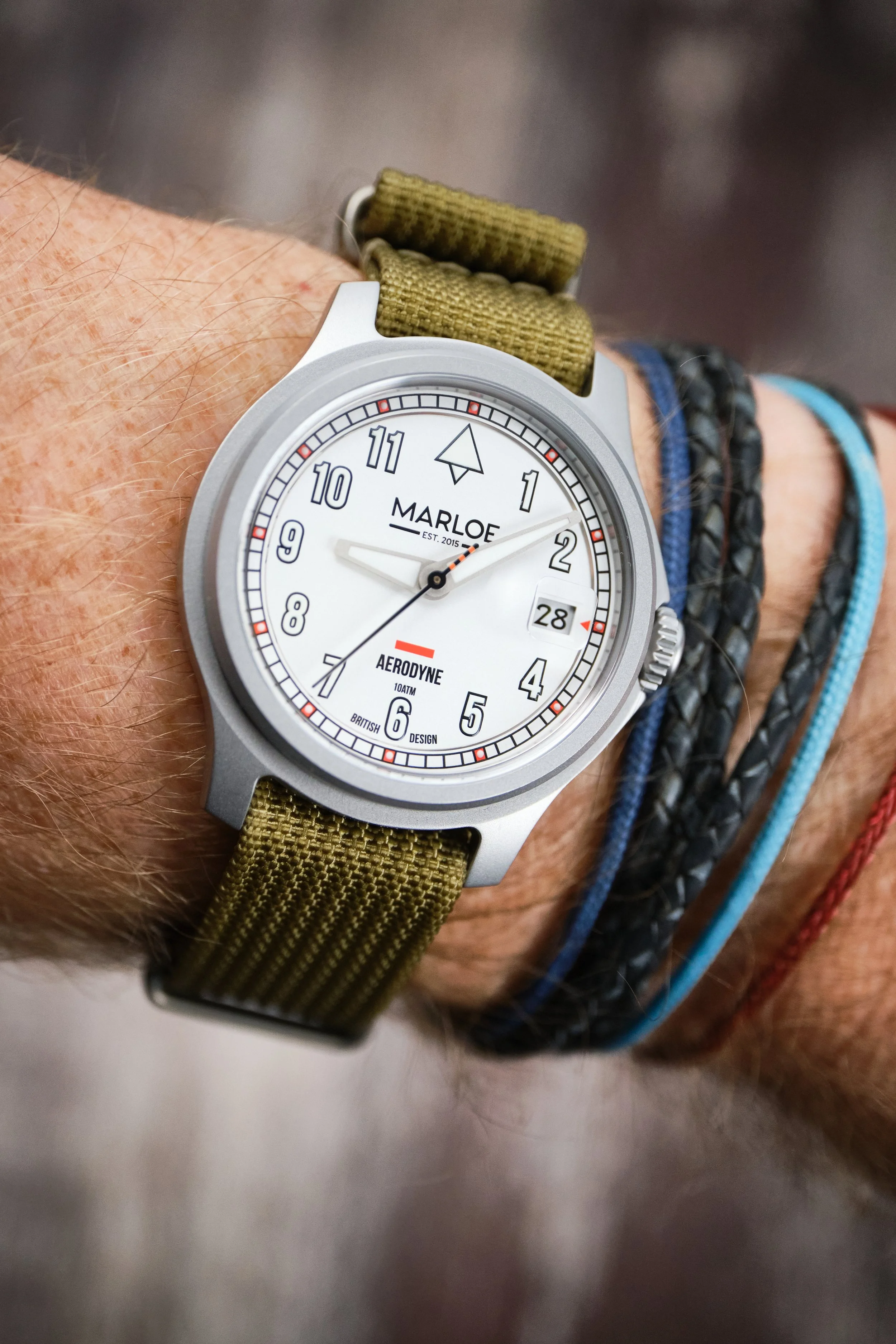
The 40mm case itself isn't particularly large, but the more complicated dial, steel bracelet and additional visual mass give it far more presence.
Yet it never felt unnecessarily bulky, and that's probably the sweet spot. It's substantial enough to feel like a proper tool watch without becoming something you're constantly knocking against door frames. We've all owned one of those.
Aerodyne Navigator or SkySplitter Airway?
So which one would I choose?
For me, it's the SkySplitter Airway.
That's not to take anything away from the Aerodyne Navigator. At 38mm and under 10mm thick, it's a great size, incredibly easy to wear and probably the more understated of the two.
But the SkySplitter is much more my kind of watch.
The Miyota 9075 is a big part of that. I'm a fan of GMT watches anyway, and having a true GMT movement where the local hour hand can be adjusted independently makes the complication genuinely useful rather than simply another hand on the dial.
Then there's everything else you get with it.
The 200 metres of water resistance, anti-magnetic protection, more substantial case construction and that wonderfully layered, cockpit-inspired dial all make the SkySplitter feel like a lot of watch for the money.
At £599, I think Marloe has put together a pretty impressive package.
The Airway colourway also works well, with its grey and teal GMT scale and flashes of aviation yellow giving what could otherwise have been a fairly serious looking watch a bit of personality. Marloe says the colour scheme takes its inspiration from the Airbus A400M Atlas, which makes considerably more sense once you know where those colours came from.
My only slight reservation is the brown leather strap.
This is entirely personal preference rather than a criticism of its quality, but I've never been a huge fan of brown leather straps. On the Airway, I'd probably spend most of my time wearing it on the steel bracelet, which actually suits the more technical nature of the watch better anyway.
And Marloe has done a good job with that bracelet. The solid screw links, quick-release spring bars and on-the-fly micro-adjustment make it feel like a proper part of the watch rather than something added at the end of the design process.
Final thoughts
Having the Aerodyne Navigator and SkySplitter Airway together has been a great way of seeing two very different sides of Marloe.
Both watches are inspired by aviation. But that's pretty much where the similarities end.
The Aerodyne looks backwards.
It's influenced by the pioneering era of aviation and manages to capture some of that character without becoming another generic Flieger homage. The compact dimensions are also a refreshing change from the oversized pilot's watches we've become accustomed to seeing.
The SkySplitter is altogether more modern.
It's technical, purposeful and considerably more complicated, with the Miyota 9075 true GMT movement giving the aviation theme some genuine functionality.
And of the two, the SkySplitter would be my choice.
There's simply more about it that appeals to me. I like the additional functionality of a GMT, I like the more substantial case and I particularly like the amount of depth Marloe has managed to get into that dial without completely sacrificing legibility.
Would I wear the Airway on the supplied brown leather strap? Probably not. Stick it on the bracelet and that problem disappears.
As for the Aerodyne, while I enjoyed my time with the Navigator, it's actually made me want to get my hands on another version.
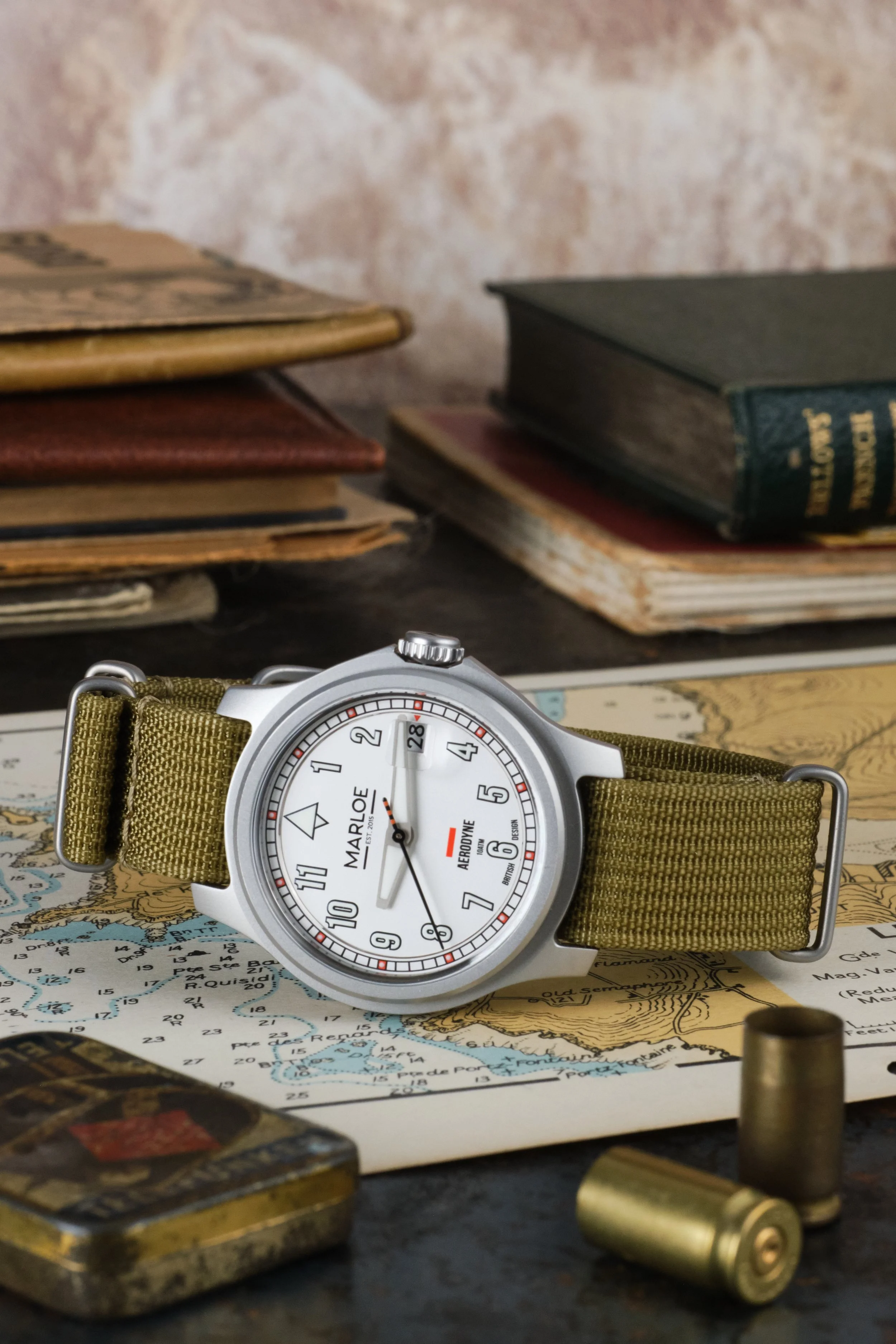
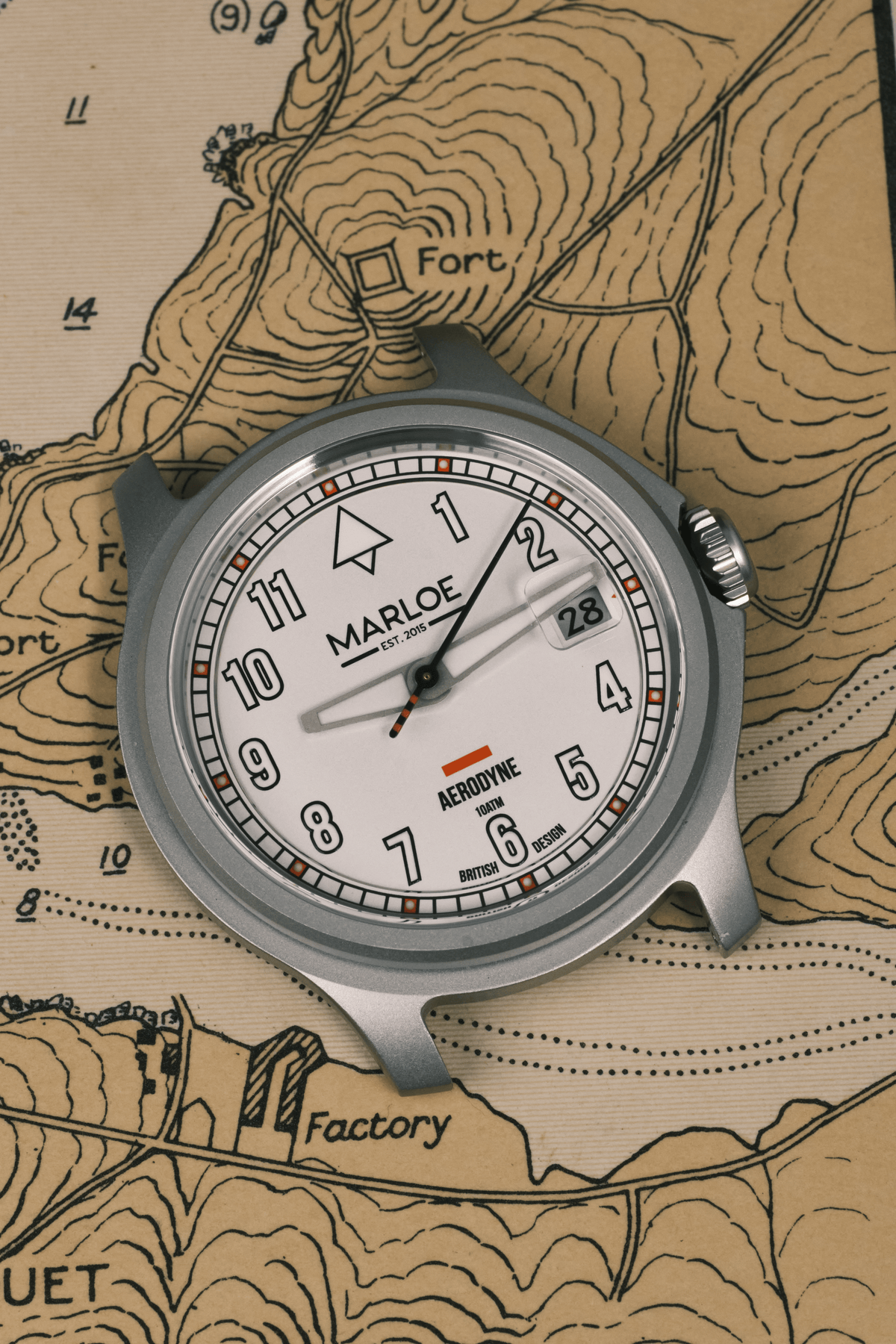
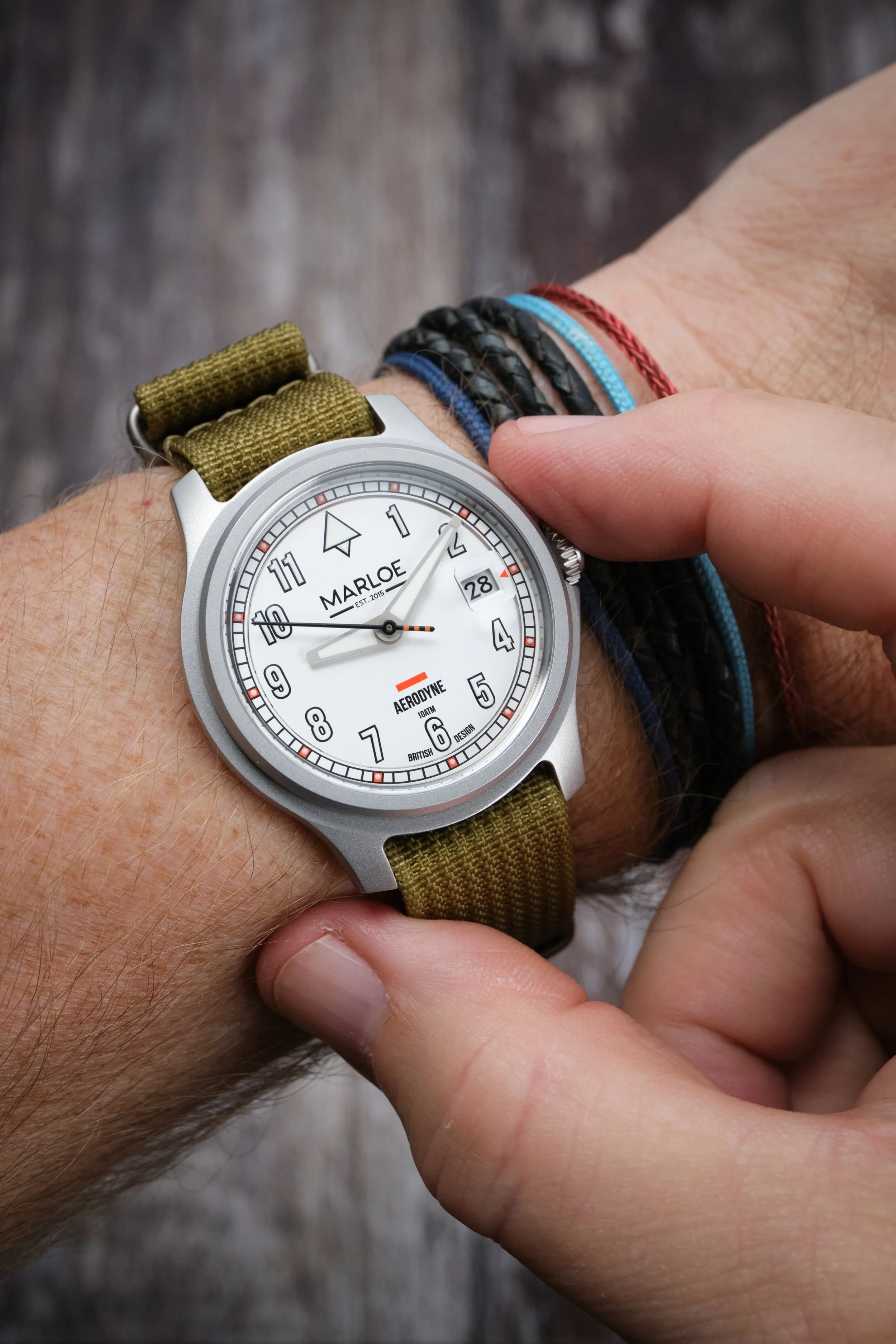
The Pearl.
That white dial with its black and orange accents is much more up my street and, paired with the khaki NATO, I think it would be my choice from the Aerodyne collection.
Ultimately, though, what I like about both watches is that Marloe hasn't taken the easy route. There are safer designs they could have produced. There are certainly more familiar ones. Instead, they've created two aviation watches that actually have their own identity.
In a market increasingly crowded with British independents and microbrands, that's important.
At £349 for the Aerodyne and £599 for the SkySplitter, neither is trying to compete at the bargain basement end of the market. But look at what you're getting, particularly with the SkySplitter, and I think both represent strong value.
They're also now assembled in-house in Oxfordshire, which makes Marloe an increasingly interesting British brand to keep an eye on.
If it were my money? SkySplitter on the bracelet.
Although I'd quite happily find room for a white dialled Aerodyne Pearl alongside it. Funny how these reviews have a habit of becoming shopping lists.