

Most watches enter your collection after you have become interested in watches. The Breitling Emergency did things the other way round. It helped create the interest in the first place.
I have a hazy memory of seeing a yellow-dialled Emergency in GQ in the late 1990s. I cannot remember much else about the magazine, but I remember the watch. Here was something that could tell the time and transmit a distress signal. To me, that was considerably more exciting than knowing which movement was inside it.
Years later, as an owner, the appeal is still there. But revisiting the Emergency has also made me question how we judge it.
We happily buy dive watches without diving. We buy chronographs without timing anything more demanding than dinner. Yet show someone an Emergency and the question soon arrives: “Would you actually use it?”
Preferably, no. That is rather the point.
Before Everything Had to Be Mechanical
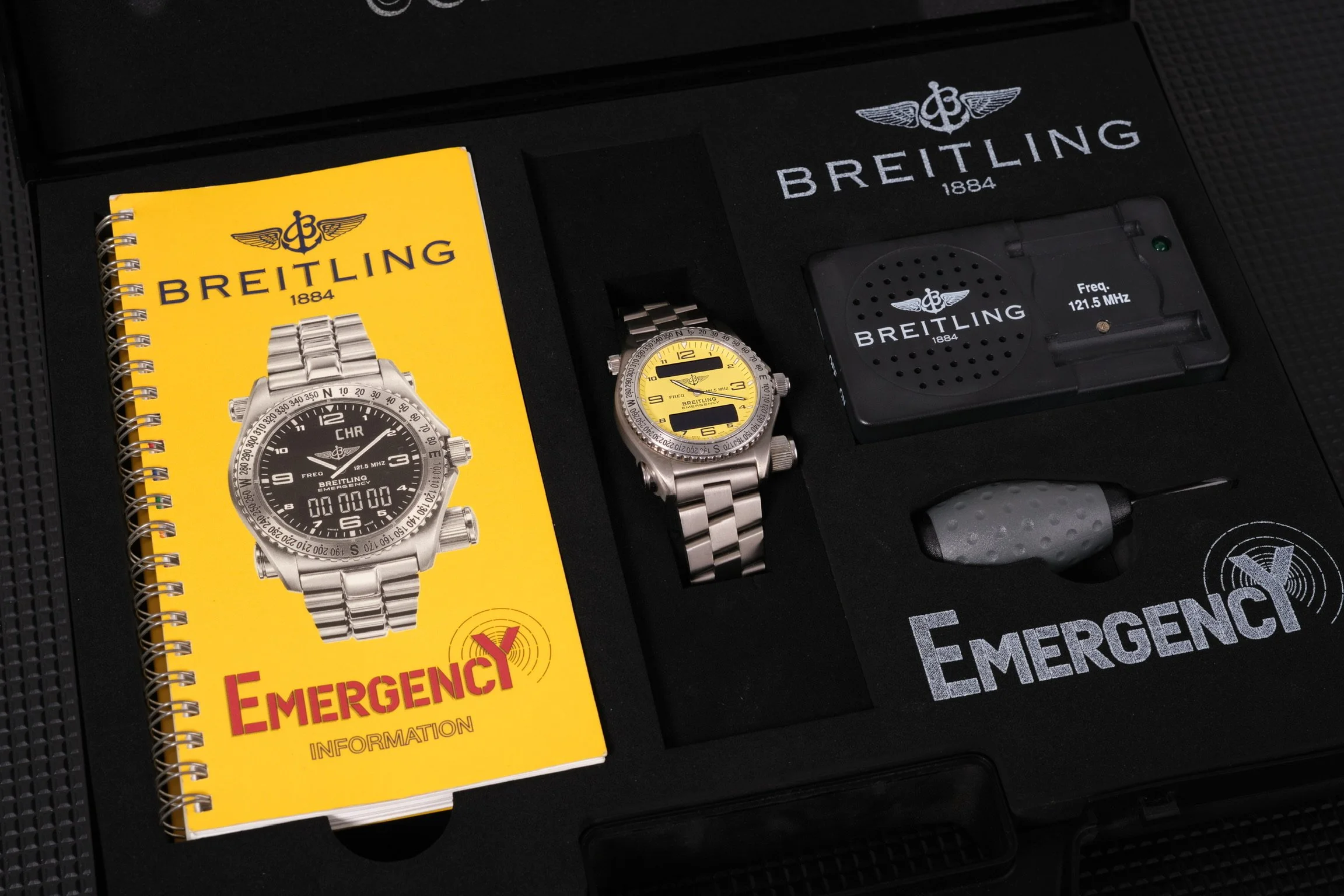
The Emergency belongs to a kind of watchmaking I would like to see more of: engineering that gives a watch a reason to exist beyond a new dial colour.
Breitling launched the original in 1995, with a miniature transmitter operating on the 121.5 MHz aviation distress frequency. It was designed to help rescuers home in on pilots or passengers after an aircraft accident, complementing the equipment aboard the aircraft.
That is a much more specific brief than “inspired by adventure”. Breitling had put an actual piece of rescue equipment on the wrist.
It also makes the usual mechanical-versus-quartz argument feel rather silly. A sweeping seconds hand is lovely. So is a beautifully decorated movement. But neither would have made the Emergency better at the job it was created to do.
For this watch, electronic timekeeping belongs to the idea. It is not a compromise to be excused before the review can continue.
There Is a Watch Behind the Party Trick
The transmitter inevitably dominates any conversation about the Emergency. It is the feature everyone remembers, and the reason those antenna housings sit there looking both intriguing and mildly alarming.
But remove that talking point and the original still has a distinctive identity.
The combination of analogue hands and digital displays gives it a cockpit-instrument feel. The compass-scale bezel adds another layer of information. The titanium case and conspicuous antenna housings make the shape unmistakable. It looks as though somebody designed it around equipment that had to fit inside, rather than a focus group’s preferred silhouette.
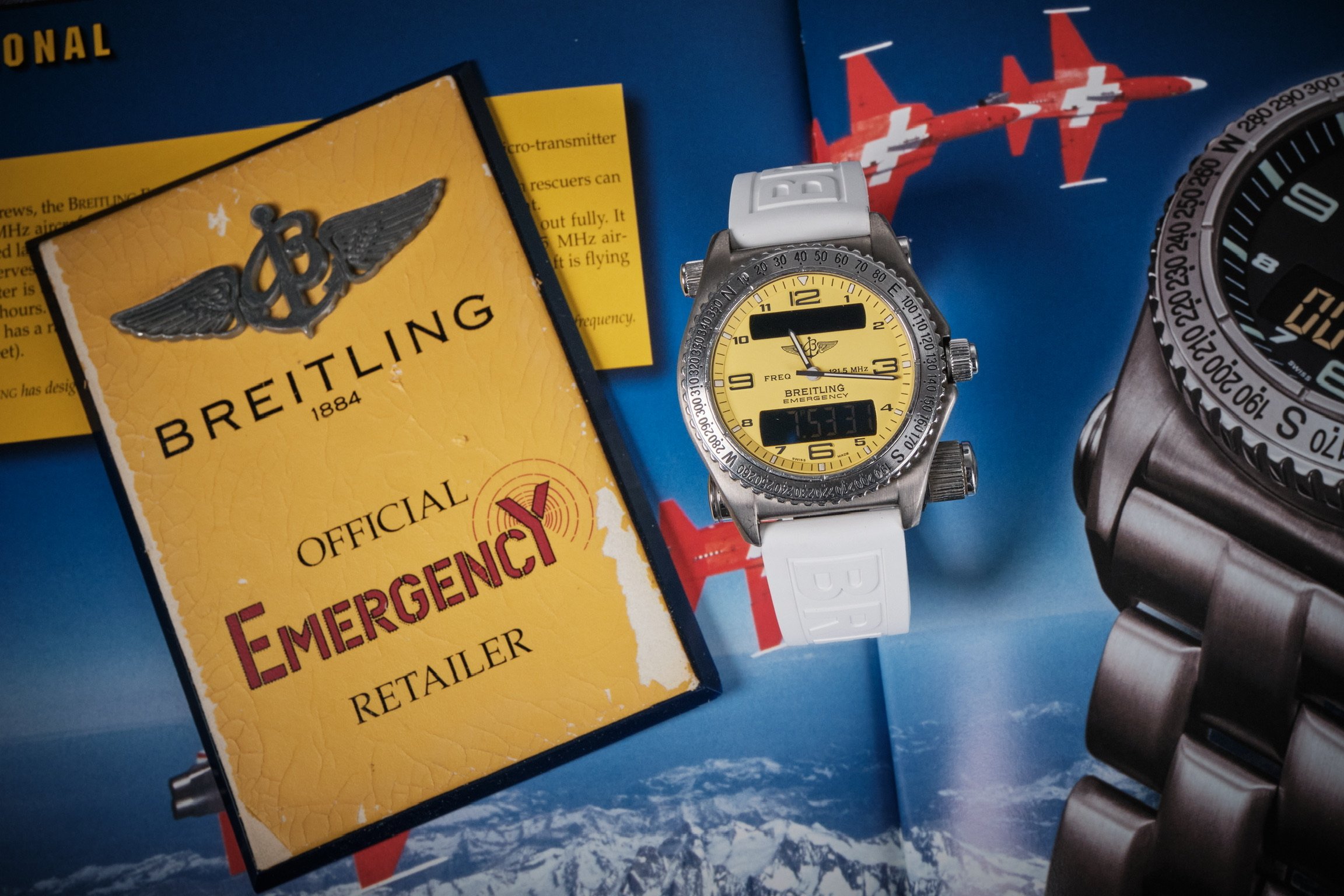
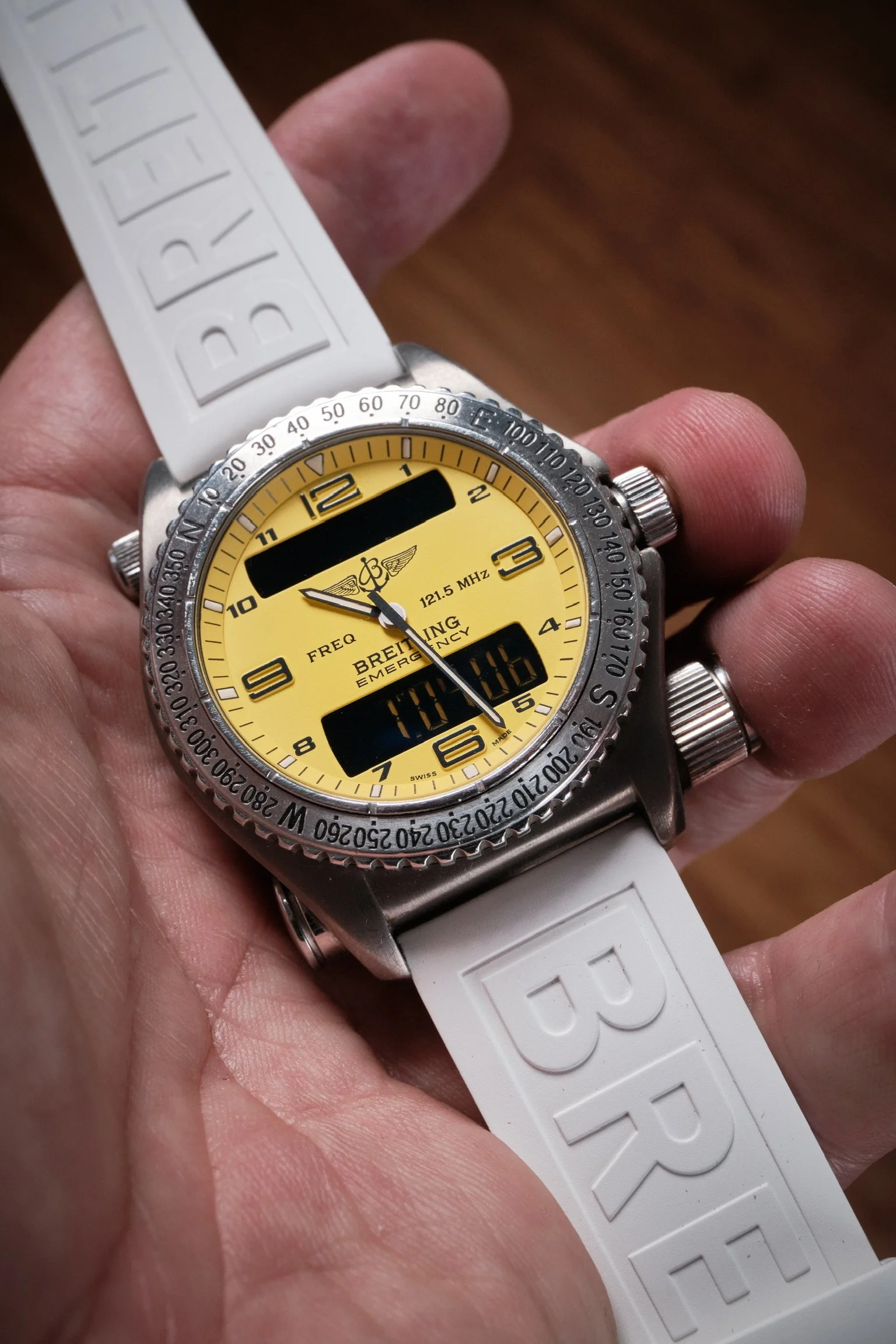
I like that. It has a purpose you can see.
The yellow dial remains the version that captures the initial attraction for me. There is nothing particularly discreet about it, but discretion was never what made me remember that magazine page.
This is also where the Emergency will divide opinion. If your ideal watch is a clean dial with three hands and enough empty space to park a bus, it is unlikely to convert you. Its appeal lies in the information, the unusual case and the slightly excessive nature of the whole proposition.
For me, those are reasons to look closer.
Does the Original Emergency Still Work?

This is the part that deserves more precision than the romantic version of the story.
In February 2009, the Cospas-Sarsat satellite system stopped processing distress signals on 121.5 MHz. That did not mean the frequency itself disappeared or ceased to have a role in rescue operations.
The distinction matters. The original Emergency was conceived as a homing aid, and its 121.5 MHz transmitter should not be confused with the satellite-alerting capability of the later dual-frequency model.
Equally, an old Emergency should not be treated as a modern, standalone satellite rescue beacon simply because it has “Emergency” written on the dial. The condition of the transmitter and its power supply matters too. Owning the watch is not evidence that its rescue equipment is ready for use..
That changes the practical argument for owning one. It does rather less to change why I like it.
The Emergency II: Better Equipment, a Bigger Commitment
The Emergency II introduced a substantial technical advance. Its transmitter combines a 406 MHz satellite alert with a 121.5 MHz homing signal.
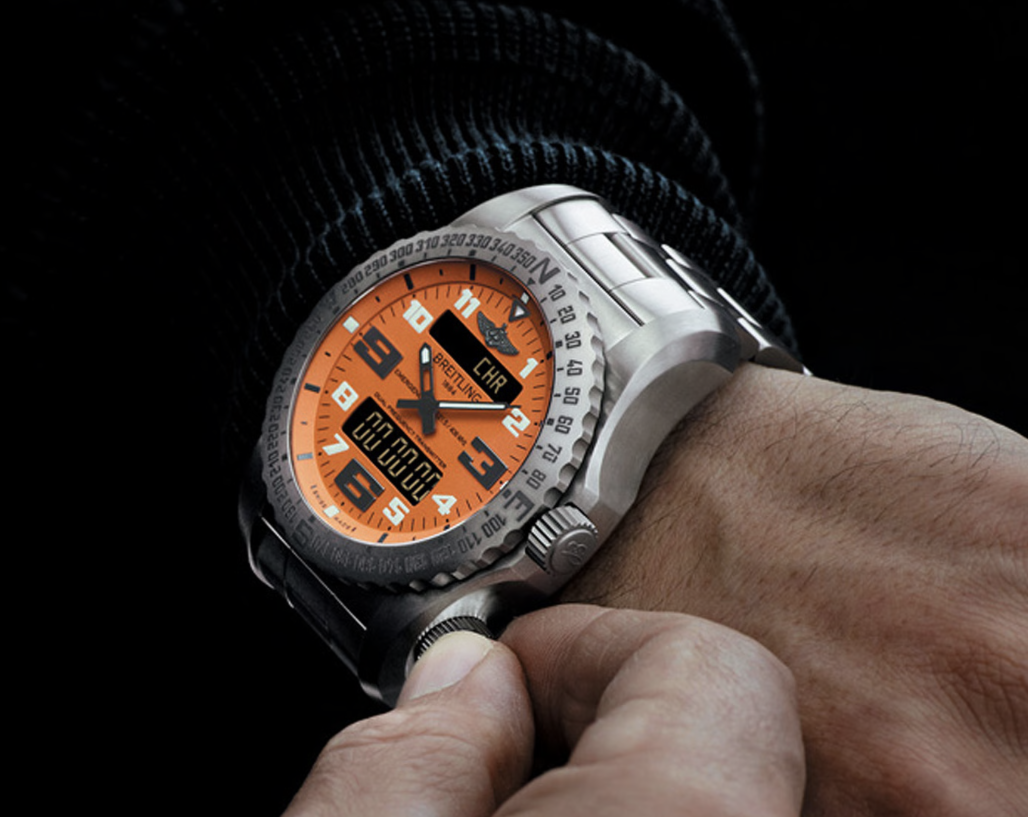
Breitling’s published specifications give the later watch a 51mm diameter, and the beacon has its own rechargeable battery. These are not small details. Greater capability requires more equipment, more power and more space.
As an engineering achievement, it is impressive. As a watch, 51mm asks a lot of its owner.
There is an interesting question here: does improving the Emergency’s rescue function automatically make it a more desirable watch?
For someone choosing it around that capability, the advance is central to the appeal. From a collector’s perspective, however, the answer is less straightforward. The original has the attraction of the watch that established the idea, wrapped in a less imposing package.
I can admire the later model’s capability without feeling that it makes the first generation irrelevant. Technical progress and personal preference do not always arrive at the same destination.
The Awkward Question About Tool Watches
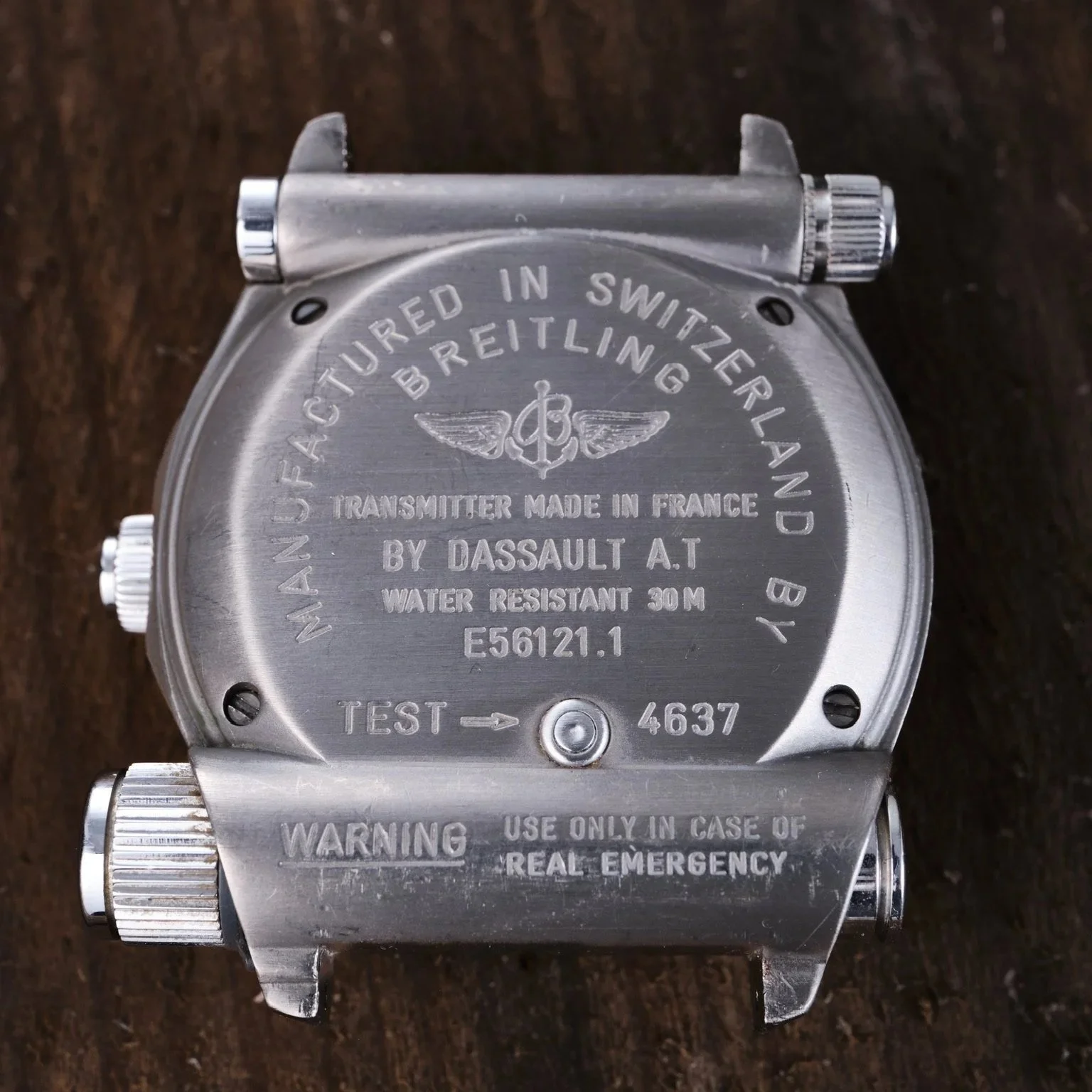
Perhaps the Emergency makes some collectors uncomfortable because it exposes how generously we use the phrase “tool watch”.
For plenty of us, a tool watch is something that looks suitably equipped. The actual tool spends most of its time accompanying us to work, the supermarket or the pub.
There is nothing wrong with that. We are allowed to enjoy design, history and the idea of capability without submitting a diving log alongside the warranty card.
The Emergency simply takes that attraction to an unusual extreme. Its equipment is real, its purpose is serious, and its most memorable feature is something you should hope never to need.
I do not need to invent an expedition to justify enjoying it. Nor does every watch in my collection have to be the most practical solution to a problem.
Sometimes the reason is that it still makes me feel something when I look at it.
Still the One That Started It
The Emergency is not an automatic recommendation for everyone. Its appearance is busy, its case is unconventional, and buying an older example deserves more thought than simply choosing a dial colour. The rescue story also needs to be understood accurately.
But none of that makes it ordinary.
What I still admire is that Breitling took an ambitious, unusual idea and made an actual watch out of it. The result has a character that cannot be recreated by adding another paragraph of adventurous language to a press release.
My reasons for appreciating watches have expanded since that glimpse in GQ. I now care about things that would not have crossed my mind then.
Yet the Emergency retains the original attraction. It was the watch that made me want to know more. I hope I never need its most extraordinary feature. I have already had plenty of use from the curiosity it started.