
Bühlmann Decompression 02
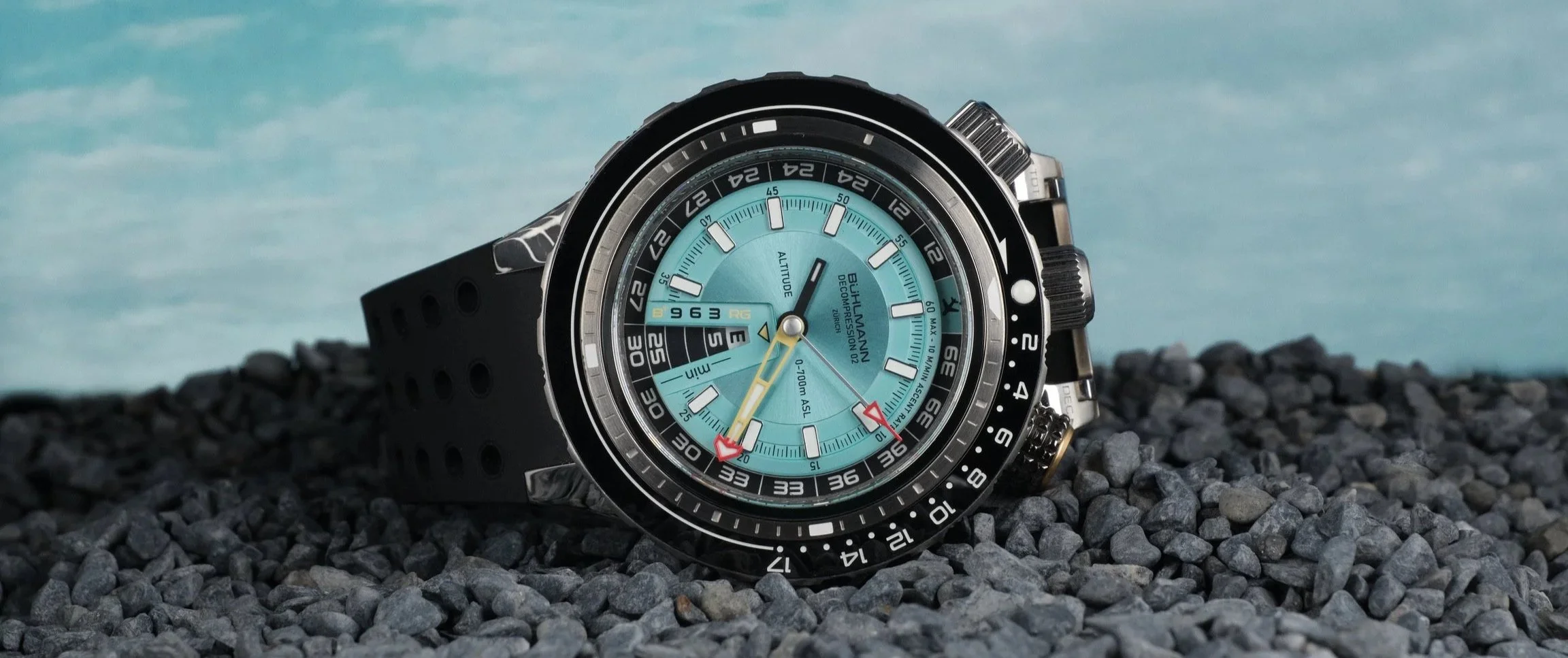
There’s something reassuring about a dive watch that doesn’t try to do everything for you.
Before we get carried away, a quick caveat. I’m not a diver. Not even close. The deepest I’ve ever been was Edmonton Green swimming baths, sometime around 1976, when I bravely launched myself off the diving board and immediately questioned every life decision that led me there. So no, I’m not the target audience for something like the Buhlmann Decompression 02.
And yet, here we are. Because even from that very safe, very dry perspective, this watch is fascinating. And it does so in a way that feels unapologetically mechanical.
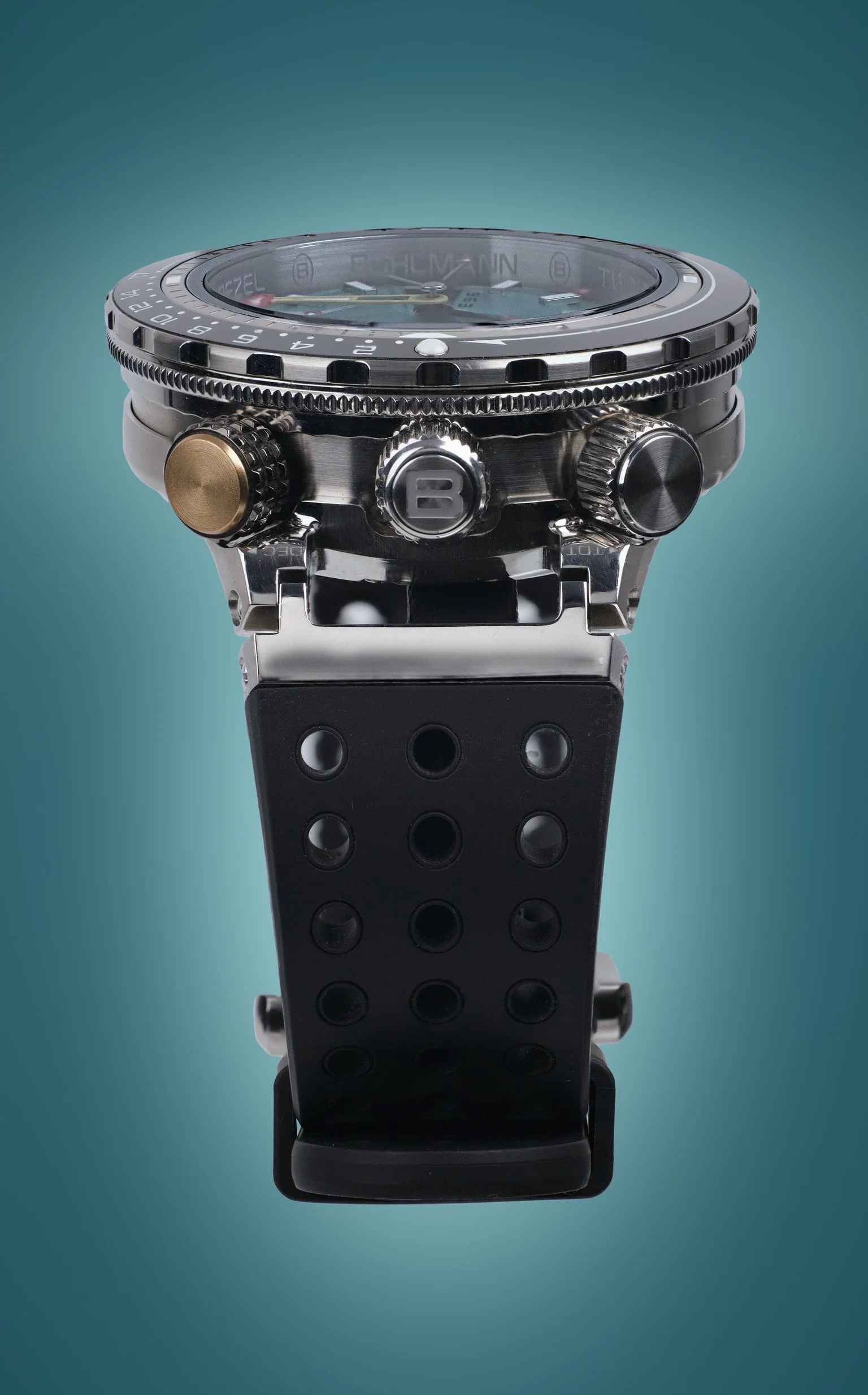
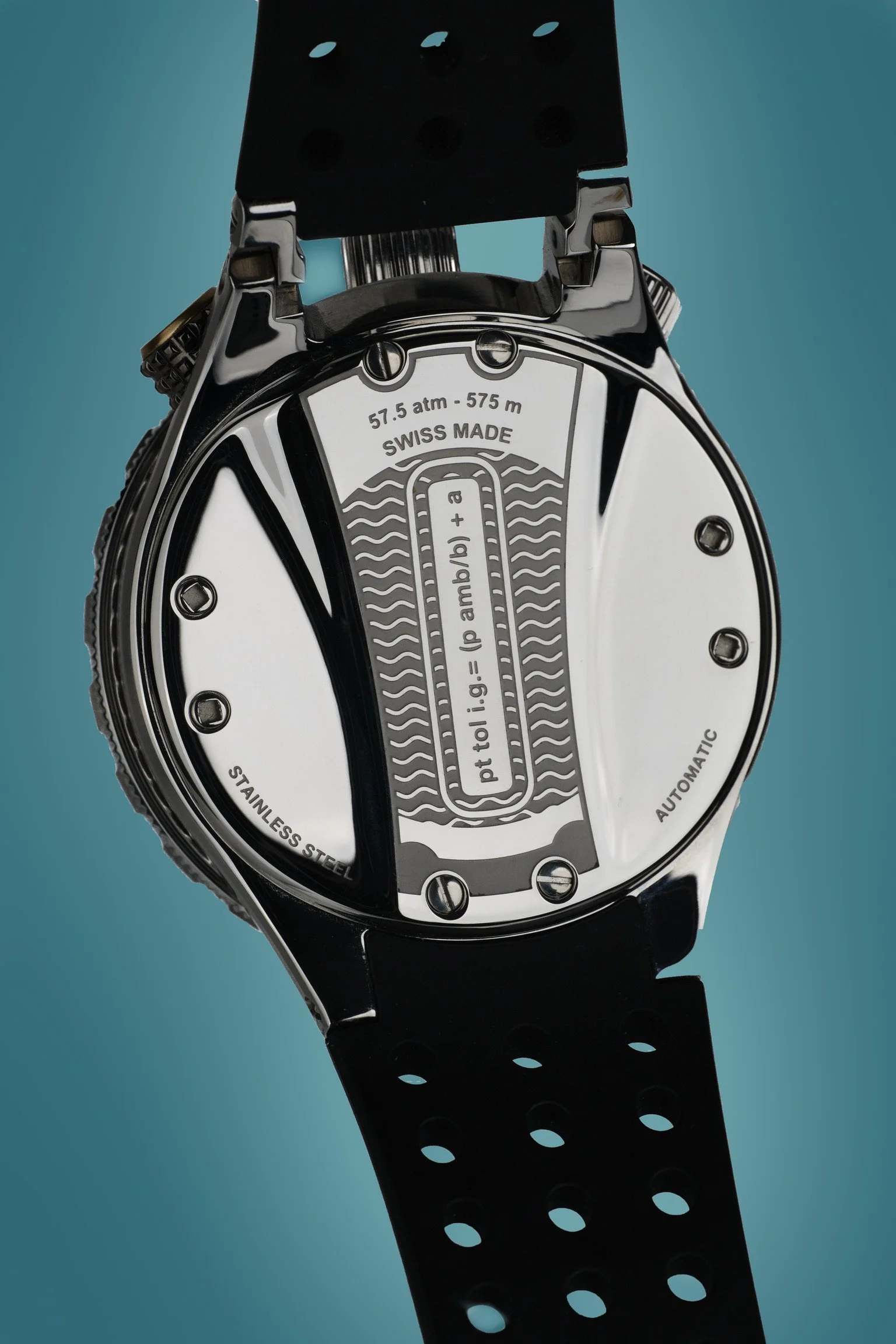
Before even getting into what it does, let’s talk about what it is, because the physical presence of this thing matters. A lot. At around 48.5mm across, roughly 46mm at its core, and over 16mm thick, this is not a watch you accidentally wear. It’s big, properly big, with a footprint that immediately brings the Omega Ploprof to mind. You feel every bit of its 200-plus grams, yet somehow it doesn’t feel clumsy. There’s intent behind the size.
The case is all business. Polished surfaces dominate, broken up with just enough brushing detailing to stop it feeling flat. No unnecessary flourishes, no attempt to dress it up as something it isn’t. It’s a tool, and it looks like one. The slightly asymmetrical layout and subtle forward tilt are clever touches too. Not something you notice straight away, but once you do, it makes perfect sense. It’s been designed to be read underwater, not admired at a desk.
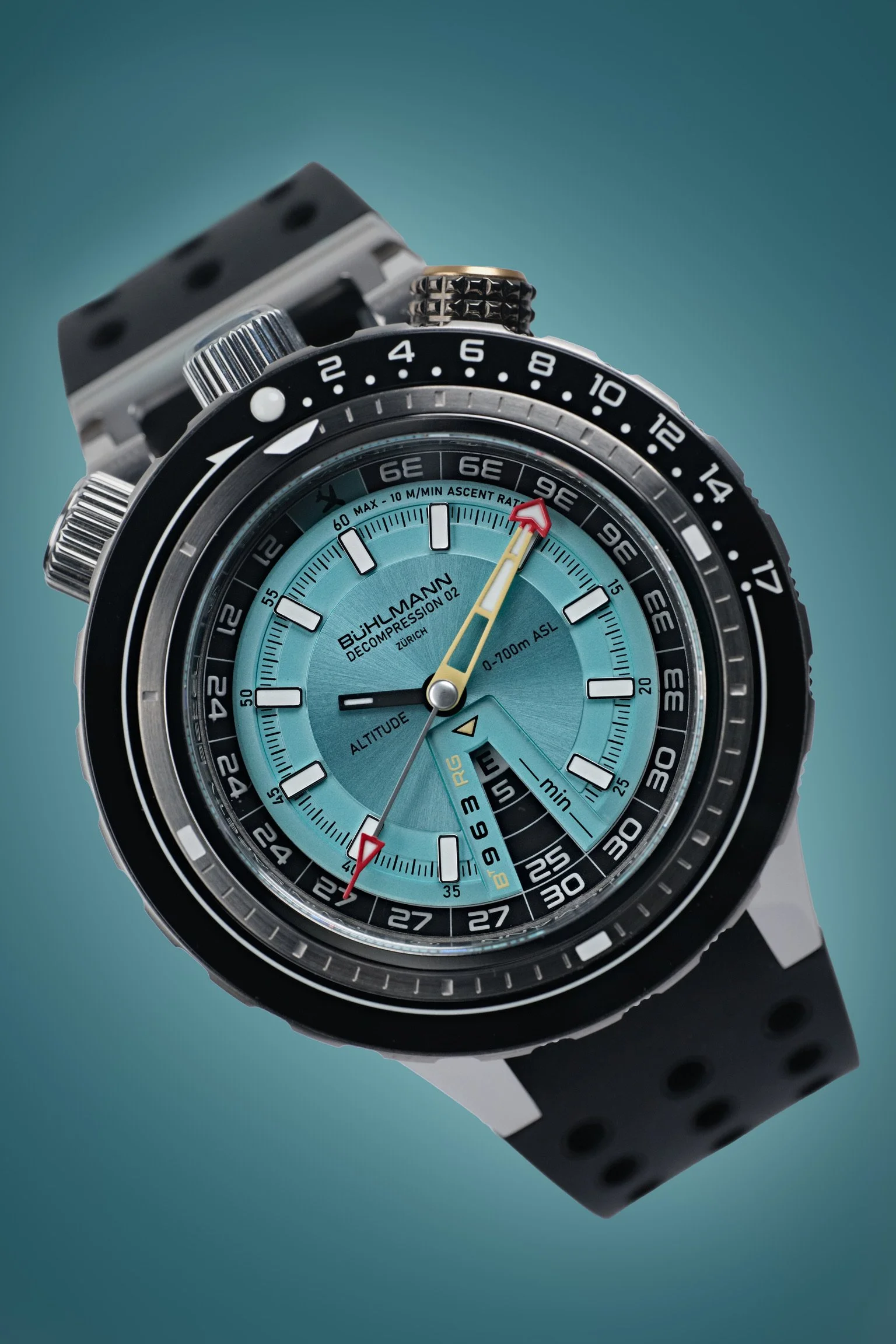
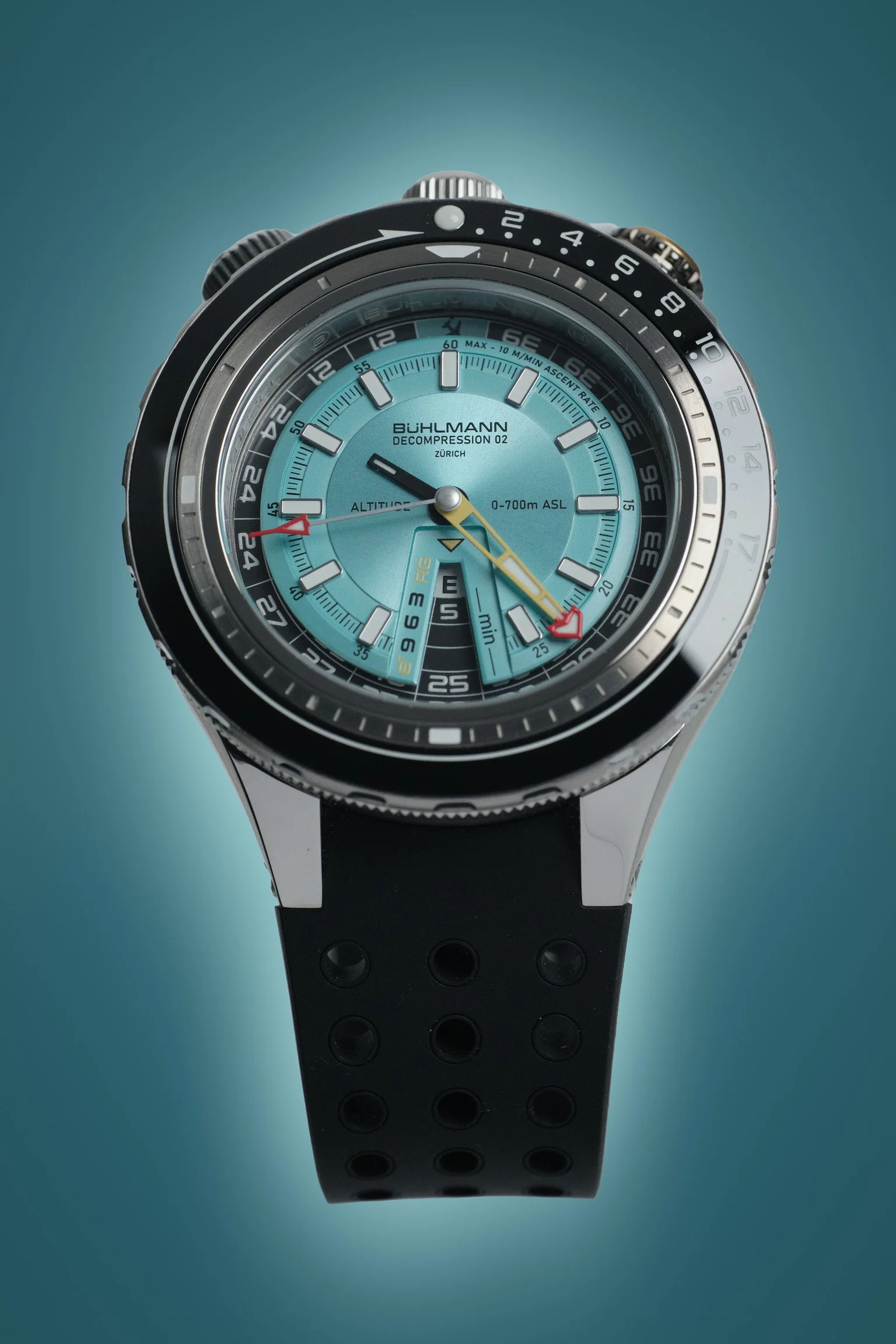
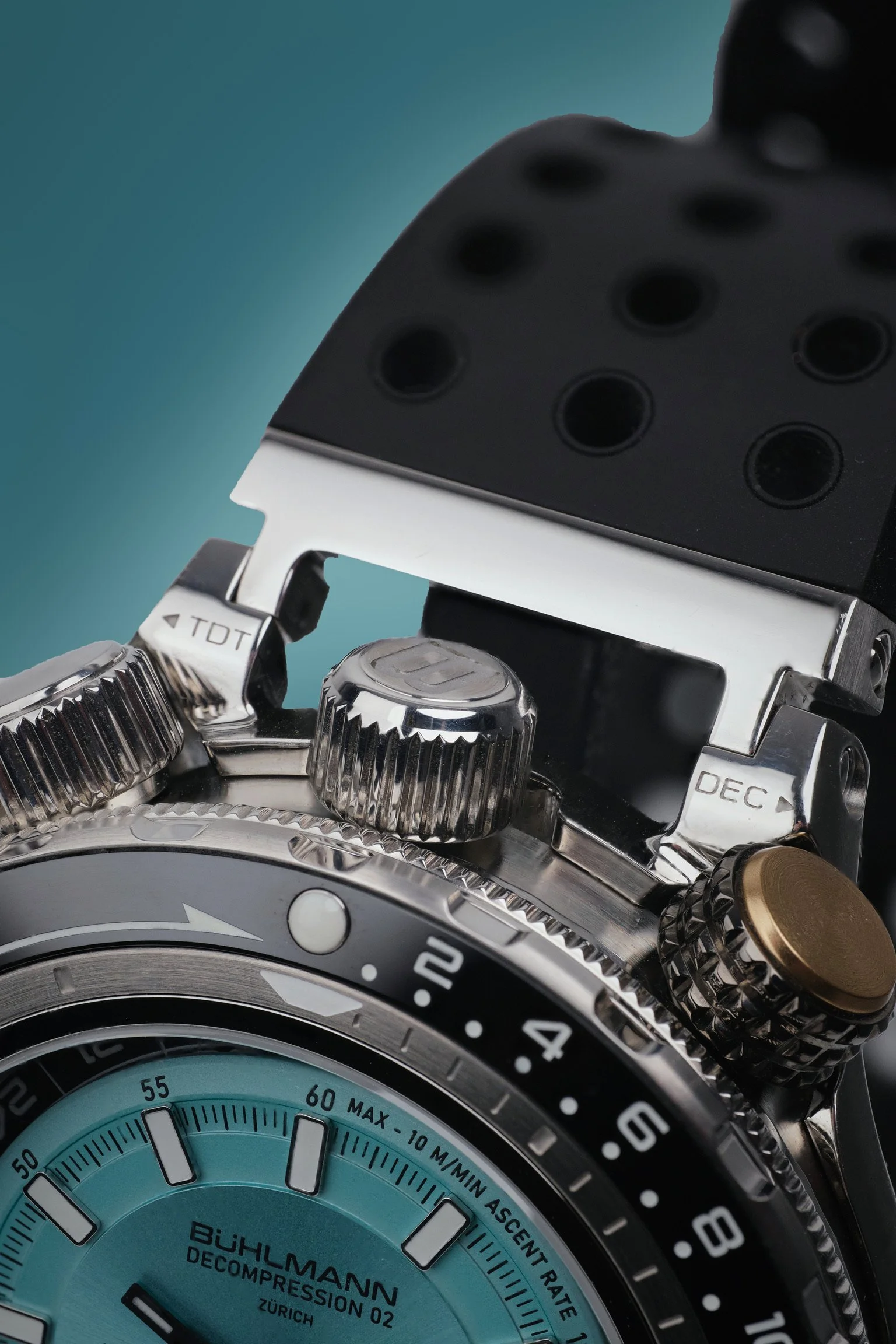
Then there’s the crown setup, which looks intimidating at first glance but quickly becomes part of the charm. Multiple crowns, each with a job to do, all with a reassuringly mechanical feel when you use them. Nothing vague or overly light. Everything clicks, turns, and locks with purpose. Same goes for the bezel. Firm, precise, and integral to how the watch actually functions, not just there to tick a box.
And that’s where things get interesting.
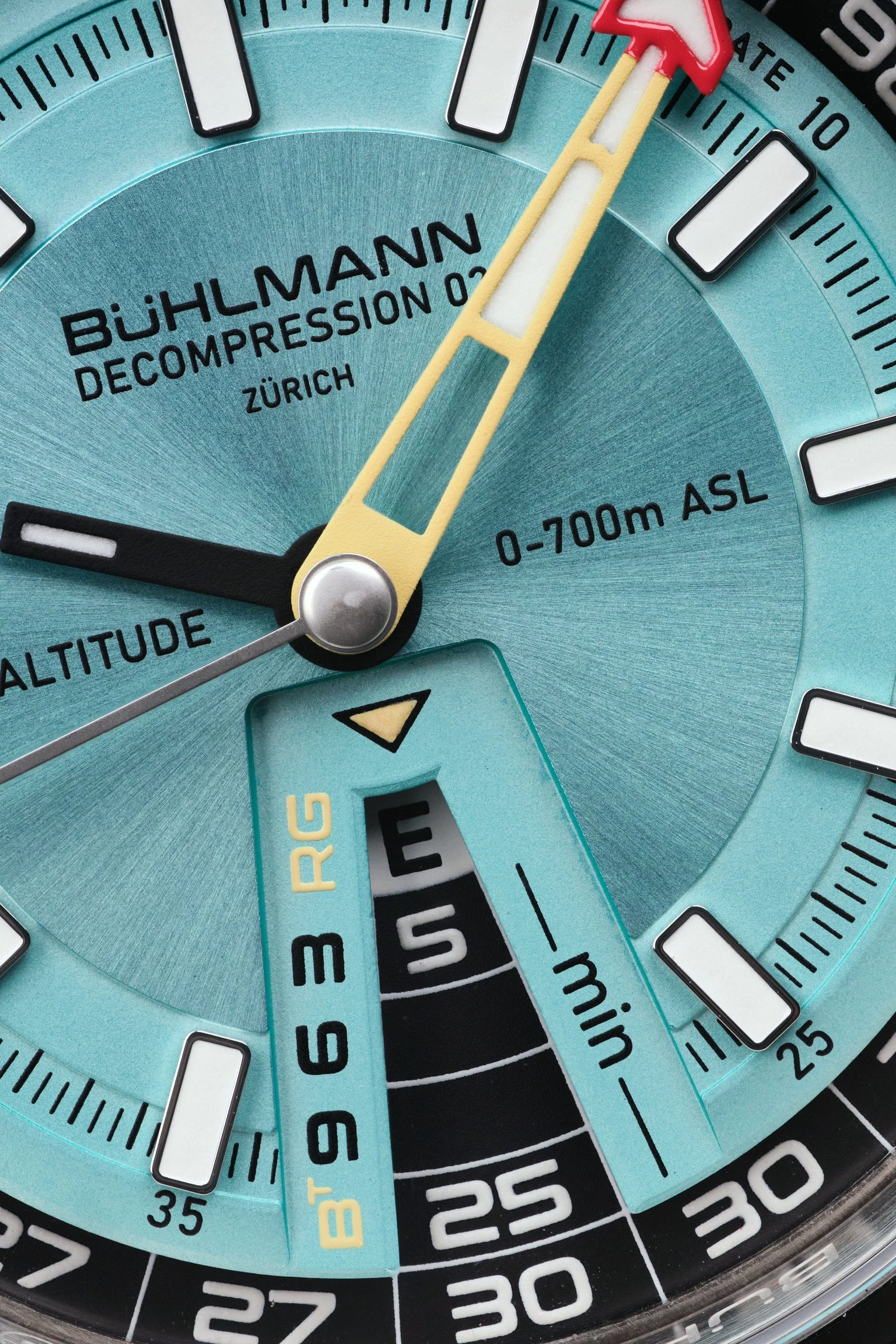
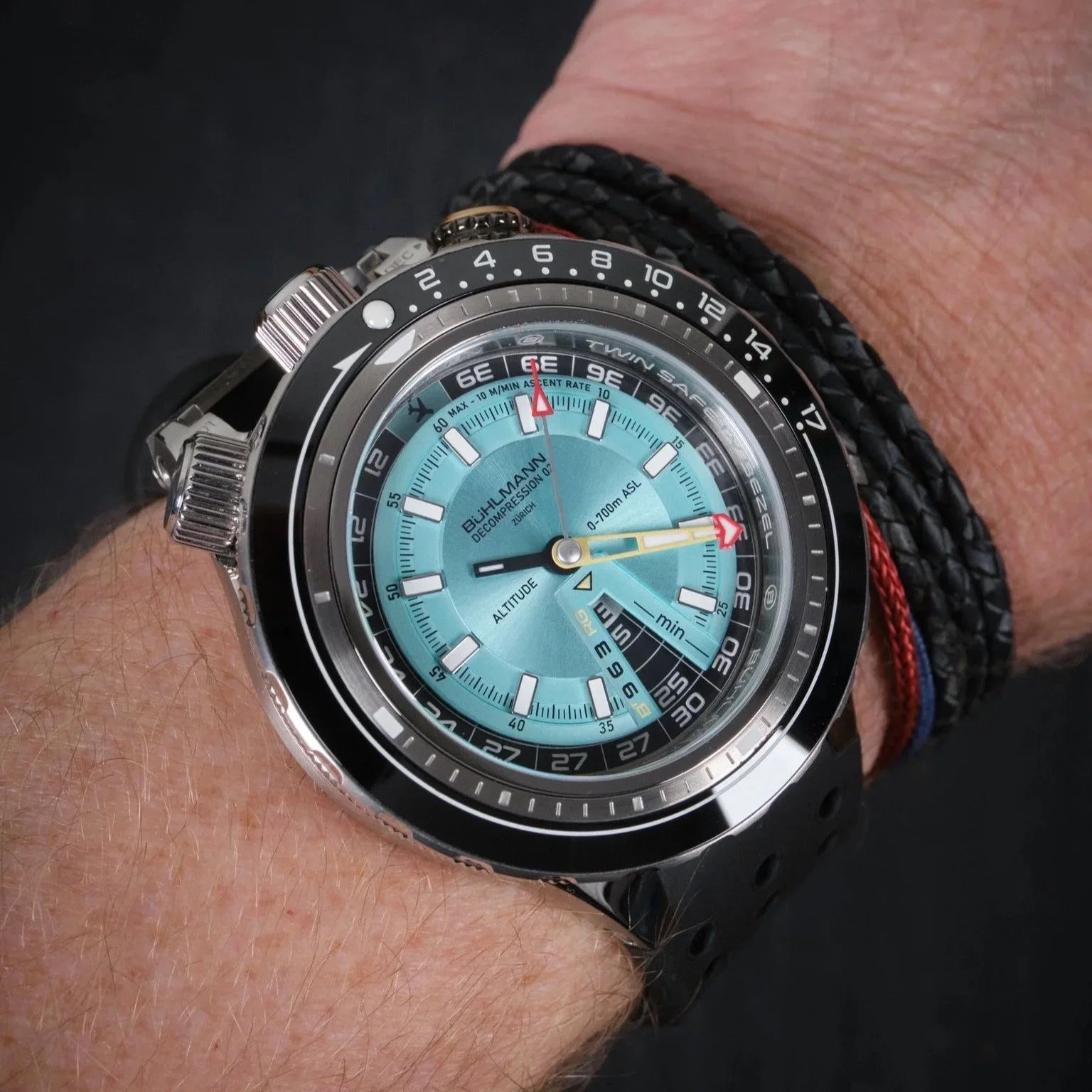
The Decompression 02 is built around the Bühlmann decompression model. That’s the same underlying theory used by most modern dive computers, but here it’s been translated into something you can physically interact with. No screens, no menus, no hidden calculations. It’s all there on the dial and bezel.
Using it is less complicated than it looks, but it does require you to pay attention. Before the dive, you set the bezel to your intended depth. That effectively loads your dive profile. From there, you track your bottom time as normal.
As the dive progresses, the watch starts to tell a story. You can see how close you are to your no-decompression limits, and if you push beyond them, it shows you what your stops will look like on the way back up. Not with alarms or flashing warnings, just through the relationship between the dial and bezel. It’s subtle, but once you understand it, it’s actually quite intuitive.
And that’s the key difference compared to a digital dive watch.
A dive computer is reactive from your side. It does the thinking, you follow instructions. There’s nothing wrong with that. In fact, for most people, it’s exactly what you want. It’s safer, more precise, and far better at handling variables like multi-level dives or repetitive profiles.
The Buhlmann doesn’t try to compete with that. Instead, it pulls you into the process. You’re not waiting to be told what to do. You’re watching your limits develop in real time. You start to understand how quickly things can change depending on depth and duration. It becomes less about reacting and more about anticipating.
Of course, that comes with a bit of responsibility. This isn’t a safety net. It won’t beep at you if you’ve pushed things too far. It assumes you know what you’re doing, or at the very least, that you’re willing to learn.
And that’s really where it finds its audience.
This isn’t for someone who just wants a straightforward, no-fuss dive companion. A modern computer will always win that battle. It’s easier, more adaptable, and frankly, more forgiving. The Decompression 02 is for someone who enjoys the mechanics of diving as much as the dive itself. Someone who wants to understand the “why” behind the numbers, not just follow them blindly.
From my side of the fence, though, that’s almost irrelevant. Because even without ever taking it anywhere near open water, you can appreciate what’s been done here. This isn’t just a dive watch with a bit of extra text on the dial. It’s a genuinely thoughtful piece of mechanical engineering that translates something quite complex into a physical, usable format.
What I particularly like is that it changes your behaviour, even in theory. You check it more. You think ahead. You become a bit more deliberate. It slows things down in a way that feels quite refreshing, especially when everything else around us is becoming increasingly automated.
And then there’s the simple fact that it’s just a very well put together watch. The finishing is sharp without being overdone, the dial layout makes sense once you spend a bit of time with it, and the whole thing feels cohesive. Even the choice of a Sellita SW300 inside feels right. Reliable, proven, and not trying to steal the spotlight from what the watch is actually about. Priced around the €4000, this is a watch that will probably be owned by those who dare to use it properly. Available from Watch Angles, who dare to develop such a bohemoth
It’s not subtle. It’s not small. And it’s definitely not for everyone. But that’s kind of the point. The Buhlmann Decompression 02 doesn’t try to replace your dive computer. It reminds you why you might not always want it to.