
Complications That Should Exist
There’s no shortage of articles cataloguing the world’s watch complications, ranking them, or marvelling at their mechanical wizardry. But I want to approach the subject from a slightly different angle. For centuries, minds far sharper than mine have dreamt up some truly astonishing mechanisms, miniature mechanical universes that track everything from lunar cycles to sidereal time. These inventions have been tweaked, refined, reinterpreted and occasionally reinvented, but the core brilliance remains the same.
Take Vacheron Constantin’s Reference 57260, the reigning heavyweight champion of horological complexity. With 56 complications and more than 2,500 components, it makes a standard three-hander, typically 100 to 200 components, look almost quaint by comparison. The 57260 isn’t just complicated; it’s a mechanical thesis, the kind of watch that forces you to pause, blink twice, and ask whether the boundary between engineering and magic is really as clear as we think.
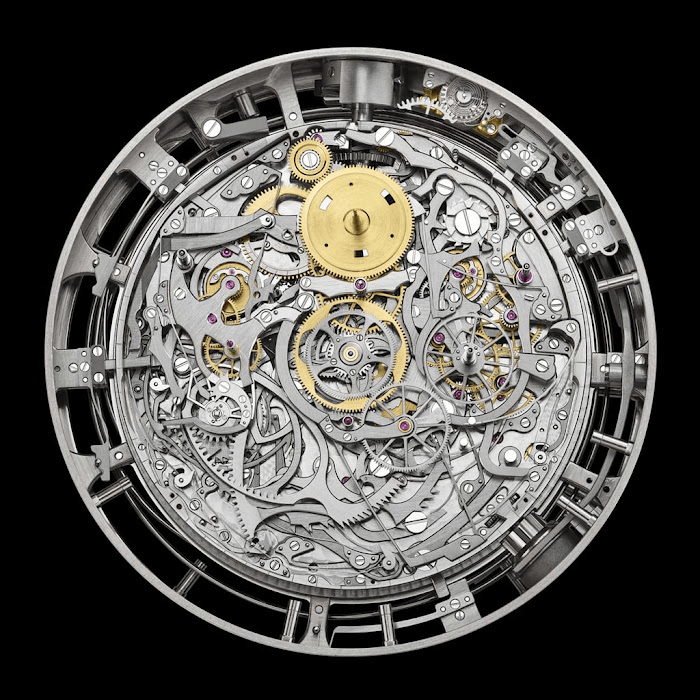
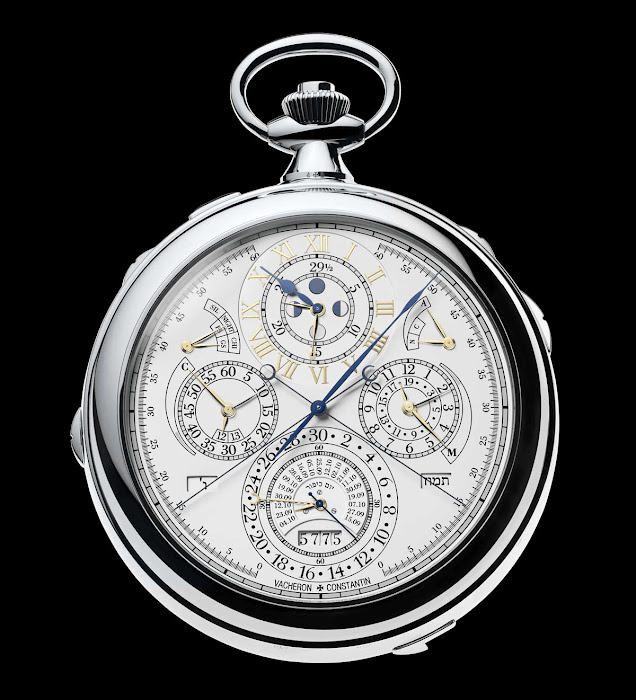
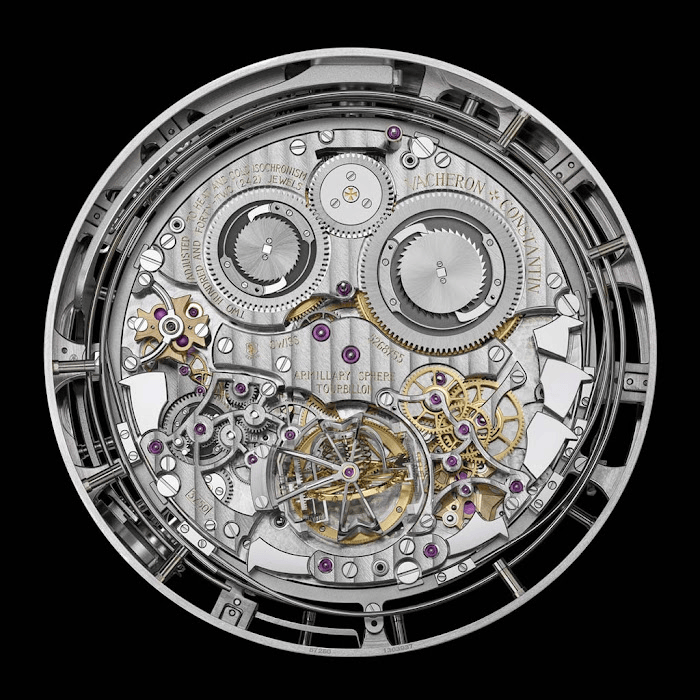
I’m no watch designer, and I’ll happily leave that particular sorcery to the pros, but with an engineering background, I can’t help poking at the boundaries of what might be possible. After all, every great complication started life as someone’s slightly unhinged idea. If watchmaking is going to keep evolving, new mechanisms need to be imagined before they can ever be machined.
So, I thought I’d try my hand at dreaming up a few complications that don’t exist… yet. And let’s be honest: they can’t possibly be any more impractical than half the complications we already celebrate.
Make yourself comfortable and let’s see what’s on my list.
1. Emotional Reserve Indicator
Instead of measuring stored energy, this complication tracks interaction with the watch. The more the watch is worn, wound, or handled, the “reserve” increases. Leave it unworn too long and the indicator drops. It becomes a poetic measure of connection rather than power, a reminder that watches are meant to be lived with, not stored.
2.The Custodian Register
Tracks ownership without names. A hidden mechanical counter advances only when the crown is removed entirely. It represents a change in ownership. and is visible only through UV light or at certain angles. It reinforces the idea that watches aren’t owned, they’re passed through lives.
3. Memory Date
A manually programmable complication that allows the wearer to “mark” a date without a traditional calendar. Pull the crown, advance to a chosen day, and the watch subtly highlights that date each year, with a different colour, texture, or hand position. A mechanical anniversary keeper, personal and invisible to anyone else.
4. The Mortality Scale
Measures time remaining, not elapsed. Based on an adjustable lifespan estimate A slow, irreversible hand moves once per year. When it reaches zero, the watch continues running, but the scale ends. Because timepieces shouldn’t just measure time, they should challenge how we think about it
5. Legacy Counter
This complication tracks how many times the watch has been serviced, repaired, or passed on. Each intervention advances a discreet counter, visible only through the caseback. Rather than hiding age, it celebrates the custodian, acknowledging that ownership is temporary, but history accumulates.
This last one, apart from the “Memory Date” is one that might be snapped up as an idea. But how might it work?
Hidden beneath the movement, visible only through the sapphire caseback, sits a small mechanical register. It advances once every time the watch is officially opened for service. Only when a watchmaker’s hands step in.
Each click represents, a service, repair or movement refresh, or a handover to the next generation It’s irreversible. No resets. No polishing it away.
This isn’t about condition, it’s about continuity. Only authorised watchmakers have the tool. No cheating. No vanity resets.
How It Works
A micro-ratchet wheel is linked to the caseback opening sequence.
When the caseback is removed using a proprietary tool, it engages a spring-loaded pawl.
The pawl advances a discreet counter by one increment.
The mechanism is independent, so zero impact on accuracy or power reserve.
The counter displays 0–12, after which it stops counting. Because nothing lasts forever.
Who knows whether any of these ideas will ever make their way into a watch, maybe one day, if a brave enough watchmaker takes pity on my imagination. But what I do want to see is new complications from the people who actually know how to coax them into existence. Let’s be honest: we don’t need watches, and we need complications even less. What we do need is innovation, progress, and the thrill of seeing someone try something genuinely new.
And that’s where I’ve been a little frustrated. The big brands, for all their resources, seem increasingly cautious, recycling the familiar rather than pushing into the unknown. It’s the independents who are showing the guts and curiosity to experiment, to surprise us, challenge us, and occasionally make us raise an eyebrow in the best possible way.